Portuguese
  Spanish


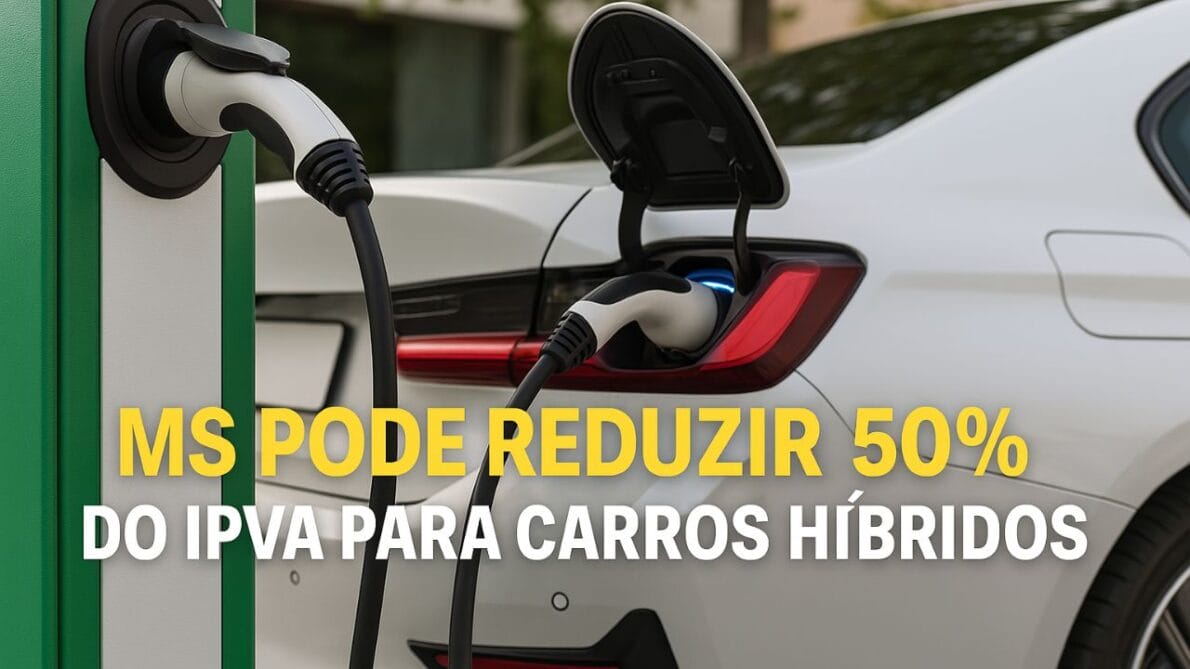

Deputy Hashioka Wants to Encourage the Use of Less Polluting Vehicles and Strengthen Sustainable Mobility Policy in the State
The Legislative Assembly of Mato Grosso do Sul is analyzing a project that could change the tax scenario for drivers of hybrid vehicles. The proposal by Deputy Roberto Hashioka (Union) foresees a 50% discount on the IPVA for this type of vehicle, as a way to encourage sustainable mobility and reduce pollutant emissions. The information was released by the portal correiodoestado.com.br.
Incentive for Vehicle Sustainability
Bill 85/2025 has as its main objective to stimulate the purchase and use of hybrid vehicles, which combine electric and combustion engines, thus promoting a less aggressive alternative to the environment. According to Deputy Hashioka, the proposed benefit represents an advance in the state policy for encouraging sustainability and modernizing the automotive fleet.
As highlighted by the parliamentarian in a statement to correiodoestado.com.br, other Brazilian states already apply similar benefits and reap positive results both in the environmental area and in the technological renewal of vehicles in circulation.
-
Hilux’s little sister: Toyota relaunches the Land Cruiser 70 in the 2027 lineup with over 40 years of production, a 2.8 turbo diesel engine with 201 hp and 51 kgfm, a six-speed automatic transmission, and a renewed retro look.

-
Automatic, economical, and known for reliability: with a 1.5 engine of up to 110 hp, CVT transmission, seven airbags, and fuel consumption of up to 15.9 km/l, this used hatchback appears as a rational alternative to Polo, HB20, and Onix; meet the Toyota Yaris XLS 2020.
-
He surpassed the Tera, Creta, and Tracker: With a TSI engine of up to 150 hp, 6-speed automatic transmission, and a 373-liter trunk, the Volkswagen T-Cross was the best-selling SUV in June, with 11,753 registrations.

-
It looks factory-made, but it came out of a workshop: a mechanic from Pernambuco builds a handcrafted “mini Toyota,” drives it through the streets, and the video goes viral on social media, leaving residents astonished.



Legal Basis and Feasibility of the IPVA Discount
The proposal to reduce the IPVA for hybrids is based on Article 153 of State Law No. 1,810/1997, which allows the Executive Power to grant tax incentives linked to pollution control and the development of sustainable technologies. The project is under consideration in the Legislative Assembly and, if approved, could generate a multiplier effect on the incentive for automotive electrification in Mato Grosso do Sul.
The expectation is that the project will attract consumers interested in more economical and environmentally conscious vehicles, reducing the emission of polluting gases in the state.
Comparison of the IPVA with Other Brazilian States
Deputy Roberto Hashioka emphasized that the proposal from Mato Grosso do Sul follows a national trend already applied in states like São Paulo, Paraná, and Pernambuco, which offer exemptions or discounts on the IPVA for hybrid and electric vehicles. According to the parliamentarian, these public policies have encouraged the population to replace old and polluting vehicles with cleaner and more efficient options.
By mentioning these experiences in the correiodoestado.com.br, Hashioka reinforces that competitiveness among states can accelerate the adoption of less polluting vehicles, as the cost of taxes directly influences the consumer’s purchasing decision.
Environmental Impact and Fleet Renewal
In addition to relieving the taxpayer’s burden with the reduction of the IPVA, the measure is viewed as strategic for environmental control. Hybrid vehicles produce less carbon dioxide (CO₂), contributing to the reduction of urban pollution levels. This technological transition, as pointed out by the project, also stimulates the development of public policies aimed at modernizing the state fleet.
According to correiodoestado.com.br, the approval of the project could generate a positive effect on the local automotive chain, stimulating not only the acquisition of hybrid cars but also private sector interest in sustainable solutions.