





 Portuguese
  English
  Spanish
  3 min of reading
  0 comments


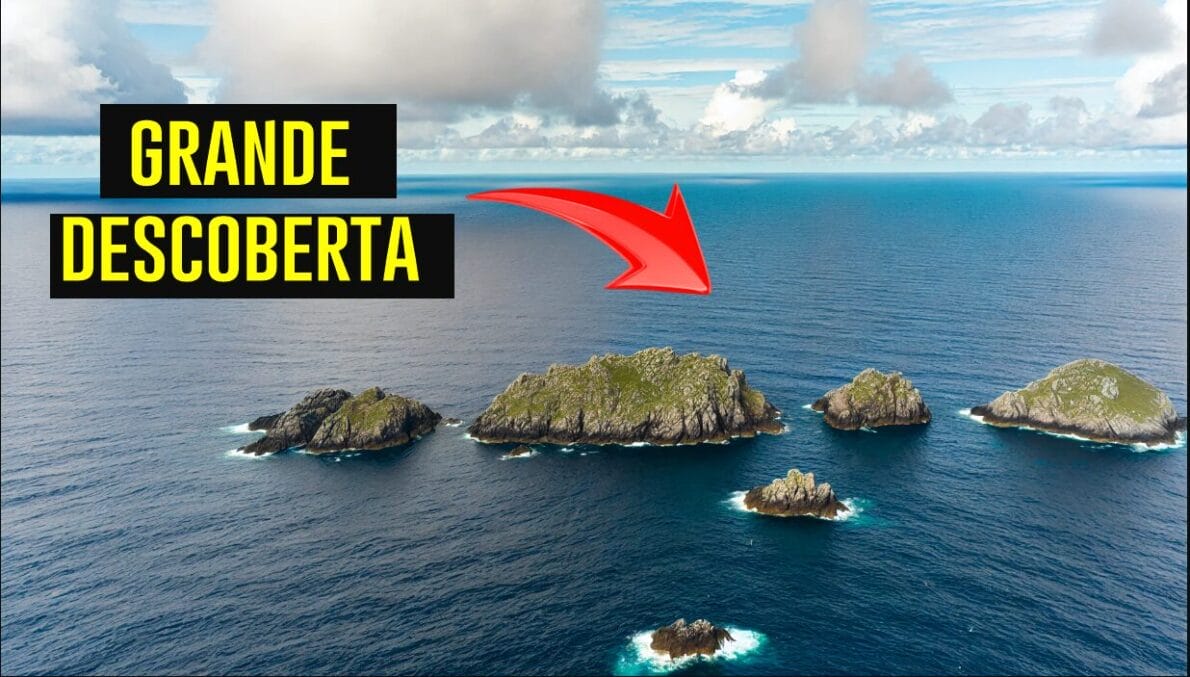
Researchers Find A Lost Piece Of The Seafloor, Hidden In The Mantle Of The Earth, Near Easter Island. The Discovery Raises Expectations That Many Other Ancient Structures Still Await Discovery.
The recent discovery of an ancient submerged tectonic plate beneath the Pacific Ocean is generating significant interest in the fields of geology and Earth sciences. Earth.
Scientists found what they call a “fossilized fingerprint” of a part of the seafloor that sank about 250 million years ago, at the beginning of the age of dinosaurs.
This piece of the Earth’s crust, now located in the depths of the mantle transition zone, represents a fascinating discovery that could help explain some of the most mysterious geological features of our planet.
-
Obsessed with eliminating water waste, a factory in SC invests R$ 5 million, reduces consumption from 48,000 to just 3,000 liters per day, and today supplies about 70% of the flexographic market in Latin America.

-
Truck drivers can retire diesel: technology refuels in just 8 minutes, reaches up to 700 km of range, and emerges as an alternative for a fleet that still depends 99% on the fuel responsible for 47% of the sector’s emissions.
-
What seemed impossible has been confirmed by researchers from Germany: fish sleep in ways very different from humans and use mechanisms developed over millions of years to conserve energy and increase their chances of survival.

-
Yeast used in bread, beer, and pizza becomes biomaterial for architecture and surprises by forming lightweight pieces, molded in 3D printers and dried without high energy consumption heating.




The Discovery In The Mantle Of The Earth
The team of scientists, led by Jingchuan Wang from the University of Maryland, made this discovery using seismic waves to examine the rocks situated beneath the East Pacific Rise, an underwater mountain range located about 3,200 kilometers off the coast of South America.
During the analysis, it was possible to create a digital cross-section of the Earth’s crust and mantle. The study revealed an unusually thick region in the mantle transition zone, an area between 410 and 660 kilometers deep.
This abnormal thickness was found 350 kilometers east of Rapa Nui, better known as Easter Island.
This thick area was described as a fossilized fingerprint of an ancient tectonic plate that underwent subduction—a process in which a tectonic plate is pushed down beneath another, sinking into the mantle.
Typically, the material from tectonic plates disintegrates in the mantle, being recycled as magma due to high temperatures.
However, this piece of oceanic crust survived intact, which surprised scientists. “Typically, oceanic plates of material are completely consumed by the Earth,” commented Wang.
A Glimpse Into The Past Of The Earth
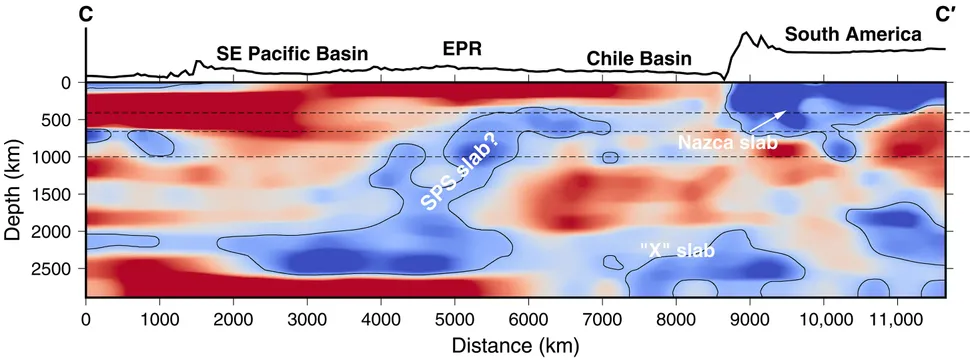
Wang et al. Science Advances, 2024.)
The plate found by the researchers holds significant importance for several reasons. It represents a piece of the planet’s geological history, providing a unique glimpse into how plate tectonics operated in the distant past.
Moreover, the position of the submerged plate suggests that it moved much slower than expected.
This indicates that the mantle transition zone may act as a viscous barrier, slowing the movement of material that is sinking—a discovery that challenges scientists’ expectations.
Another intriguing aspect of this finding is the possible connection with an area of the mantle called the Pacific Large Low Shear Velocity Province (LLSVP). In this region, seismic waves slow down significantly, suggesting a change in mantle properties.
Scientists believe that the plate trapped in the transition zone may be pushing the lower boundary of this area, creating a gap in the LLSVP. The movement of material to accommodate the shape of the sunken plate could explain this strange interruption in the seismic characteristics of the region.
A New Beginning For Plate Tectonics
Although the discovery of the submerged plate is fascinating in itself, it also has broader implications for understanding plate tectonics and the geological history of Earth. Wang and his team believe that this is just the beginning of a series of possible future discoveries.
“We believe there are many other ancient structures waiting to be discovered deep within the Earth,” stated the researcher.
Each new discovery may offer new insights into the planet’s geological past and contribute to understanding how the plate tectonic system has shaped the Earth’s surface over the millennia.
In addition, these discoveries may help improve knowledge of the geology of other planets.
The understanding of plate tectonics and the internal dynamics of Earth can be applied to study other celestial bodies, such as Mars, and help unravel mysteries about the formation and evolution of rocky planets.







Be the first to react!