Portuguese
  Spanish




New program connects hospitals, universities, and research institutes and directs resources to accelerate solutions in public health in Brazil
A new initiative aimed at strengthening national science was announced by the federal government, attracting attention from the health sector and the academic community. The Ministry of Health confirmed, on April 17, 2026, the creation of the National Clinical Research Program (PPClin), with an initial investment of R$ 120 million this year, and thus, a new financing model will reorganize the dynamics of research incentives in the country. The distribution of resources will be carried out through a public consultation, allowing federal hospitals, universities, and research institutes to present projects for funding, which expands access to opportunities and strengthens national scientific production.
Official launch reinforces national strategy in health
The initiative was presented by Minister Alexandre Padilha during the SUS Inova Brasil Fair, held in Rio de Janeiro, and therefore becomes part of a broader strategy of the federal government aimed at innovation in the sector. The program aims to strengthen national scientific production and accelerate the development of solutions aimed at the Unified Health System, while also seeking to reduce historical bottlenecks in the area. This movement demonstrates that the government intends to direct investments to areas considered strategic, reorganizing priorities within public health policy.
Distribution of resources follows competitive model
The amount of R$ 120 million will be allocated to proposals selected through a public call and, in this way, will allow the participation of institutions linked to the Unified Health System, as well as universities and research centers. This competitive model increases the transparency of the process and, at the same time, directs resources to projects with the greatest potential for impact. The selection based on technical criteria tends to strengthen initiatives capable of generating concrete results, which contributes to the evolution of clinical research in the country.
-
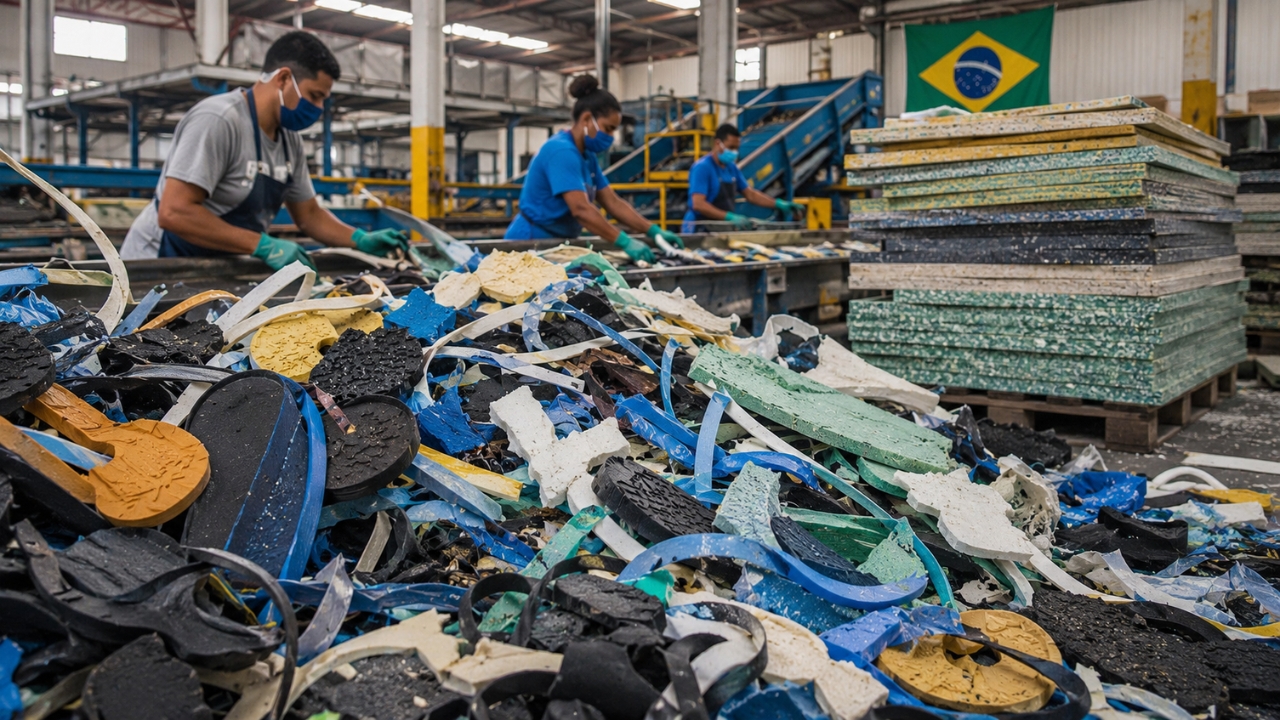
The industrial waste that even recyclers didn’t want has gained value in the interior of Bahia: two entrepreneurs invested R$ 2.8 million to transform 350 tons per year of foam, rubber, and plastic into boards that can replace wood and MDF.

-
What is a red flashlight used for, after all? See why it is so commonly used at night.

-
He has never read a line of code, but he already knows how to work: the French company UMA presented in Paris the Northstar, its first AI-powered humanoid robot designed for factories and warehouses, capable of copying tasks just by observing an employee in action.

-
A young Kenyan engineer collects plastic waste from the streets and transforms it into robots that translate physics lessons into sign language in real-time, a machine made with old bottles that teaches what was missing to deaf children left out of science.



Focus on medicines, vaccines, and national technology
The program’s proposal is to finance studies aimed at the development of medicines, vaccines, diagnostics, and innovative equipment, maintaining a focus on the reality of the Brazilian population. This direction seeks to reduce dependence on imported technologies and expand national health sovereignty, as highlighted by the Ministry of Health. The encouragement of applied research reinforces the importance of solutions adapted to the country’s epidemiological context, which enhances the strategic relevance of the program.
“`html
Integration between science, regulation, and industry
The PPClin also provides for the articulation between different areas, connecting scientific institutions, regulatory bodies, and the productive sector, which can make technological development more efficient. In this context, the Ministry of Health announced partnerships with the National Health Surveillance Agency (Anvisa), aiming to align regulatory processes and facilitate the approval of new technologies. Furthermore, the HU Brazil network is expected to act as a clinical research hub, expanding the operational capacity of the program and strengthening its execution.
The initiative also includes the launch of the Technological Challenge for the SUS, a hackathon aimed at attracting startups for the development of solutions in areas such as oncology diagnosis and treatment. This movement increases the participation of the innovative sector in the public system and reinforces the integration between science and technology applied to health.
Recent investments reinforce sector growth
According to the Ministry of Health, between 2023 and 2025, investments in clinical research in Brazil exceeded R$ 1.4 billion, nearly three times greater than the amount recorded in the previous period, which demonstrates a consistent expansion trajectory. The new round of funding announced for 2026 reinforces this strategy and expands the national capacity for health innovation, consolidating the role of clinical research as a central element in the development of the sector.
Expectation is to expand access to new therapies in the SUS
The government’s expectation is that the program will contribute to accelerating the arrival of new therapies to the Unified Health System, expanding the population’s access to more modern treatments adapted to the country’s epidemiological characteristics. This advancement can transform scientific research into practical solutions for public care and, at the same time, strengthen national technological autonomy. In light of this scenario, will the new funding model be able to consolidate innovation as a central pillar of Brazilian public health?
“`