






 Portuguese
  Spanish


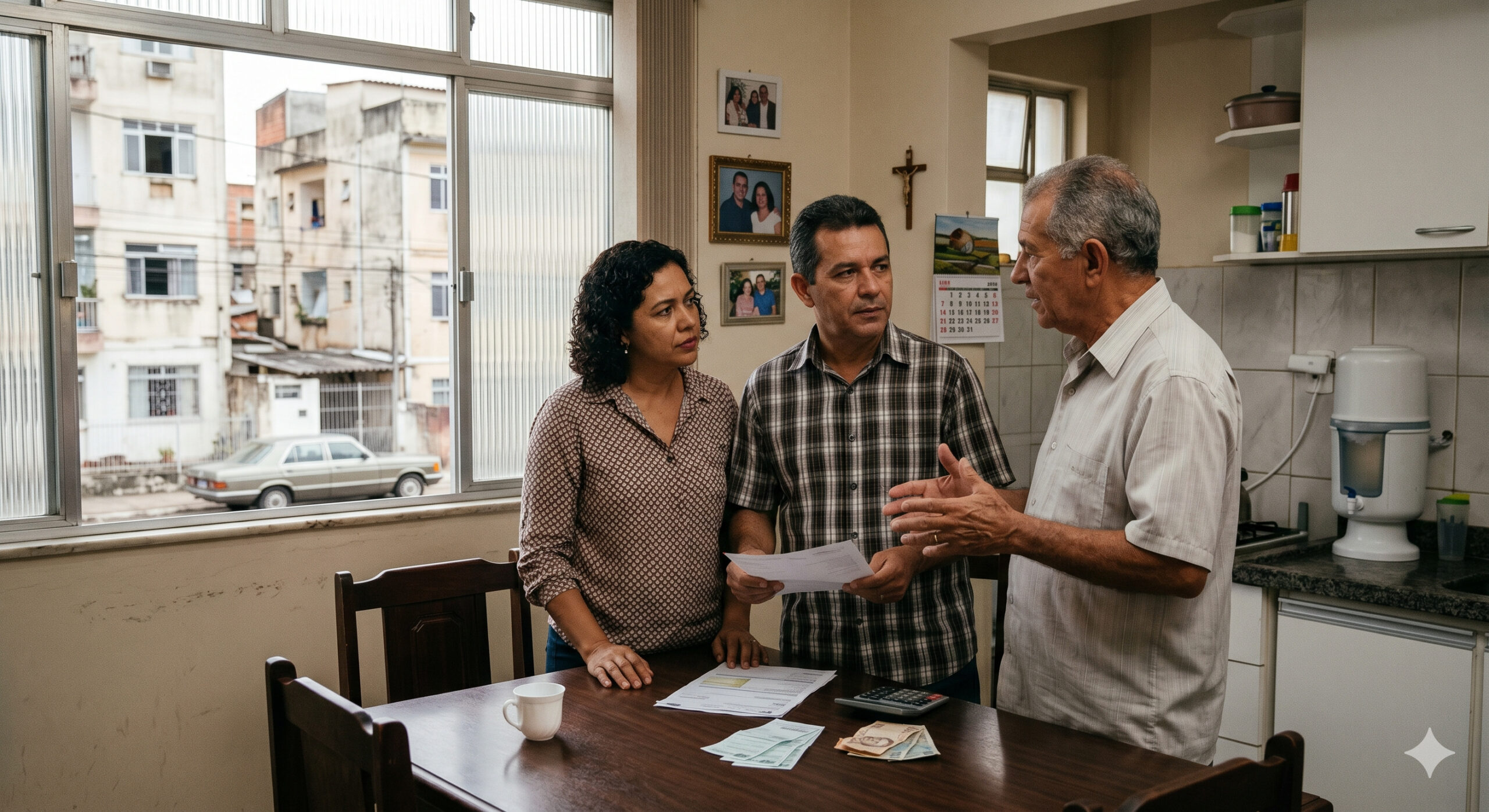

Understand why purchasing power has fallen, how inflation, expensive credit, and more expensive housing have changed the financial lives of families.
In 2025, the discussion about the cost of living gained momentum in Brazil as the official inflation rate closed the year at 4.26%, according to data released by IBGE on January 9, 2026. At the center of this perception is purchasing power: as explained by the Central Bank, inflation is the widespread increase in prices and, when it rises, money buys fewer goods and services. In practice, this helps explain why the feeling that “before you could buy more with the same salary” is not just an impression. A direct example appears in the basic food basket of São Paulo: it cost R$ 382.13, according to a survey by DIEESE released in November 2015, and reached R$ 860.53 in February 2025, in a note published on March 10, 2025.
In ten years, the value more than doubled, highlighting how money has lost purchasing power over time, especially in the most basic items of everyday consumption.
In practice, this means that the perception that “before you could buy more with the same salary” is not just an impression. Data shows that over time, the real value of money decreases when prices rise faster than wages. A direct example helps visualize this: a basic food basket that cost around R$ 380 in 2015 rose to approximately R$ 860 ten years later, more than doubling in price.
-
At 14 years old, she worked in a factory in Hong Kong, studied economics abroad, and then entered the Chinese real estate market, which helped change the landscape of Beijing.

-
While NATO secured more than $10 billion in missiles and space surveillance at a single forum, Brazil still spends 1.1% of its GDP on defense and is stalling its own anti-aircraft system.

-
Corn ethanol attracts R$ 23 billion in 21 new plants and prepares for a nearly 50% jump in Brazilian production by 2027, even with high interest rates.
-
A newly opened terminal in the middle of the Amazon has begun transporting soy and corn through Amapá, eyeing the queue of ships that is congesting the ports in the South.


This type of variation highlights one of the central points of this transformation: money has lost purchasing power over time, especially in essential items.
Accumulated inflation and loss of purchasing power over the years
Inflation does not need to be explosive to have a deep impact. Even at moderate levels, it slowly erodes purchasing power. In the last 20 years, for example, accumulated inflation in Brazil reached about 196%, which means that prices have practically tripled during this period.
This has a direct and measurable effect:
- R$ 100 today buys much less than it did decades ago
- The nominal salary may even rise, but the real salary (adjusted for inflation) often does not keep up


This phenomenon is known as the decline of real wages, that is, when income grows less than the cost of living. The practical result is simple and brutal: families end up working more or earning more nominally, but are able to consume less.
The weight of high interest rates and more expensive credit
Another decisive factor that differentiates the past from the present is the cost of credit. Decades ago, during certain periods, access to real estate and automotive financing was more favored by public policies and specific market conditions. Today, the scenario is more complex.
Brazil has historically dealt with high interest rates, and this directly impacts:
- Real estate financing
- Vehicle purchases
- Everyday credit use
When interest rates rise, the final amount paid for an asset can increase drastically. A real estate financing, for example, can cost double or more than the original value of the property over the years, depending on the interest rate.
This creates a structural barrier: it is not just the price of the asset that has increased, but also the cost of purchasing it.
The impact of property appreciation on family budgets
If there is one factor that summarizes this change in reality, it is the real estate market. In recent decades, properties have undergone consistent appreciation in various regions of Brazil and the world, driven by factors such as:
- Urban growth
- Scarcity of land in central areas
- Expansion of credit during certain periods
- Real estate investment as a store of value
The effect of this is direct: the price of properties has grown faster than the average income of the population.
This means that:
- Before: a larger proportion of people could buy property with lower income
- Today: higher income, larger down payment, and more financing time are necessary
Moreover, the cost of rent also follows this appreciation, further pressuring the budget.
Cars have stopped being affordable and have become heavy financial commitments
The same phenomenon occurred in the automotive market. If before a car was considered a relatively accessible entry-level asset, today it has come to represent a much heavier financial commitment.

This occurs due to a combination of factors:
- Increase in the price of new vehicles
- Higher tax burden
- Higher production costs (technology, safety, emissions)
- High interest rates on financing
The result is that the car has ceased to be just a consumer good and has become, for many families, a long-term financial decision with a direct impact on the monthly budget.
Salaries did not keep up with the cost of living at the same speed
One of the most critical points of this change lies in the relationship between income and prices. According to classical economic concepts, purchasing power directly depends on the relationship between salary and inflation.
When salaries do not grow at the same speed as prices, there is a loss of purchasing power. And this has been observed in various recent periods:
- Income grows slowly
- Prices rise steadily
- The cost of living increasingly pressures
This imbalance explains why many people feel that they work more but achieve less.
More complex cost of living and new expenses in the budget
Another important factor is that the consumption pattern has changed. Today, in addition to traditional expenses such as food and housing, there are new expenses that were not as relevant decades ago:
- Internet and digital services
- Streaming plans
- Smartphones and technology
- Education and constant specialization
- Private health on a larger scale
This means that the modern budget is more pressured by new types of expenses. Even though some of these costs bring quality of life, they also reduce the available margin for acquiring larger goods, such as a house and a car.
Economic inequality and the invisible effect of inflation
There is still a little perceived phenomenon, but extremely relevant: inflation does not affect everyone in the same way. The economic theory known as Cantillon Effect explains that new money enters certain sectors of the economy first, benefiting some groups before others.

Meanwhile, most of the population feels the impact only later, already with higher prices. This contributes to:
- Increased inequality
- Difficulty in social mobility
- Feeling of economic stagnation
In practice, those who depend solely on salary tend to lose more purchasing power over time.
Why the feeling of poverty is real and not just perception
The combination of all these factors creates a clear scenario:
- High accumulated inflation
- Wages growing less than prices
- More expensive credit
- More valued real estate
- New expenses in the budget
This leads to an objective conclusion: the purchasing power of the average income has decreased compared to the past. And this is not just a psychological perception. It is a documented economic phenomenon, measured by indicators such as:
- IPCA
- Real wage
- Cost of the basic basket
- Purchasing power indices

When these indicators are analyzed together, it becomes evident that money has lost strength over the decades.
What do you think weighs the most on your budget today and why?
The economic transformation of recent decades has profoundly changed the relationship between income, consumption, and quality of life. But this reality is not the same for everyone.
- For some people, the biggest impact is on housing.
- For others, it’s on credit, food, or basic services.
In light of this scenario, it’s worth reflecting: what weighs most on your budget today and what has been the biggest change you’ve noticed in your financial life over the years?






