Portuguese
  Spanish


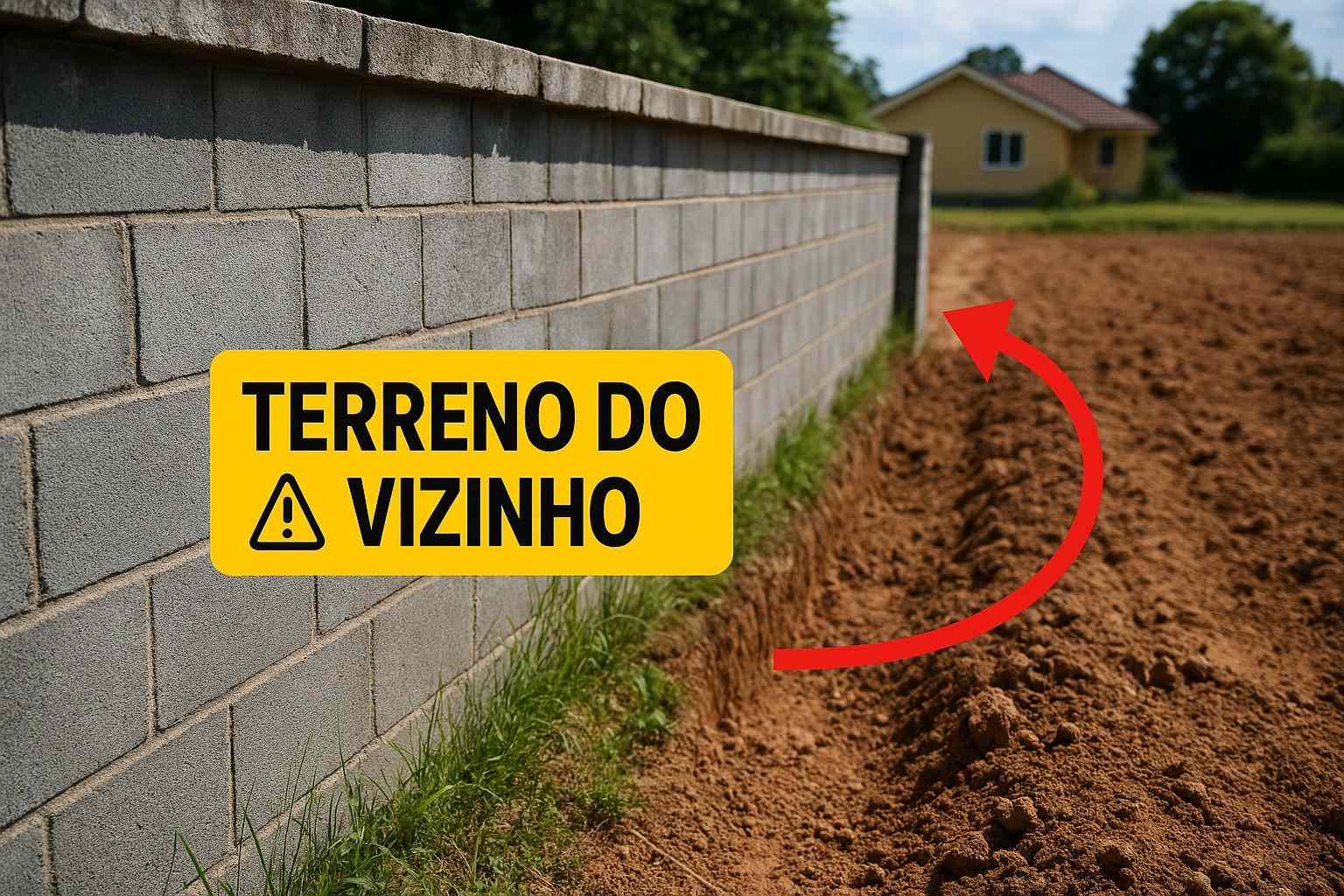

A Simple Measurement Error Can Turn Into a Huge Headache Between Neighbors. When a Wall or Construction Invades Someone Else’s Land, Tension Grows and Coexistence Can Quickly Collapse.
Boundary problems between neighbors are among the most common conflicts in urban and rural areas.
In many cases, the dispute begins with the construction of a wall, fence, or building that extends beyond the boundary line between the lots, occupying part of the neighboring land.
This situation often generates tension, distrust, and, if not resolved cautiously, can evolve into lengthy legal battles.
-
Seniors Over 60 Can Travel for Free Across Brazil: Elderly Statute Ensures Two Free Bus Seats and 50% Discount When Full for Low-Income Passengers

-
Detran RJ starts requiring a toxicological test for those obtaining their first driver’s license in the car and motorcycle category starting June 29; see who will be affected.

-
Florida takes TikTok to court and accuses the Chinese giant ByteDance of ignoring the law that bars minors under 14, while parents and authorities demand more protection for children on social networks.
-
Chamber approves constitutional amendment reducing the age of criminal responsibility from 18 to 16 years; what now?




The challenge is to protect property rights without turning daily coexistence into a battlefield.
First Step: Confirm the Invasion
Before any judicial or administrative measures, it is essential to confirm whether there has indeed been an invasion of the property.
Suspicions alone are not enough. It is necessary to know exactly where the wall was erected and whether it has crossed the limits of the land.
To clarify this doubt, the recommendation is to hire a surveying professional.
This specialist performs an accurate measurement of the boundaries of the property and the neighboring land, producing a detailed technical report.
This document will serve as evidence in any negotiations or legal proceedings, establishing the exact area of the alleged invasion.
Legal Basis of Property Right
The right to reclaim the invaded area derives from Article 1,228 of the Civil Code, which guarantees the owner the right to use, enjoy, and dispose of the property, as well as to reclaim it from anyone who unlawfully possesses it.
This right is the legal basis for any measures aimed at reclaiming the occupied area.
With the report in hand, the recommendation is to attempt to resolve the conflict amicably.
Since it involves a neighbor, future coexistence must be considered. The idea is to avoid escalating the problem into bigger misunderstandings.
Lawyer-Assisted Discussion
This discussion should preferably take place with the presence of lawyers from both parties.
The professional specialized in real estatelaw uses the correct technical terms and ensures that any agreement is properly formalized.
If there is consensus, the agreement needs to be drafted, signed, and approved, providing legal security to all involved.
Advantages of a Formal Agreement
An amicable solution reduces costs and avoids lengthy legal processes.
Moreover, if the agreement is breached in the future, the formal document will allow for immediate legal enforcement.
The lawyer’s role is essential to ensure everything is recorded in a valid and secure manner.
When Negotiation Fails
If dialogue does not yield results, it will be necessary to resort to the courts.
At this point, the specialized lawyer will advise on the appropriate actions to protect the owner’s rights.
Action for Recovery of Possession
One of the alternatives is the action for recovery of possession, provided for in Article 560 of the Code of Civil Procedure (CPC).
This process seeks to return the area that was invaded by the wall to its owner and requires proof of possession and of the invasion.
Demolition and Damages Action
Another possible measure is the demolition action, based on Article 1,299 of the Civil Code, which allows the owner to demand the demolition of a construction raised on their land without authorization.
When demolition is not feasible, it is possible to file a damages action based on Article 927 of the Civil Code, which establishes liability for damages caused to others.
This compensation may cover material damages and, in certain cases, moral damages arising from the unlawful occupation.
Evaluation of Neighbor’s Good Faith
It is also important to verify whether the neighbor acted in good faith when building the wall.
Article 1,255 of the Civil Code stipulates that anyone who builds on someone else’s land loses the construction in favor of the owner; however, if they acted in good faith, they are entitled to compensation for the value of the improvements.
If the construction is much more valuable than the invaded portion of land, courts may apply the so-called reverse accession, allowing the builder to acquire the invaded strip through compensation to the landowner.
This solution, however, is not automatic: it depends on the judicial analysis of good faith, the extent of the invasion, and the economic proportionality between the work and the land.
Documentation of All Steps
Throughout the process, it is essential to gather and keep evidence.
This includes the survey report, photos of the area, records of conversations with the neighbor, and guidance received from lawyers.
These pieces of evidence will be used to support any future legal action.
Role of the Specialized Lawyer
Dealing with land invasion requires legal knowledge and strategy.
Therefore, having the guidance of a lawyer specialized in real estate law ensures that each step is taken safely.
This professional evaluates the evidence, conducts negotiations, and, if necessary, proposes appropriate legal actions.
Resolving a conflict between neighbors is not simple and can affect coexistence for years.
Thus, mediation and conciliation should always be prioritized whenever possible, avoiding wear and unnecessary costs.
When to Turn to Justice
If an amicable solution is not possible, seeking legal support is the way to ensure your property rights.
With well-documented evidence and professional support, it is possible to resolve the situation legally and definitively.
Conflicts over land invasion require a balance between firmness and dialogue.
Identifying the invasion, gathering evidence, trying for an agreement, and, if necessary, resorting to the courts are the essential steps to resolve the problem.
With specialized guidance, it is possible to protect the property and preserve, whenever feasible, good coexistence between neighbors.