






 Portuguese
  Spanish


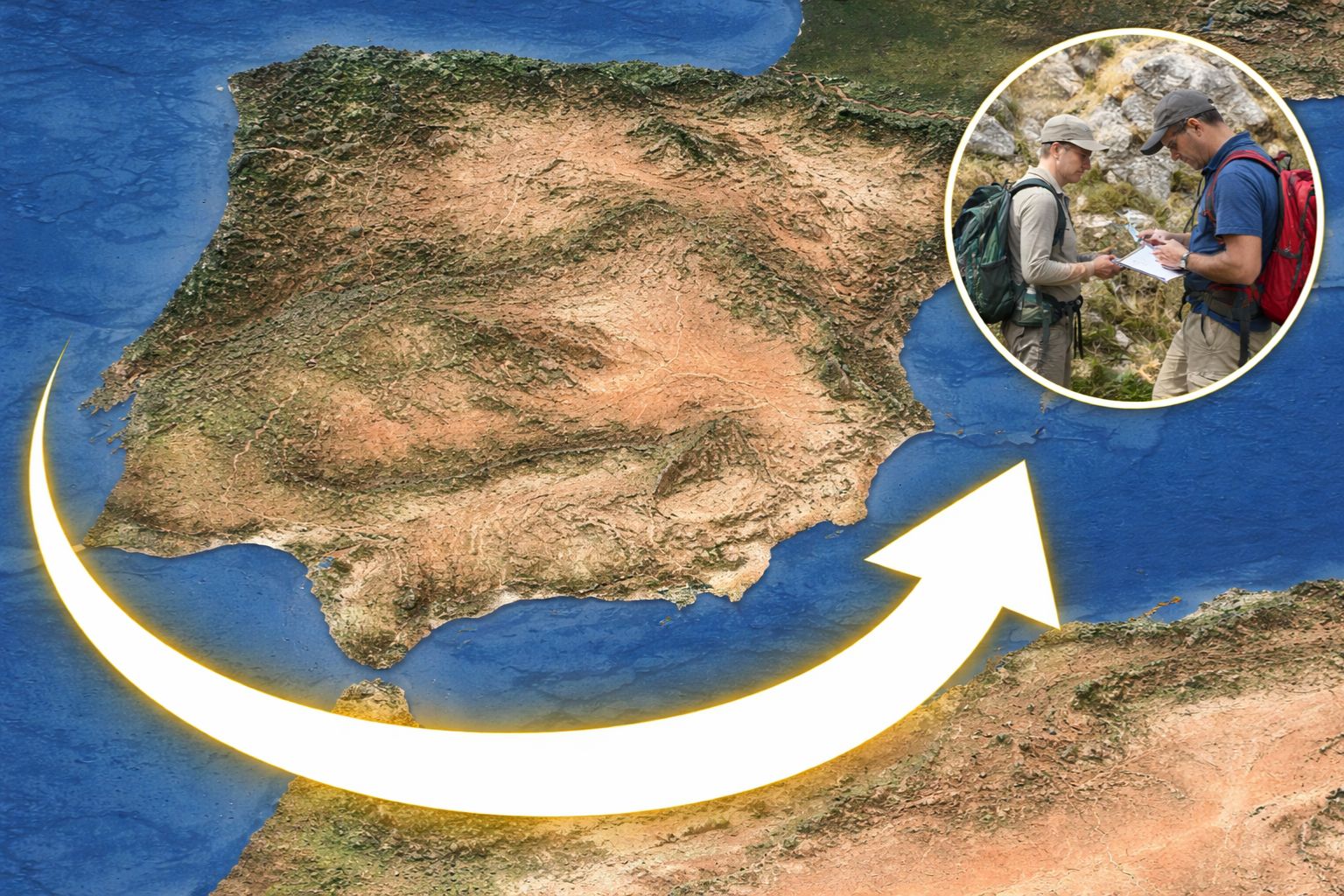


The Iberian Peninsula is rotating clockwise, pushed by the dispute between the tectonic plates of Eurasia and Africa. Studies from the University of Granada and the CSIC measure the displacement at a few millimeters per year using high-precision GPS. If the movement continues, the Strait of Gibraltar could close and transform the Mediterranean into a salty lake.
The Iberian Peninsula is moving beneath the feet of more than 58 million Spaniards and Portuguese, and most of them have no idea. Scientists have confirmed that the Iberian Peninsula is rotating clockwise, a geological phenomenon invisible to the naked eye, but strong enough to redraw the map of Europe and Africa over millions of years. Studies from the University of Granada and researchers from the CSIC confirm that the displacement occurs at a few millimeters per year, measured by high-precision GPS stations and paleomagnetic analyses of ancient rocks. The main cause is the pressure between the tectonic plates of Eurasia and Africa, which compress the region and force Portugal and Spain to undergo a slow lateral torque that accumulates energy in geological faults.
The long-term scenario is what draws the most attention. If the rotation of the Iberian Peninsula continues at the current pace, the Strait of Gibraltar is likely to close completely, transforming the Mediterranean Sea into a gigantic salty lake isolated from the Atlantic Ocean. This event would have profound climatic and biological impacts across the planet, from altering ocean currents to the extinction of marine species that depend on the flow of water between the two bodies of water. We are talking about a process that takes millions of years, but is already happening and is measurable.
Why the Iberian Peninsula is rotating clockwise
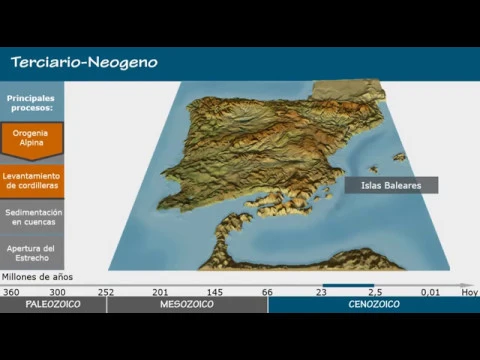

According to information from the Geovisuales Channel, the main cause of the rotation of the Iberian Peninsula is the dispute of forces between two of the largest tectonic plates on the planet. The Eurasian plate, which supports most of Europe and Asia, and the African plate, which pushes the African continent northward, compress the Iberian region like a vice, generating tensions that are not distributed evenly. The southern edge of the Iberian Peninsula is pushed northward by the African plate, while the north remains anchored to the European continent.
-
The Trap of Modern Technology: How Screen Overload and Digital Connections Can Impact Your Mental Health and Well-being

-
Wyoming Couple Grows Tropical Fruits Year-Round in -40°C Using Geothermal Greenhouse, Demonstrating Earth’s Heat Can Produce Oranges and Lemons in Snow Without Traditional Heating

-
Ship Returns from Brazilian Coast with Thirty Newly Discovered Life Forms
-
Nigerian Professor Invents Electricity-Free Refrigerator Using Clay Pots and Wet Sand, Extending Shelf Life of Vegetables to 27 Days; 7,000 Units Distributed in Energy-Deprived Villages



The result of this unequal pressure is a torque that forces the Iberian Peninsula to rotate. Studies from the University of Granada show that the Iberian block acts like a loose piece being pushed by gigantic gears, an analogy that geologists use to explain how a landmass can move in rotation without completely disconnecting from the plate it is embedded in. The movement is imperceptible in everyday human life, but accumulates over millions of years in displacements that reshape coastlines, open or close straits, and create mountain ranges.
The scientific evidence that the Iberian Peninsula is moving
The evidence accumulated over decades of monitoring leaves no room for doubt. Ancient rocks collected in the Iberian Peninsula contain magnetic orientations that prove the rotation over millions of years, a method called paleomagnetism that analyzes how magnetic minerals aligned with the Earth’s magnetic field at the time the rock formed. When these orientations are compared over time, they reveal that the position of the Iberian Peninsula has changed significantly.
Modern data confirm what the ancient rocks indicate. Precision GPS stations measure the actual displacement of the Iberian Peninsula at a few millimeters per year, and computer models created with radar satellite data confirm the trajectory of the movement. The stresses are concentrated especially in southern Spain and southwestern Portugal, regions historically sensitive to earthquakes and seismic shocks of great magnitude, such as the Lisbon earthquake of 1755, one of the most devastating in European history.
What happens if the Strait of Gibraltar closes
The most dramatic scenario of the rotation of the Iberian Peninsula is the closure of the Strait of Gibraltar, the passage just 14 kilometers wide that connects the Mediterranean Sea to the Atlantic Ocean. If the Iberian Peninsula continues to rotate and the African plate keeps pushing north, the two landmasses will eventually meet, eliminating the water passage that keeps the Mediterranean as an open and connected sea.
Without the constant influx of water from the Atlantic, the Mediterranean would begin to evaporate faster than it receives water from rivers and rain, gradually transforming into a salt lake that would shrink over thousands of years. This process is not geological fiction: it has happened before. About 5.96 million years ago, the Mediterranean nearly dried up in an event known as the Messinian Salinity Crisis, leaving salt deposits kilometers thick at the bottom of what is now a sea. The rotation of the Iberian Peninsula could repeat this episode in the distant geological future.
The seismic risk that the rotation of the Iberian Peninsula generates today
The effects of the rotation of the Iberian Peninsula are not just long-term. The continuous compression between the plates accumulates energy in the geological faults that cut through southern Spain and southwestern Portugal, and this energy is periodically released in the form of earthquakes. The region of the Strait of Gibraltar and the Gulf of Cádiz are areas of high seismic risk precisely because they are in the contact zone between the forces that make the Iberian Peninsula rotate.
For governments and engineers, this risk has practical implications. The simulations created with radar satellite data help in the planning of critical infrastructures, such as bridges, power plants, and buildings, positioning them away from the areas of greatest tectonic friction in the Iberian Peninsula. Modern geology has transformed what was once just theory into a real early warning system that allows for increasingly precise anticipation of the behavior of the Earth’s crust. For those living in southern Spain or Portugal, knowing that the Iberian Peninsula is rotating is not academic curiosity; it is safety information.
What the rotation of the Iberian Peninsula teaches us about the planet we inhabit
The story of the Iberian Peninsula in motion is, at its core, the story of a planet that never stops. The Earth’s surface is in constant rearrangement, and processes that seem static on a human scale reveal colossal transformations on a geological scale. Continents open, oceans close, mountains rise, and straits disappear in cycles that last millions of years, but that begin with displacements of millimeters that modern science can measure.
For the Iberian Peninsula, the geological future is already written in the forces that today compress and rotate it. The Strait of Gibraltar may close, the Mediterranean may become a lake, and the map of Europe may become unrecognizable, but all of this will happen on timescales that exceed any human planning. What science gives us today is the ability to understand this process, monitor it, and use this knowledge to protect the people living on a ground that, millimeter by millimeter, never stops moving.
The Iberian Peninsula is rotating and may close the Strait of Gibraltar, transforming the Mediterranean into a lake. Did you know that the ground beneath Europe is moving? Does this perspective change how you see the planet? Share your thoughts in the comments.





If the peninsula is rotating clockwise then shouldn’t the arrow be pointing the opposite direction?