





 Portuguese
  English
  Spanish
  4 min of reading
  1 comment


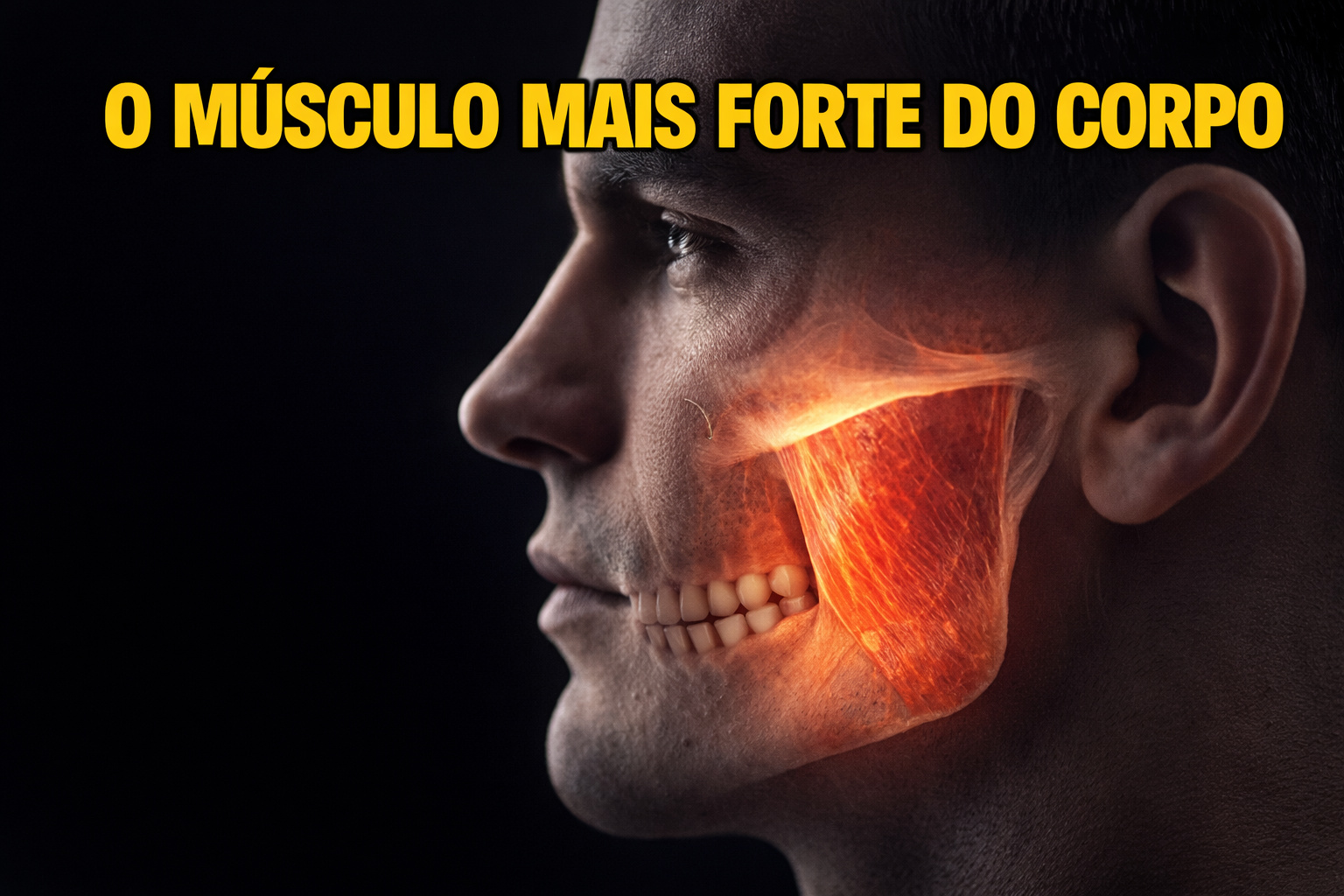


The Masseter Is the Strongest Muscle in the Human Body Relative to Its Size and Can Generate Over 90 Kg of Bite Force. Science Explains How This Is Possible.
The human body hides impressive forces that go unnoticed in daily life. One of the most surprising examples is not found in the arms, legs, or torso, but in the face. The masseter, a muscle located on the side of the jaw, is considered by physiologists and biomechanists to be the strongest muscle in the human body when analyzing the force generated relative to its size. In laboratory tests, it can produce forces equivalent to over 90 kilograms-force, something comparable to the weight of an entire adult concentrated in a few square centimeters.
This data, often cited in studies of biomechanics and dentistry, helps explain why human chewing is so efficient and why the jaw exerts pressures capable of crushing extremely hard foods without difficulty.
Where the Masseter Is Located and Why It Is So Special
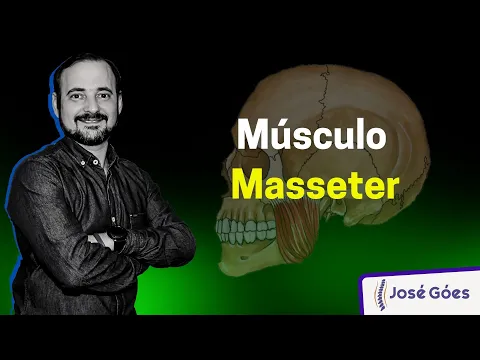
The masseter is a short, thick, and extremely dense muscle that connects the zygomatic arch (facial bone) to the jaw. Its main function is to elevate the jaw during chewing, closing the mouth with force. Unlike long muscles, such as the biceps or quadriceps, the masseter is designed for maximum strength in short movements, making it biomechanically efficient.
-
A homeless man became the only “resident” of London’s most expensive mansion, a £210 million house with 45 rooms that remains empty while he lives at the entrance.

-
What happens when coffee grounds end up in the toilet and why so many people are using this residue against bad odors

-
Mirror in the elevator seems like mere vanity, but it exists for 5 reasons that almost no one notices: a common detail in buildings changes the experience inside the cabin and hides a logic related to fear, safety, accessibility, and psychological comfort without you noticing.
-
Were you deceived? The aluminum foil ball trick in the washing machine promises lint-free clothes, but science reveals when it can actually work.



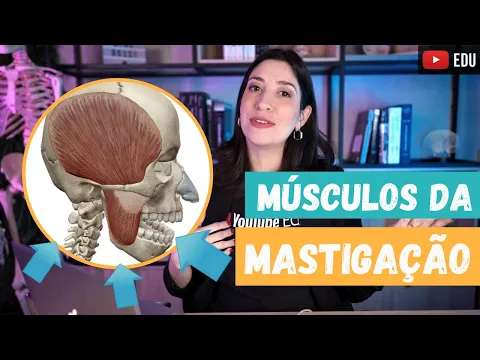

The internal architecture of the masseter is composed of short, thick muscle fibers organized to generate great tension in a small space. This configuration allows it to produce extremely high pressure at the point of contact of the teeth, even without significant displacement.
How Much Force the Masseter Really Produces According to Science
Studies published in scientific journals such as the Journal of Biomechanics, Journal of Oral Rehabilitation, and articles indexed in PubMed show that the maximum human bite force varies according to age, sex, dentition, and muscle condition, but can reach impressive values.
In healthy adults, direct measurements indicate average forces between 500 and 700 newtons, which corresponds approximately to 50 to 70 kg-force. In situations of maximum contraction, especially in controlled laboratory environments, there are records above 800 and even 900 newtons — equivalent to more than 90 kg-force concentrated in the bite.
These numbers explain why human teeth can fracture rigid materials and why the jaw requires neuromuscular protection mechanisms to avoid damage to the joints and the teeth themselves.
Why It Is Considered the Strongest Muscle in the Body
When talking about the “strongest muscle,” it is necessary to define the criterion. In absolute strength, large muscles like the gluteus maximus produce more total force. However, when the analysis focuses on the force generated per cross-sectional area and mechanical efficiency, the masseter leads by a wide margin.
No other muscle in the human body concentrates so much force in such a small area. The pressure exerted by the teeth during a bite is proportionally greater than the pressure applied by hands, arms, or legs during everyday activities.
That is why textbooks on functional anatomy and muscle physiology frequently cite the masseter as the strongest muscle in the human body relative to its size and function.
Comparison with Other Human Muscles
While the biceps brachii is designed for wide movements and moderate strength, and the quadriceps for supporting loads distributed throughout the body, the masseter acts as a true biological press. It transforms short contractions into extremely high localized pressure.
In practical terms, the human bite can generate forces comparable to those used by simple manual tools, such as pliers, when considering the dimensions of the contact point.
Why We Don’t Use All This Force All the Time
The human body has extremely sophisticated protection mechanisms. Neuromuscular reflexes prevent the masseter from operating constantly at its maximum capacity, avoiding dental fractures, temporomandibular joint injuries, and damage to the facial bones.
In experiments where these reflexes are partially reduced, such as under local anesthesia, researchers observe significant increases in bite force, confirming that the muscle’s potential is even greater than what is normally utilized in daily life.
What This Muscle Reveals About Human Evolution
The strength of the masseter is a direct reflection of human evolutionary history. Our ancestors relied on hard, fibrous, and minimally processed foods. Strong jaws and powerful chewing muscles were essential for survival.
With the advancement of cooking and food processing, the demand decreased, but the muscle structure remained. The result is a small, discreet, and incredibly powerful muscle that continues to be one of the greatest demonstrations of biomechanical efficiency in the human body.





O Mike Tyson já tinha comprovado isso a uns bons anos atrás…kkkkkkkkk