Portuguese
  Spanish


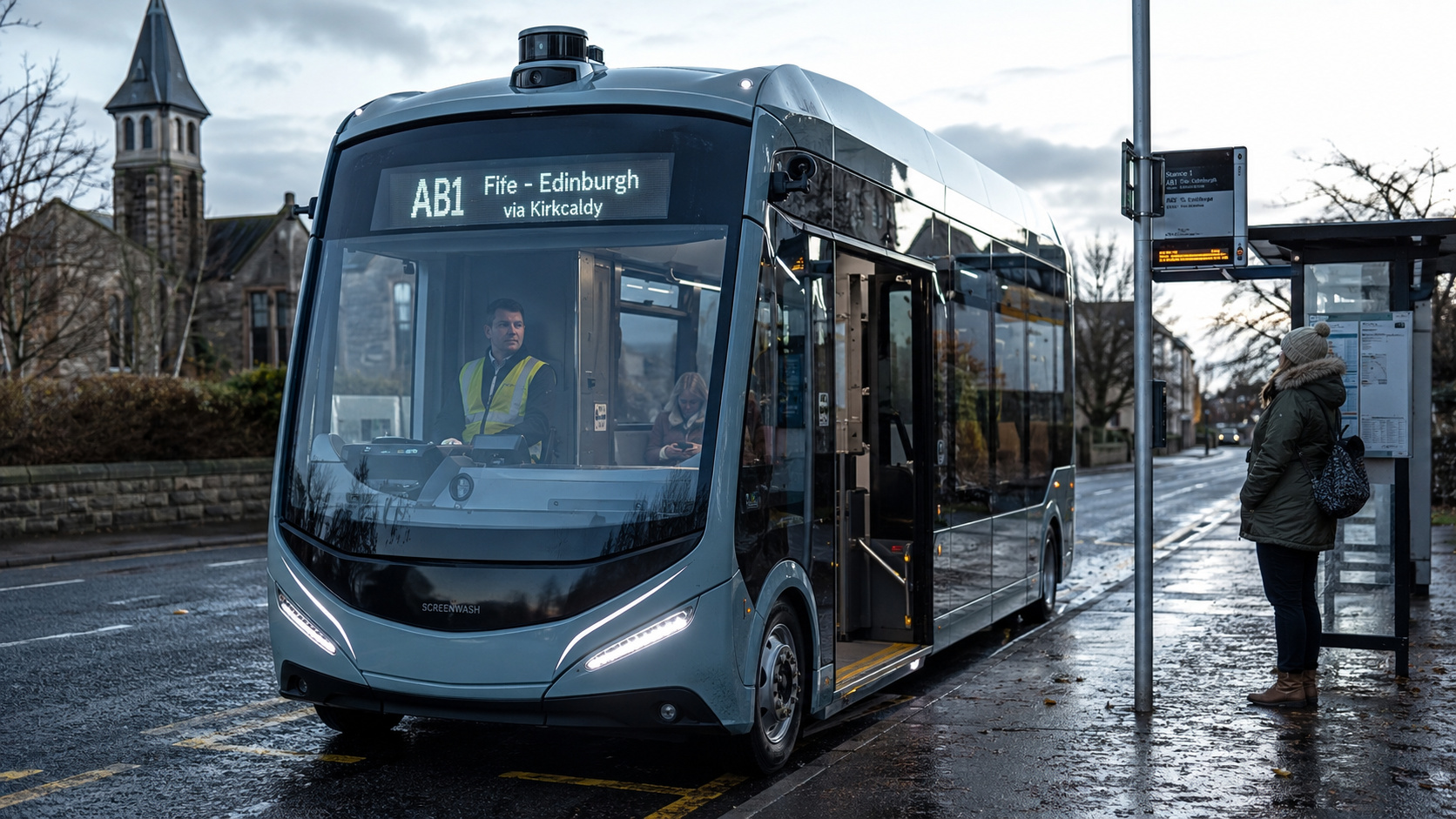


The AB1 route between Fife and Edinburgh became a warning for autonomous transport, as the driverless bus arrived as a promise of the future, kept a human crew on board, and was eventually shut down due to low passenger demand.
The driverless bus promised as the future of transport in the UK was canceled due to low demand. The AB1 service, created to connect Fife and Edinburgh, came to an end in February 2025.
The investigation was published by Forbes, an international magazine of business, technology, and innovation. The case is noteworthy because the technology was presented as an important step for autonomous mobility, but it failed to attract enough passengers.
The impact goes beyond a closed route. The end of the pioneering autonomous bus service casts doubt on the commercial viability of this type of transport when it moves from the innovation showcase and needs to convince ordinary people to board.
-
Orphaned Youth Turns Dismissed Idea into Global Prestige with Innovative Wristwatch

-
English Skills Boost Career Opportunities in the Oil and Gas Industry

-
Brazil Secures Second Place at WorldSkills 2024 in Lyon, with 64 Young Professionals and 8 Medals, Including Gold from a Rio de Janeiro Hairdresser

-
3,000 Military Personnel from 10 Countries, Including US and Chinese Marines, Train Together in Brazil’s Savanna: Operation Formosa Becomes Largest Naval Ground Exercise Before First Cancellation Since 1988



UK driverless bus canceled due to low demand, leaving an uncomfortable question about the future of transport
The AB1 was born with the image of a novelty capable of showing what public transport would be like in the coming years. The route between Fife and Edinburgh began operation as the first registered autonomous bus route in the UK.
The proposal looked strong on paper. A bus with autonomous technology, operating on a real route, could show that the mobility of the future was already close to the routine of cities.
But the public’s response was cold. Low passenger demand led to the end of the service in February 2025, turning the experience into a warning for companies and governments investing in autonomous transport.


The promise of autonomous bus lost momentum because the novelty did not become a habit for passengers
An innovation in transport only sustains itself when it enters people’s lives in a simple way. In the case of the driverless bus, initial curiosity was not enough to keep the route in operation.
The problem was not just technological. The service needed to prove that it was useful, practical, and desirable for those who rely on public transport daily.
When few passengers use a route, the project loses strength as a commercial solution. Therefore, the termination of AB1 shows that advanced technology does not guarantee automatic adoption.
The most curious detail is that the driverless bus still had a human crew on board
The most striking point of the case lies in the contradiction between the promise and the real experience. The bus was presented as driverless, but still relied on staff on board during operation.
This detail helps explain why the project might not have had such an impact on passengers. For some of the public, the journey might have seemed less revolutionary than the announcement suggested.
The human presence also shows that the transition to autonomous vehicles still requires caution. Even with automated driving technology, real-route operation remained linked to supervision and support.
Forbes detailed the case that became a symbol of an innovation almost no one wanted to use
Forbes, an international magazine of business, technology, and innovation, detailed the termination of the service and the contrast between the promise of the future and low passenger adoption. The research and funding phase ended, and the service ceased operation.
The case breaks a common idea about technology. Not every innovation fails because people are afraid of the new. Sometimes, the public simply doesn’t see enough reason to change their habits.
This is the strongest point of the story. The autonomous bus arrived as a milestone of modern mobility, but it did not become a natural choice for passengers on the route.
Stagecoach ended the service and the project began to question the commercial viability of autonomous buses
Stagecoach, a bus transport operating company, ended the service after the research and funding phase concluded. The closure of AB1 marked the end of an experience seen as pioneering in the United Kingdom.
The closure does not mean that autonomous buses are no longer being studied. However, it shows that testing a technology and making it viable for the public are different challenges.
To operate on real routes, autonomous transport needs to be more than a novelty. It needs to deliver trust, utility, and a clear reason for people to choose to board.
When the future arrives at the bus stop and almost no one gets on, the technology loses some of its shine
The end of the UK’s driverless bus became a strong image of current mobility. The technology was there, circulating on a real route, but it didn’t attract enough passengers to continue.
The main consequence is the questioning of the commercial viability of autonomous buses. The case shows that the future of transport depends not only on advanced machines but also on public acceptance.
The AB1 ended as a simple reminder. Innovation needs to solve a problem felt by people, not just look modern in advertisements and presentations.
Do you think the failure of this driverless bus shows public distrust of the technology, or does it reveal something even deeper: that many innovations are launched before proving real utility for those who need to use them every day? Share your opinion in the comments.