






 Portuguese
  Spanish


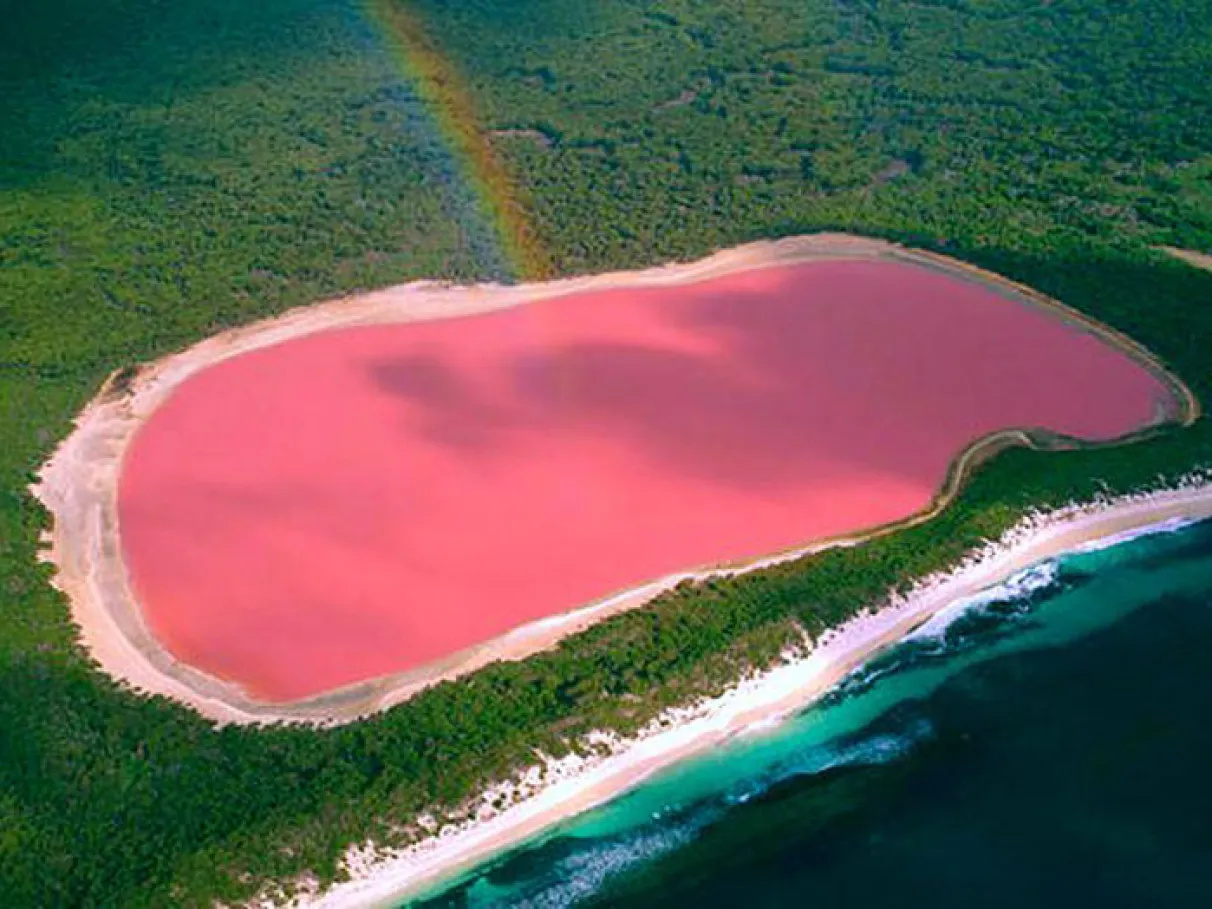

Learn More About the Pink Lakes of Australia and Why This Phenomenon Happens, But Also, Why Some Are Losing Their Color.
The Australia, land of exotic landscapes and unique natural phenomena, is home to one of the most spectacular curiosities about the planet: its Pink Lakes.
For decades, these surreal-hued bodies of water have attracted tourists and scientists, raising the universal question: why do they exist?
However, a growing concern haunts these pastel paradises: many of them are losing their characteristic color and, in some cases, disappearing. Understand the mysteries behind these natural wonders and the warning that their fading brings us.
-
Heatwave in Europe Causes Drownings: France Reports 40 Victims as Temperatures Soar to 40°C, Experts Issue Surprising Warning

-
French Solar Mirror Array Concentrates Sunlight 16,000 Times, Reaching Temperatures Over 3,000°C

-
Brazil to Use Reinforced Concrete in $200.4 Million Mega Roundabout Project with Four Overpasses and Expanded Bridge, Set to Last 630 Days
-
China Builds Underwater Wall After Discovering Technology That Could Shift Military Balance in the Pacific, Study Reveals Why the Asian Power Reacted Now


Pink Lakes: Why Do They Exist? The Science Behind the Color
The magic of the Pink Lakes in Australia is not the work of fairy tales, but rather a complex interaction between microorganisms, salinity, and sunlight.
The main reason why they exist with this vibrant coloration is the presence of a halophilic microalga, that is, one that loves salt, called Dunaliella salina.
This microalga, which thrives in extremely saline environments, produces carotenoid pigments – the same ones that give color to carrots and flamingos – as a form of protection against intense solar radiation.
The higher the concentration of salt and the intensity of light, the more carotenoids the alga produces, intensifying the pink or red hue of the water.
In addition to Dunaliella salina, other microorganisms, such as halophilic archaea (tiny living beings that also live in extreme salt environments), also contribute to the color palette.
These archaea, along with bacteria and the high concentration of salt, create a unique ecosystem that results in the impressive coloration of the pink lakes. Therefore, the color is not just a visual effect; it is an indication of the rich and adapted microscopic life present in these extreme environments.
The Curiosities About the Pink Lakes of Australia: They Are Not All the Same
Although Australia is famous for its pink lakes, it is important to note that each one has its particularities, which adds more curiosities about them.
Some are a soft pink, almost pastel, while others display shades of bubblegum pink, magenta, or even deep red.
The intensity of the color can vary depending on the time of year, the amount of rain, and the concentration of salt.
One of the most famous is Lake Hillier, on Middle Island, which maintains its vibrant pink color year-round, regardless of the season. Other lakes, like Hutt Lagoon or Pink Lake (Port Gregory), may have more noticeable variations, with the intensity of the color depending on climate conditions and the time of year.
This variation makes the experience of visiting each of these lakes a surprise in itself.
Another curiosity about them is that, despite their intriguing color, many of these lakes are quite safe for adapted wildlife and even for human contact, although the high salinity makes floating quite easy, similar to the Dead Sea.
The richness of microscopic life makes them fascinating ecosystems for scientific studies.
The Disappearance of the Pink Lakes: A Climatic Warning
The sad reality is that many of the famous Pink Lakes in Australia are losing their characteristic color or drying up completely.
This phenomenon raises serious concerns and serves as a clear warning about climate change and the impact of human activities.
The main reasons for this disappearance or fading include:
- Climate Change: Increases in global temperature and changes in rainfall and evaporation patterns directly affect the water balance and salinity of the lakes. Longer and more intense droughts cause the water to evaporate, reducing volume and drastically altering salt concentration, impacting the survival of microalgae.
- Water Diversion and Human Activities: In some regions, water diversion for agriculture or other human activities can reduce the flow of water to lakes, compromising their delicate ecosystem.
- Alteration of Salt Balance: A decrease in salinity or the introduction of other elements can disadvantage the growth of Dunaliella salina and other halophiles, resulting in the loss of coloration.
The loss of the Pink Lakes is more than just the loss of a tourist attraction; it is a sign that sensitive ecosystems are under immense pressure.
Understanding why they exist and now, why they are disappearing, forces us to reflect on the importance of conservation and global climate action to protect the natural wonders of our planet.


