





 Portuguese
  English
  Spanish
  4 min of reading
  10 comments


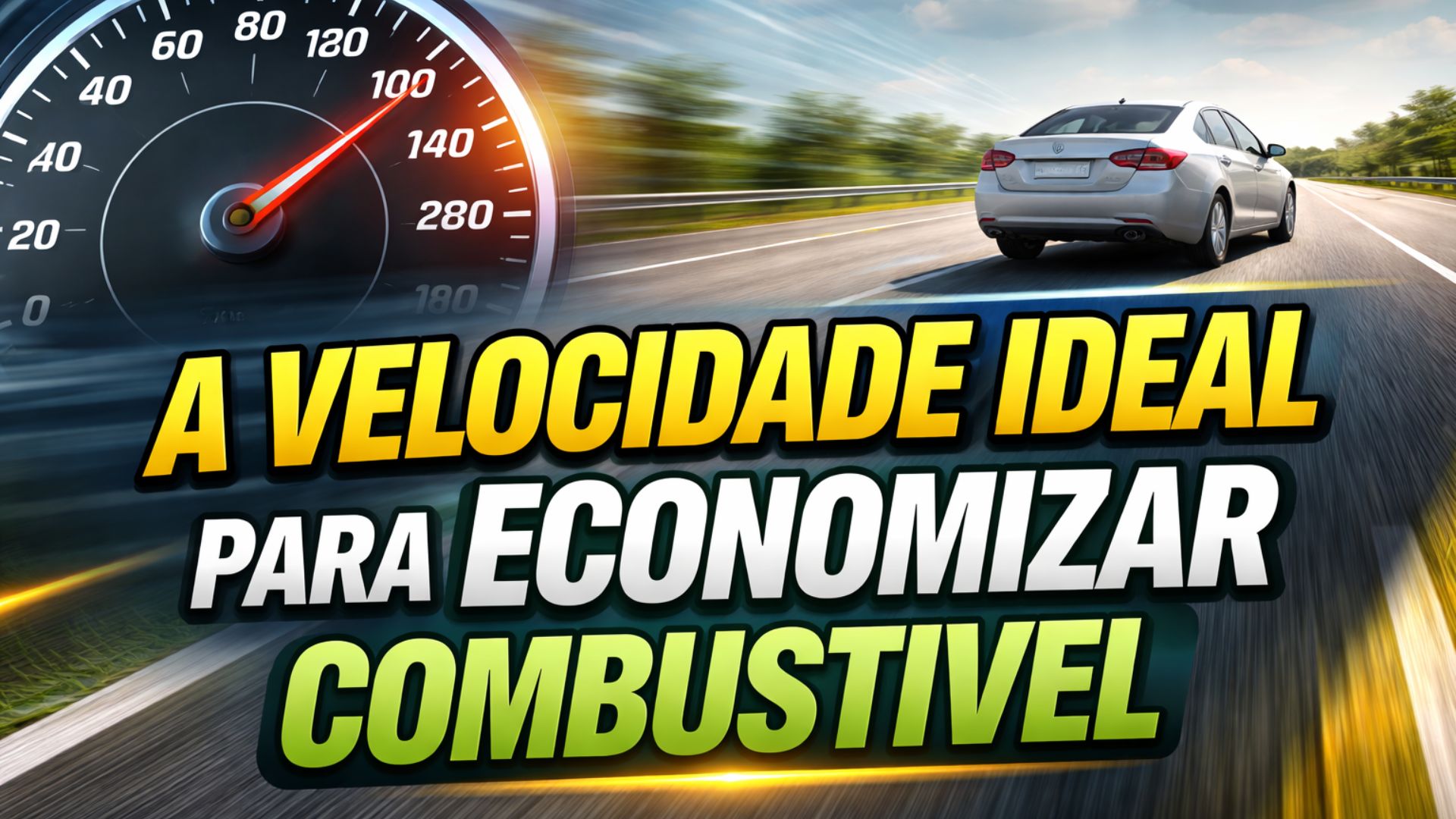


Cruise Speed, Engine Speed, and Aerodynamics Directly Influence Consumption on Highways, According to Technical Analyses and Vehicle Efficiency Tests That Indicate More Economical Ranges and Show Why Extremes of Speed Tend to Increase Spending.
The speed associated with lower fuel consumption on highways does not usually coincide with either the lower urban limits or higher cruising levels.
According to technical studies and vehicle efficiency analyses, savings tend to appear when the vehicle maintains a constant pace, in high gear and with the engine operating at moderate revolutions, without the need for additional effort to overcome air resistance.
The perception that “arriving faster” reduces spending by decreasing the engine’s operating time is not supported by practical measurements.
-
Fish disappear and microorganisms take over: at 301 meters deep in the sea, the Dragon Hole reveals a world without oxygen in the South China Sea.

-
More than 3,200 nanosatellites have already been launched into space, almost 3,000 of which are CubeSats, and the new space race has become smaller, cheaper, and much more crowded around the Earth.

-
Agro 5.0 invades the interior of SP with solar-powered robots, an app that monitors 11,000 cattle, and a curious promise to cut waste by up to 90%.
-
100% pure hydrogen engine enters Spain’s power grid for the first time in the world and demonstrates how excess solar and wind energy can be converted into clean electricity during high demand periods.


Experts in energy efficiency and automotive engineering point out that consumption is more related to the effort demanded from the engine than the duration of the trip.
This effort varies according to factors such as aerodynamics, gear ratios, weight carried, type of route, and consistency of driving.
Speed Range With Best Fuel Efficiency
In simulations carried out in a controlled environment, consumption tests usually indicate better performance at speeds close to 40 to 50 miles per hour, equivalent to about 65 to 80 km/h.
According to technical surveys, above this range, consumption per kilometer tends to gradually increase.
In the Brazilian context, however, real-world analyses show that many passenger vehicles achieve a good balance of consumption in a slightly wider range, between 80 and 90 km/h, especially on flat highways with free flow.
This behavior is attributed to the fact that the car already operates in the longest gear, with reduced revs and without frequent acceleration variations.
However, this is not a single speed valid for all models.
Energy performance depends on the vehicle’s characteristics and the conditions of the route.
Automotive technicians emphasize that gradual increases in speed tend to result in a loss of efficiency, even when the time gain seems small.
Aerodynamics and Increased Consumption at High Speeds

One of the central factors for increased spending at higher speeds is air resistance.
Vehicle dynamics studies indicate that the force required to overcome drag increases disproportionately as the car accelerates, demanding more power from the engine to maintain the same pace.
This effect becomes more evident when there are changes in the aerodynamic design of the vehicle.
Roof racks, external mounts, and open windows modify airflow and increase resistance, which can raise consumption even without significant changes in the route or the weight carried.
At intermediate and constant speeds, on the other hand, the engine tends to operate with lower demand.
According to specialists, savings appear when the vehicle can maintain momentum with less need for additional acceleration.
Engine Speed and Gear Influence Spending
The number displayed on the speedometer is not the only relevant parameter for understanding consumption.
The engine’s rotation and the engaged gear directly influence the amount of fuel needed to sustain a certain speed.
In most passenger cars, stable cruising on the highway keeps the engine at considered moderate revolutions, often between 2,000 and 3,000 rpm, as long as the transmission is in the appropriate ratio for the terrain.
When the revs remain above what is necessary, consumption tends to increase, even without a change in speed.

This difference helps explain why different vehicles, driving side by side at 90 km/h, can exhibit different average consumption rates.
Transmissions with shorter ratios or inappropriate use of gears require greater engine effort to deliver the same performance.
Low Speed Does Not Always Mean Economy
Excessively reducing speed also does not guarantee, in itself, lower fuel consumption.
In routes with irregular traffic, constant pace variations, frequent accelerations, and successive gear changes can raise consumption, even when the car is traveling at modest speeds.
In the urban environment, this effect is intensified.
Frequent stops, repeated accelerations, and long periods in low gears increase the energy demand to move the vehicle.
Experts in efficient driving highlight that regaining speed consumes more fuel than maintaining it continuously.
When conditions allow, a gradual acceleration and anticipation of braking contribute to keeping the car moving with lower energy expenditure, capitalizing on the vehicle’s inertia.
Maintenance and Habits That Affect Consumption
Besides speed, mechanical conditions and usage habits directly influence consumption.
Out-of-specification tires increase rolling resistance, while filters and lubricants that have not been changed can compromise engine operation.
The weight carried also factors into this equation.
According to technical guidelines from manufacturers, carrying unnecessary volumes or improperly distributing the load requires more effort in accelerations and uphill climbs, directly affecting fuel consumption.
What Studies and Consumption Measurements Indicate
In general, technical measurements indicate better efficiency at speeds between 65 and 80 km/h, while practical experience shows that many vehicles maintain good performance also in the range of 80 to 90 km/h, as long as the route allows for high gear and constant pace.
Still, specialists warn that there is no universal “magic number.”
The most consistent guidance is to observe the behavior of your own car, avoid unnecessary accelerations, maintain stable speed, and reduce prolonged periods at high speeds, when the effort to overcome aerodynamic drag becomes greater.


A média sempre sera mais altas,pq na sua grande maioria faz uso urbano. E fato relação peso potência e se o carro responde melhor o torque em baixa ou em alta rotação.
Carros menos potente andam com rpm maís alto, carros com motor mais potente andam com rpm maís baixo em velocidade de cruzeiro…
Isso é fato…
Motor aspirado com câmbio manual ou CVT tem apresentado a melhor eficiência energética, mesmo com ar condicionado ligado chega a mais de 17 km/L em uma boa estrada.