Portuguese
  Spanish


![]maquiagem-nova-tecnologia-com-concreto-e-selante-a-prova-d-agua-pode-acabar-com-alagamentos-buracos-e-bueiros-quebrados-nas-ruas-do-brasil](https://en.clickpetroleoegas.com.br/wp-content/uploads/2025/12/nao-e-maquiagem-nova-tecnologia-com-concreto-e-selante-a-prova-d-agua-pode-acabar-com-alagamentos-buracos-e-bueiros-quebrados-nas-ruas-do-brasil.jpg)


A Workshop Truck Created in Germany Speeds Up the Repair of Manholes and Inspection Wells with Hydraulic Systems, Sealants, and Level Measurement, Reducing Street Closures and Improving Traffic.
A “clack” on the asphalt that costs a lot and everyone has heard! You drive by, the wheel takes a jolt, the steering wheel shakes, and there it is: another manhole out of level marking the street as if it were a makeshift speed bump. It may seem like a detail, but it’s the kind of problem that creates a domino effect: wear on the asphalt, risk for motorcycles and bicycles, noise, infiltration, and when it rains heavily, that classic scenario of water pooling where it shouldn’t.
This is where a German technology comes in that has been drawing attention because it replaces “long construction” with “quick intervention,” resembling an urban pit stop.
The Idea is Simple: A Mobile Workshop to Fix What’s Beneath the Street
What is being described as a “German invention” is, in practice, a straightforward concept: a truck (or light truck) equipped to provide quick and efficient repairs on underground structures, functioning as a complete mobile workshop.
-
She heard for decades that space was not a place for women, became a pioneer in aviation, was part of the Mercury 13, and at 82, finally traveled with Jeff Bezos before dying at 87.

-
Scientists investigate microplastics in the airways of patients with sleep apnea and reveal a new focus for research on environmental pollution, human exposure, and possible impacts on breathing quality.
-
For the first time, scientists have seen the ocean floor open up in real-time—plates moving apart by two meters in a few days and 160 million cubic meters of lava emerging on the seafloor.
-
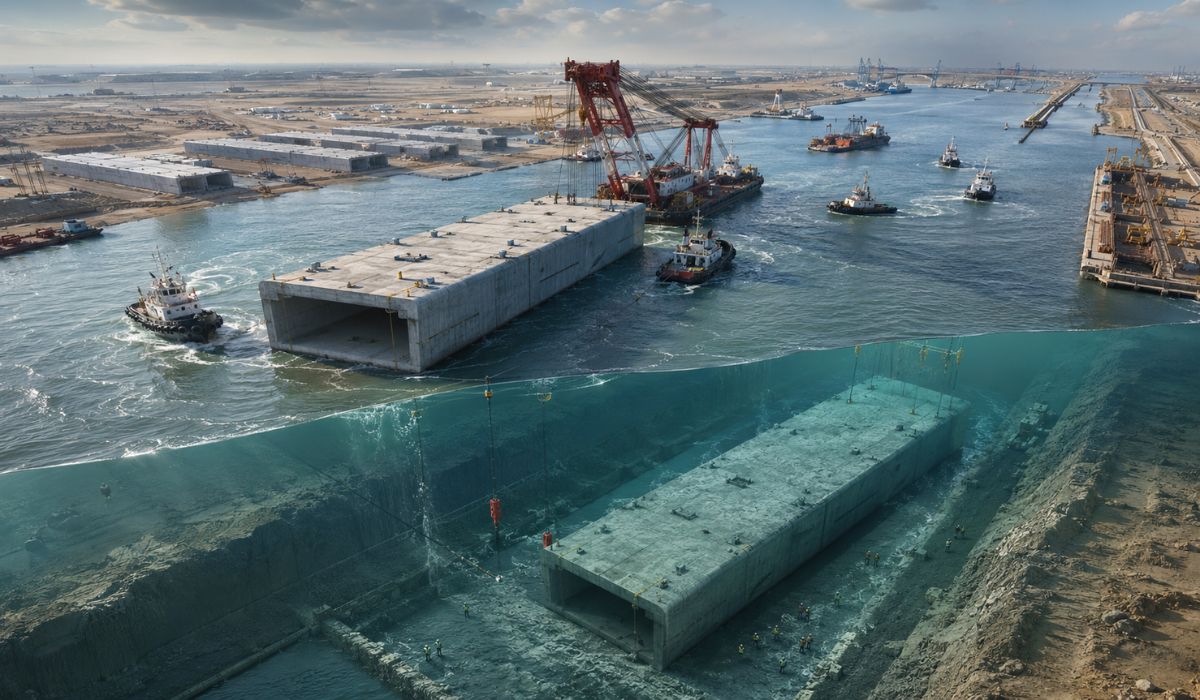
Iraq floats and sinks under an arm of the Euphrates 10 giant concrete boxes of 46,000 tons and 125 meters each to assemble a 2.4 km submerged tunnel and open a new land route between Asia and Europe.




The point is not just to transport tools; it is to bring a complete working method, with a trained team, hydraulic equipment, cleaning, sealing, and level checking all in one package.
With everything on board, the promise is to drastically cut down the interruption time in traffic. Instead of blocking the road for days, the intervention can be completed in just a few hours, as the team doesn’t have to wait for parts, support trucks, or improvise adjustments on-site.
This changes the game significantly in large cities, where “a day of closure” becomes a problem for the entire neighborhood.
How It Works Behind the “Repair in Hours”
The system relies on the combination of manual tools, hydraulic devices, and the vehicle’s structure itself as support to lift, align, and adjust heavy components. This is precisely the kind of thing that, in the traditional method, usually requires more people, more time, and more risk.
In practice, when the issue is with the manhole assembly, the work may involve replacing damaged concrete rings, sealing cracks with high-durability materials, and accurately leveling the road surface to eliminate steps and depressions.
The intervention is not just “cosmetic”: it addresses what causes the unevenness and what allows water ingress and surrounding movement.
This gain in agility is closely related to hydraulic equipment specifically designed to lift and adjust manhole covers and rings.
An example from Germany is the shaft frame lifter that uses a central hydraulic unit and lockable cylinders for precise adjustment, reducing effort and allowing for fine control when leveling.
The Detail That Makes a Difference: Trained Team and Safe Routine in Confined Spaces
It’s pointless to have machinery if the operation is slow or unsafe. Therefore, the description emphasizes a crucial technical point: the team operating the truck receives specific training to work in confined spaces and with heavy structures, ensuring the service is performed safely and quickly.
In Brazil, this directly correlates with NR-33, from the Ministry of Labor and Employment, which addresses safety in confined spaces.
The standard itself requires training for all workers involved and prohibits individual/isolated work in such environments, reinforcing the idea of a trained team and standardized procedures.
This requirement is not “bureaucracy”: manholes and galleries may have hazardous atmospheres, risk of engulfment, rescue difficulties, and other factors that require planning and appropriate equipment.
Tools and Steps: Lift, Clean, Seal, and Level Without Guesswork
The technology package includes hydraulic tools to lift covers and rings made of concrete, cleaning equipment to remove accumulated sediments, waterproof sealants to prevent infiltration, and measurement systems to ensure the leveling of the street is correct.
This combination makes the service predictable: you lift what you need, remove what is preventing the correct fit, seal to prevent water from “working” inside, and check the level with a tool, not by eye.
And when complete demolition can be avoided, the gains are substantial: less debris, less material, less asphalt cutting, and less curing time.
What Germany Has Already Seen in Practice with This Type of Solution
The impact described for German cities is significant: a 50% reduction in construction time, with a direct effect on preventing flooding, potholes, and damage to the asphalt, enhancing safety for drivers and pedestrians.
In addition to this report, there is technical documentation and European cases that show the same logic of mechanization and standardization.
MC-Bauchemie, for example, presents the concept of the MRT Truck (a vehicle dedicated to the automated rehabilitation of manholes), emphasizing that the system reduces the need for entry into manholes and automates critical steps on vertical walls, aiming for time savings, cost reduction, and repeatable quality.
According to materials from the company, it claims “more than twice as fast” compared to manual approaches in certain scenarios.
This is important because, when the service becomes “industrialized” (in a good sense), the result depends less on improvisation and more on the procedure.
Why This Relates So Much to Broken Manholes in the Streets of Brazil
The Brazilian pain is well-known: broken manholes in the streets of Brazil are not just a broken cover. Often, the problem involves depressions, damaged structure, infiltration, and degradation of the surroundings.
And when this repeats in busy avenues, the social cost is brutal, as traffic gets stalled and maintenance becomes a saga.
Here, it’s worth noting that “manhole” in everyday use also refers to the access point to underground networks.
In municipal service letters, the inspection well is described as an installation that provides access to underground networks (sewage or drainage), and common situations of requests include broken covers, depressions, or missing covers.
In the field of road infrastructure, Brazil has also been updating technical references for drainage and devices on highways.
The DNIT published updates to its standard drainage project album through recent amendments, including items related to concrete manholes (for example, an amendment published on 06/26/2025 regarding cellular manhole devices and cellular manhole openings).
This shows that the topic of “drainage, manholes, and durability” is on the official technical radar, even in a different context (roadway).
In other words: on the repair method side, the German mobile workshop aims for speed and precision; on the technical framework side, there is a continuous movement to update standards and drainage designs. Bringing both together can mean less patchwork and more smart maintenance.
Where Materials Come In: Sealants, Coatings, and the “Invisible Enemy” (Water)
When water enters through joints, micro-cracks, or fitting failures, it becomes the invisible enemy: it carries fines, creates voids, destabilizes the surroundings, and accelerates depressions. This is why the original text highlights waterproof sealants and high-durability materials, and this makes technical sense.
For those who want to see an example of an industrial solution aimed at extending service life and reducing damage from vibration and infiltration, it can be compared to the logic of adjustment components that separate surfaces and help protect masonry and concrete structures from the repetitive effects of traffic.
What Would Truly Change If Brazilian Cities Adopted Something Similar
If done correctly, the promise is very clear: reduce the historic problem of broken manholes in the streets of Brazil, optimize public resources, and minimize disruptions in traffic.
Less complete demolition also reduces waste and improves the environmental aspect of urban maintenance, because you replace “tear it all down and redo” with “correct, seal, and stabilize.”
There’s just one detail: it’s not a magic solution without planning. For the model to work in Brazil, the city hall (or concessionaire) would need to map critical points, standardize parts and procedures, and ensure training and compliance with confined space safety, as required by NR-33.
Stop Treating Manholes as “Asphalt Patchwork”
In the end, the German proposal is to transform manhole repairs into a quick, technical, and repeatable service. Less time stopped in the street, less surprise at the wheel, less risk for passersby, and less chance for water to turn an unevenness into a pothole.
If you’ve ever suffered from broken manholes in the streets of Brazil, tell us in the comments what was the worst spot in your city. And if this topic makes sense to you, share this text with someone who constantly complains about traffic and the “jolts” in the asphalt.