Portuguese
  Spanish


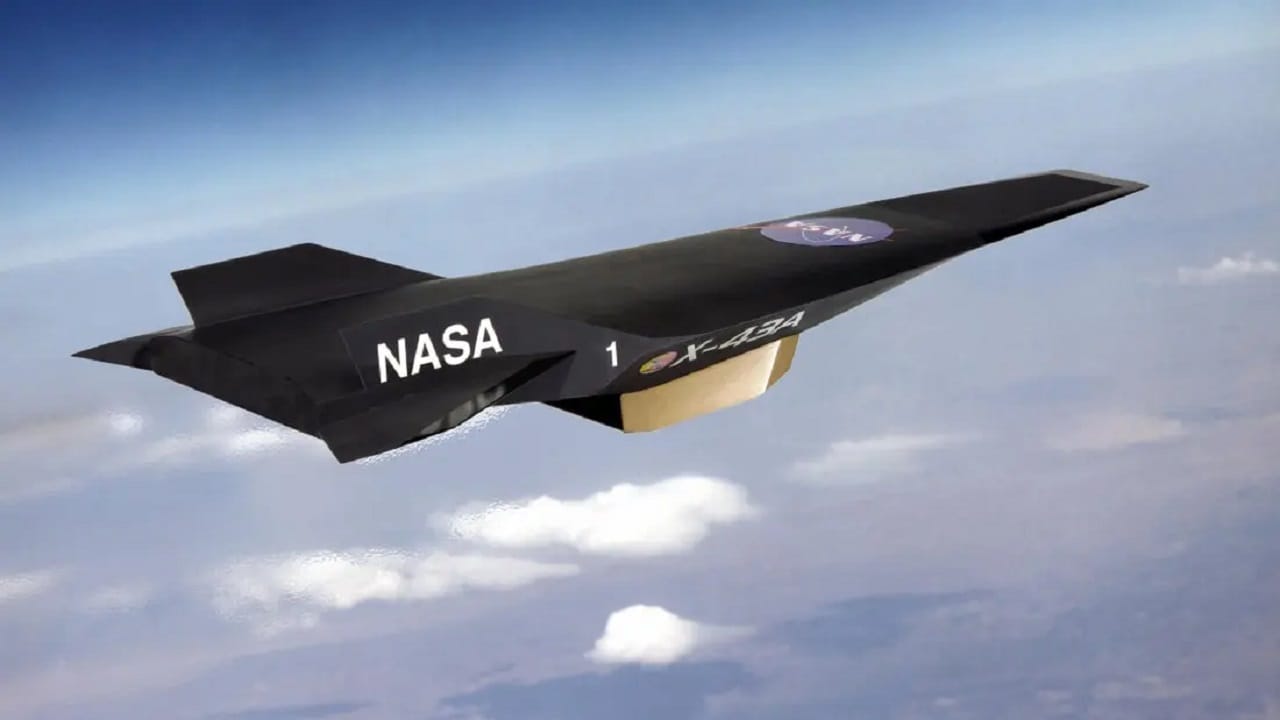

NASA’s Supersonic Plane Will Take Flight Soon, Reaching Speeds Faster Than Sound. The Supersonic Plane Is Now in the Final Painting Stage and Will Undergo Testing Soon.
The National Aeronautics and Space Administration of the United States (NASA) recently reported that it continues to make progress with its silent supersonic plane, named X-59. In the most recent move, the plane was taken to the painting hangar at the Lockheed Martin Skunk Works facilities in Palmdale, California. The NASA plane’s paint scheme will include a primarily white body, a “sonic blue” underside, and red details on the wings.
NASA’s Supersonic Plane Will Measure Its Weight and Exact Shape After Painting
NASA explains that the paint not only adds cosmetic value to the supersonic plane but also serves a different purpose, which is to help protect the aircraft from moisture and corrosion and includes important safety markings to assist with ground and flight operations.
The aircraft was transferred to the paint hangar on November 14 of this year. Once painted, the team will take final measurements of its weight and exact shape to improve computational modeling.
-
New Smart Radar Begins Issuing Fines to Solo Drivers in Carpool Lanes, Uses Cameras to Count Occupants, Changing Traffic Enforcement Rules on Busy European Roads

-
Brazil Welcomes Spanish Wamos Air and Nigerian Air Peace, Potentially Transforming International Routes and Increasing Competition
-
Why can the crane operator only obey the correct signalman on the construction site: among dozens of workers, a hand raised by the wrong person can confuse the maneuver and turn a load of tons into an immediate risk.
-
What changes with the new public transportation rules that can reduce pressure on fares and pave the way for zero fare in Brazil?




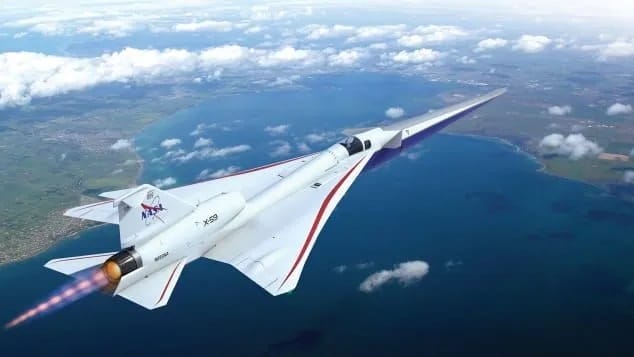
According to Cathy Bahm, project manager for the low “boom” sonic flight demonstrator, the agency is extremely excited to reach this stage of the mission. When NASA’s plane comes out of the paint hangar with fresh paint, the expectation is that it will be a breathtaking moment as they see their vision come to life.
The next year will be significant for the X-59 and it will be exciting for the exterior of the aircraft to finally match the spectacular mission ahead. The X-59 is a supersonic plane designed to fly faster than the speed of sound, while reducing the typical sonic boom sound to just a sonic thump.
NASA’s Plane Will Fly Over Various Communities to Collect Data
The supersonic plane is the centerpiece of the NASA’s Quesst mission, in which the agency will fly the X-59 over various selected communities in the U.S. and collect data on people’s perceptions of the sound the aircraft emits. NASA will provide this data to regulators, who may potentially adjust the current rules prohibiting commercial supersonic flights over land.
The current regulation allows only commercial supersonic flights over ocean areas, a rule that was followed by Concorde. The sonic boom was one of the reasons for the downfall of Concorde, as the supersonic aircraft retired in 2003 could travel at Mach 2.04 (2,179 km/h).
However, flying at this speed over populated centers, even at high altitudes, generates a significant and potentially destructive environmental impact, with the potential to shatter glass windows with the force of the shock waves created by the boom at speeds faster than sound. If NASA can eliminate this issue, supersonic planes with this capability could be employed on more routes and enable the high-speed aviation market.
Another Supersonic Plane That Promises to Change the Market
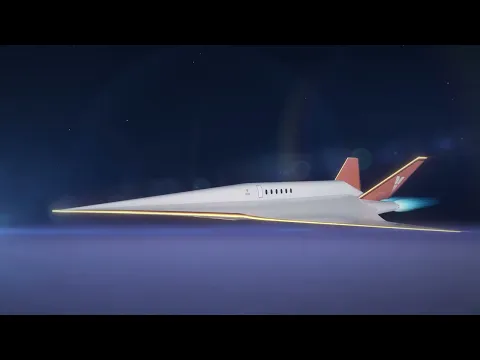

In addition to NASA’s plane, engineers from the aerospace company Venus Aerospace released photos in May of their newest supersonic jet, which can take passengers from New York, USA to Tokyo, Japan, essentially on the other side of the planet, in just one hour, flying to the edge of space before landing back on Earth.
The startup highlights that the supersonic plane can reach speeds of 6,905.42 mph, which is 11,000 km/h, a speed known by engineers as Mach 9. To achieve such speed, the plane reaches a maximum altitude of 170,000 feet, half the distance between the ground and the atmosphere.