Portuguese
  Spanish



In Note, The Mining Company Vale Spoke Out About The Collision Of Ships At The Port Of Madeira In São Luís
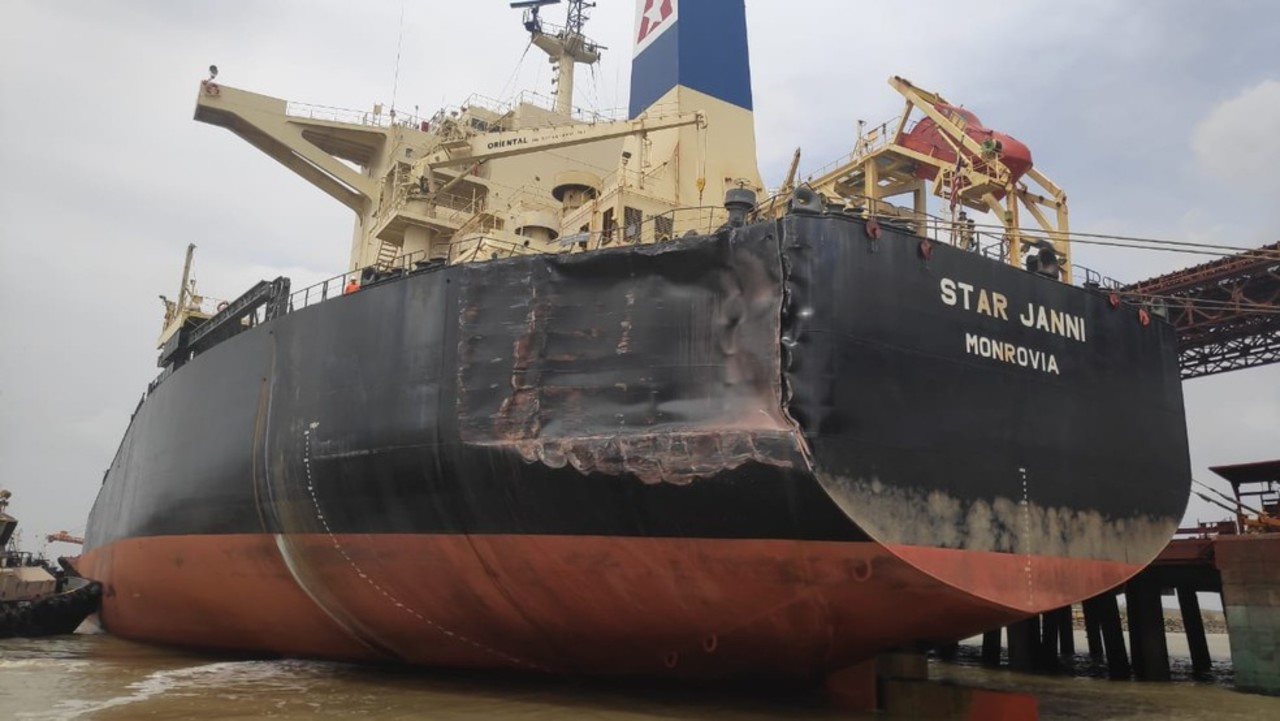
In note, the mining company Vale spoke out about the collision of ships at the Port of Madeira in São Luís, stating that the damages were only material, and that by the end of last Sunday (29) the vessels would be docked in a local area for observation.
Read Also
A NSU Carajás ship, owned by NS United Kaiun Kaisha, a Japanese-flagged company, collided with two other ships during a docking maneuver at Pier IV South, at the Port of Madeira in São Luís. This occurred last Saturday afternoon (28). Vale, which owns the port, stressed in a note that there were only material damages, no casualties, and no environmental damage, and that the port remains operational.
Note From Vale About The Incident With Ship At The Port In São Luís
“Vale informs that at the beginning of the afternoon on Saturday (28/11), the NSU Carajás ship, owned by the Japanese company NS United Kaiun Kaisha, during a docking maneuver at Pier IV South of the Ponta da Madeira Maritime Terminal in São Luís, collided with two other ships docked at Pier III of the respective terminal. There were only material damages, with no casualties or environmental damage. The ships are being undocked and by the end of the afternoon this Sunday will be anchored 25 miles away for inspections. The port operates normally. Port authorities have been notified and are investigating the incident with support from Vale’s teams.”
-
A Brazilian city decided to purchase a piece of the Atlantic Forest with more than 153,000 square meters, and owners of preserved areas will be able to submit proposals to transform the forest into a conservation unit.

-
Brazilian siblings aged 11 and 7 read 240 books in just one year and caught attention on social media: while many children spend hours on screens, they turned their family’s routine into an example of reading, discipline, and curiosity.
-
The legendary oak that, according to the story, hid Robin Hood from the Sheriff of Nottingham, died at the impressive age of 1,200 years in England, and the first chilling sign of its end was that no leaves sprouted on the tree this spring.

-
While the world looks at forests, the UN warns that the Earth is also threatened by the silent degradation of natural grasslands and savannas, ecosystems that cover half of the planet, support billions of people, and can exacerbate water, food, and climate crises.

Port Of Madeira
Opened in 1986, the Port of Madeira was designed to meet the need for the flow of iron ore and manganese originating from the Serra dos Carajás in Pará. The route taken is entirely by rail. By the end of 2014, the Port of Madeira in São Luís became the largest port in Brazil by Cargo Volume, according to the National Agency of Waterway Transportation (Antaq).