






 Portuguese
  Spanish


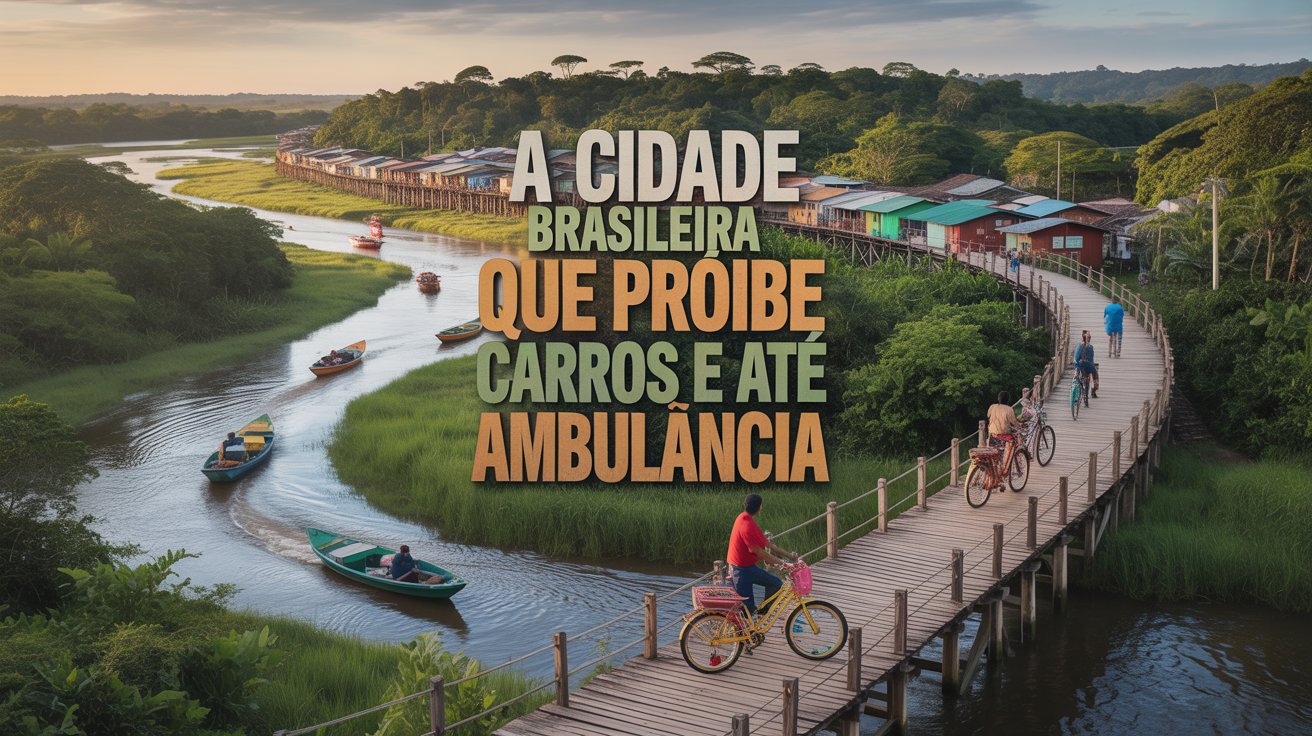

An Amazon Community Reinvented Urban Mobility By Abolishing Motorized Vehicles, Using Bicycles For Everything, Including Ambulances, In A City Hovering On Stilts, Where Rivers Function As Streets And Transport Is Pure Creativity And Sustainability.
In the heart of the Amazon, on the enchanting Island of Marajó, there is a town that breaks all paradigms of modern urban mobility.
Afuá, in the state of Pará, is a municipality where cars, motorcycles, and any other motorized vehicle are prohibited from circulating.
This rule even applies to ambulances, which move around by pedaling.
-
Brazilian Student Turns Electric Shower Repair into Thriving Industry with 3,600 Jobs and Over $1 Billion in Revenue, Aiming to Become the “Next WEG”

-
German Ship Concludes 40-Year Maritime Career with Final Mission in Brazil, Departing Recife with Floating Labs to Study Atlantic Currents

-
Artisanal Well Transforms 4 Hectares in Brazil’s Semi-Arid Region into Productive Farmland with Drip Irrigation
-
Recycled PET Bottles to Become Eco-Friendly Insulation Solution by 2026: Reduces Heat and Noise, Resists Moisture and Mold


The town, elevated on stilts, is a true symbol of sustainability, creativity, and adaptation to the environment.
Instead of the sound of engines, what echoes through the streets are the pedals turning and the noise of the waters that traverse the municipality.
In Afuá, time seems to move on two wheels—or with one’s own feet.
A City On Stilts
Built in a flood-prone area of the Amazon, Afuá literally floats above nature.
Its streets are wooden walkways raised about 1.20 meters off the ground, as the soil is almost always submerged by rivers and streams.
There is no asphalt.
There are no avenues.
Instead, there are canals, bridges, and an elevated network of wooden paths.
Since 2002, a municipal decree has prohibited the circulation of any type of motorized vehicle on urban roads.
The justification is practical: the city’s infrastructure cannot support cars, trucks, or motorcycles.
But the outcome of this decision is extraordinary: Afuá lives without traffic, without horns, without traffic lights, and without signs.
The city operates based on coexistence, mutual respect, and a collective sense of organization that eliminates the need for formal traffic rules.
Bicycles, Bicicabs, And Bicilances
About 75% of the trips in Afuá happen on bicycles or human-powered vehicles.
And the residents have found creative ways to adapt the bike to various everyday functions.
The biccab, for example, is a type of handcrafted quadricycle, resulting from the combination of two bicycles.
It serves as transportation for passengers, tourists, and even brides.
The bicilance is an adapted version of an ambulance.
It has oxygen support and a stretcher for transporting patients.
Services like garbage collection and public equipment maintenance are also done with pedal-powered tricycles and quadricycles.
Even the police patrol by bicycle.
The only motorized vehicles in the city belong to public agencies and are only used for specific emergencies.
Even so, they stay off the elevated roads, parked in appropriate and restricted areas.
A Model That Inspires Admiration
Afuá did not choose this way of living out of trendiness, but out of necessity.
However, it has become an admired alternative model by urban planners and environmentalists.
While metropolises around the world seek ways to reduce pollutant emissions, this small municipality in Pará already lives that future in the present.
There, mobility is clean, silent, and beneficial to health.
By moving daily with physical effort, the residents exercise their bodies and maintain more active and healthy habits.
The simple act of going to the market or visiting a neighbor turns into regular physical activity.
This lifestyle also contributes to mental health, promoting well-being and connection with the community.

Rivers Are Streets And Boats Are Buses
In the transition between rural and urban areas, Afuá found natural allies in the rivers.
The boats are the true “buses” of the city, serving as the main mode of transport between riverside communities and neighboring localities.
Curiously, the nearest city is not Belém, the capital of the state of Pará.
It is Macapá, in Amapá, accessible in about three hours by boat.
This geographic detail makes Afuá even more unique, as its logistical link is more aligned with another federal unit.
The isolation by land is not seen as an obstacle.
On the contrary: it is a factor that strengthens the peculiar lifestyle and the connection of the inhabitants with nature.
The absence of paved highways, the coexistence with rivers, and mobility over stilts create a unique urban ecosystem.
A place where geography dictates the rules, but human creativity shapes functional and inspiring solutions.
A Future That Pedals In The Present
While the urban world seeks technological solutions to environmental crises, Afuá continues its natural and silent course.
The city is living proof that innovation does not depend solely on digital advances or large infrastructure works.
Sometimes, the revolution comes from the simple.
From riding a bicycle, hearing the sound of the water, living with what the land offers.
Afuá not only exists: it resists.
And it inspires.
Could you live in a city where cars have no place and everything runs on pedaling?


