






 Portuguese
  Spanish


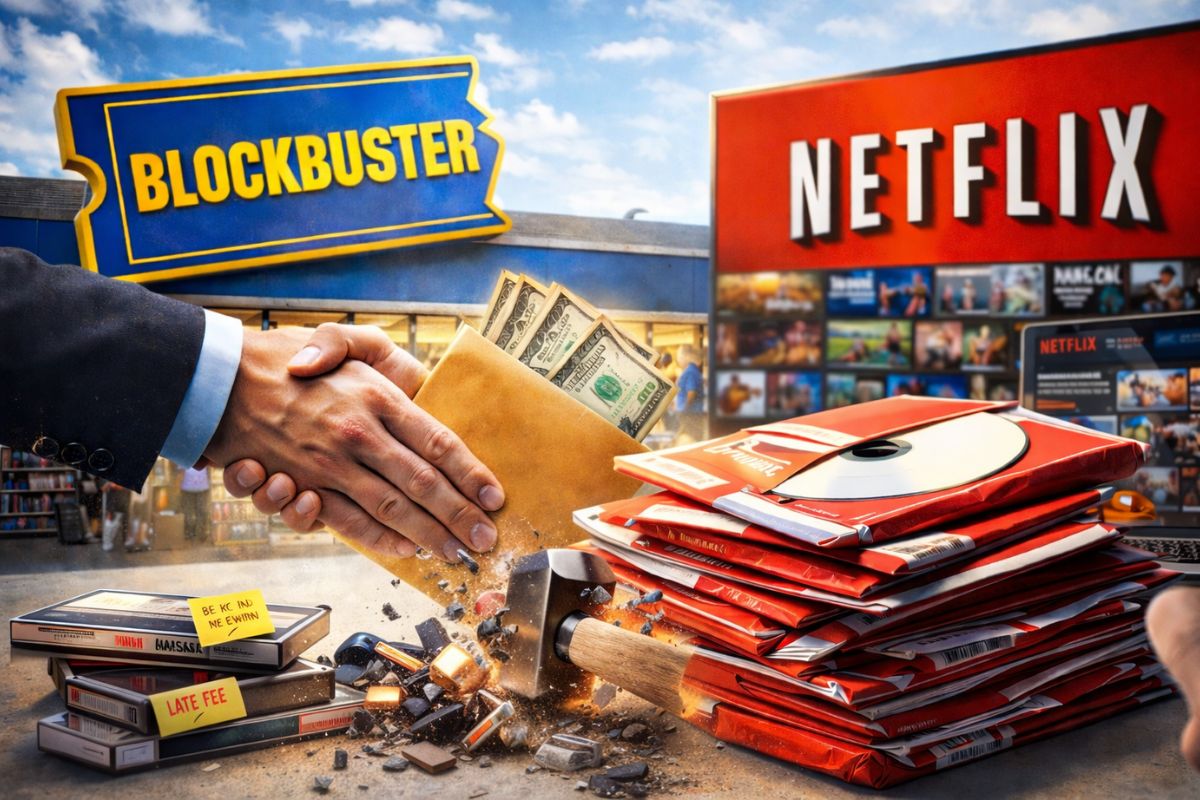
Netflix Was Nearly Sold for $50 Million to Blockbuster, Bet on DVDs by Mail, Then on Subscription and Streaming, Took Down the Rentals Empire, and Changed Consumption Habits Forever.
The Netflix Did Not Start Huge, It Started Ignored. In a room of confident executives, the company was treated as just another fragile internet idea, too small to threaten the physical empire of rental stores. When Blockbuster refused to pay $50 million for the company, it did not just reject a startup, it Rejected an Era-Defining Change in Entertainment.
Tracking Netflix’s trajectory makes it clear how seemingly invisible decisions shape entire markets, destroy giants, and create new empires. Blockbuster’s refusal, the plain envelope sent by mail, and the bet on subscription and streaming formed a sequence of choices that rewrote how the world watches films and series.
A CD in an Envelope and an Uncomfortable Idea
It all started in an almost ridiculous way: a CD placed inside a regular greeting card envelope, without special protection, sent by mail with a silent question behind it. Will it arrive intact?
-
JBS Halts Beef Production for China as Brazil Exceeds 50% of 1.106 Million-Ton Quota; Tariff May Rise from 12% to 67%, Raising Concerns Over Cattle Prices.

-
Brazil’s Social Security Alters Biometric Rules for Pensions and Benefits, Sets 30-Day Deadline, Expands Requirements, and Clarifies Who Is Exempt from Immediate Update

-
Major Brazilian Supermarkets, Including Carrefour and Assaí, May Close Earlier to Prevent Price Increases
-
Coca-Cola Shuts Down 100-Year-Old Factory in the U.S., Impacting 85 Workers and Shaking Local Community with Historic Consequences


The simple test, conceived by Mark Randolph, did not seem revolutionary but confronted the most powerful video market model head-on. While VHS tapes were bulky, fragile, and expensive to send, digital disks were light, compact, and more durable.
When the CD arrived intact to the recipient, it proved that there was a logistical gap in the traditional rental system. And it was exactly at this point that Netflix decided to enter.
Mark Randolph, Uncomfortable Persistence and System Vision
Behind Netflix’s first phase was Mark Randolph, an executive who did not see himself as a genius. He described himself as the “worst real estate agent in New York,” someone who accumulated failures but also something much more valuable: uncomfortable persistence.
Since he was young, Mark watched his father build miniature trains with an obsession for details. Nothing was bought ready-made; everything was designed, tested, disassembled, and rebuilt.
This vision accompanied him in his professional life. For him, no system works by chance; every system can be designed, broken, and redesigned.
This mindset combined with the discipline and rationality of Reed Hastings, a former Marine, mathematician, and Mark’s partner in the venture.
The two came together through rides and repeated conversations in a car, far from luxurious meeting rooms.
There, they began filtering through dozens of bad ideas until they found a real combination of technology, market, and opportunity: a DVD sent by mail as an alternative to traditional movie rentals.
Blockbuster, Late Fees, and a Giant Too Heavy to Turn
At that moment, the market had a dominant name: Blockbuster. Thousands of stores, global presence, and a weekly ritual of going to the rental store. This empire was upheld by a silent trap: late fees, which generated a good portion of the profit.
It was a system that profited from forgetfulness, mistakes, and the habit of keeping movies past the due date. At the same time, this model depended on old behaviors that seemed too solid to change.
It was exactly the kind of market Mark considered ideal: large enough to run within and fragile enough to be broken.
When the Netflix idea began to take shape, capital was necessary. Reed Hastings contributed about $1.9 million, still short of funds, and part of the investments came from embarrassing checks from friends and Mark’s own family.
In 1997, the company was born in California, with a bad temporary name, a makeshift office in an old bank, and a safe turned into a storage room.
Netflix Is Born: Launch Chaos and Rapid Learning

In the beginning, nothing at Netflix came ready. The site was hand-drawn, the servers were regular computers stacked, and the budget was minimal.
On launch day, every new transaction triggered a bell. The bell rang too quickly, the site crashed, and the team rushed to buy more machines. It was chaos, despair, and birth at the same time.
The story that Netflix was born because of a $40 late fee at a rental store is seductive, but it does not match reality. In practice, Netflix Started by Charging Fees, Selling DVDs, and Trying to Survive.
Profits came more from sales than rentals, and the company was still far from being the subscription and streaming machine the world knows today.
Coupons, DVD Manufacturers, and a Bet Against Amazon
To grow, Netflix had to be creative. Mark went directly to DVD player manufacturers, such as Sony, Panasonic, and Toshiba, and proposed a simple exchange: putting Netflix coupons inside the boxes of devices. The message was psychological and powerful: those who bought the device would already have something to watch.
Toshiba accepted, and Netflix began to have direct access to the most valuable audience: consumers who had already invested in a DVD player. Shortly after, a tempting offer came from Amazon, interested in buying the company for somewhere between $14 and $16 million.
For many entrepreneurs, this would be the finish line. For Reed, it would be a mistake. He saw much greater potential and decided to reject the offer. It was yet another silent decision that helped define Netflix’s fate.
Internal Crises, Leadership Change, and the Birth of Subscription
Even with growth, the numbers did not add up. The company was spending too much on shipping, offering aggressive coupons, and dealing with fraud.
Reed and Mark had tough conversations about the numbers until the moment came for an internal break. Reed presented, on a laptop, the vision that he was losing confidence in Mark’s leadership as CEO.
He asked to take the position, along with more power and equity. It was a painful but decisive moment. Mark accepted to step back, not out of weakness, but understanding that sometimes leading means stepping aside for another to accelerate.
Meanwhile, a persistent problem remained: people did not want to plan movies so far in advance. The consumption habit was impulsive.
The turning point came with three combined ideas: the customer could keep the DVDs for as long as they wanted, pay a flat subscription, and the next title would be sent automatically upon returning the previous one.
The three changes were tested together. It worked. In 2000, Netflix set aside a la carte rentals and fully embraced the subscription model.
The Refusal of $50 Million and the Dismissal of One-Third of the Company
The pivot to subscription coincided with the bursting of the internet bubble. Trillions in market value evaporated, money dried up, and investor appetite decreased.
Netflix was still growing, but offered a free month, spent heavily on shipping, and received less than it needed.
It was in this context that the historic meeting with Blockbuster occurred. The proposal: to sell Netflix for $50 million.
The reception was cold, almost cynical. The deal was declined, under the perception that the young company did not pose a threat.
If Blockbuster did not want to buy, the message to the Netflix team was clear: it would be necessary to defeat the giant.
To do so, tough decisions were inevitable. In 2001, the company laid off about a third of its employees. Fewer people, more focus, more speed, more clarity of direction.
From DVD to Streaming and Original Content
Over time, Netflix perfected its logistics, created regional centers, optimized inventories, and reduced shipping costs.
Meanwhile, Reed observed an inevitable curve: when internet costs fell enough and postal costs rose, the lines would cross, and streaming would become more advantageous than sending DVDs.
Hollywood resisted for fear of piracy, many companies said no, just as Blockbuster had.
Even so, Netflix went public in 2002, faced lawsuits, made deals, continued adjusting its model, and insisted on technological transitions.
In 2007, streaming began timidly, with few titles and many doubts. The following year, Netflix entered gaming consoles, entered living rooms, entered the routines and habits of millions of people.
The next step was even more ambitious: to invest in original content, exclusive series, and mastery of distribution. Who controls the content controls the game.
As Netflix grew, Blockbuster sank. In 2010, the former giant declared bankruptcy, not just for lack of money but for lack of vision, for confusing size with eternity.
The Lesson from Netflix for Business, Leadership, and Strategy
Today, Netflix is worth tens of billions of dollars, competes with global giants, and redefines how entertainment is consumed. But the future remains uncertain: the market does not forgive complacency, and every company that wins a battle risks becoming the next target.
In the end, it all started with a disk in a simple envelope, a rejected $50 million proposal, and a sequence of decisions that cost an entire empire. The story of Netflix is a reminder that technology, strategy, and the courage to change come before size and tradition.
And you, after learning about this journey of Netflix and Blockbuster, do you think the next great disruption in entertainment will take down Netflix itself or further reinforce the empire it built?


-

1 person reacted to this.