






 Portuguese
  Spanish


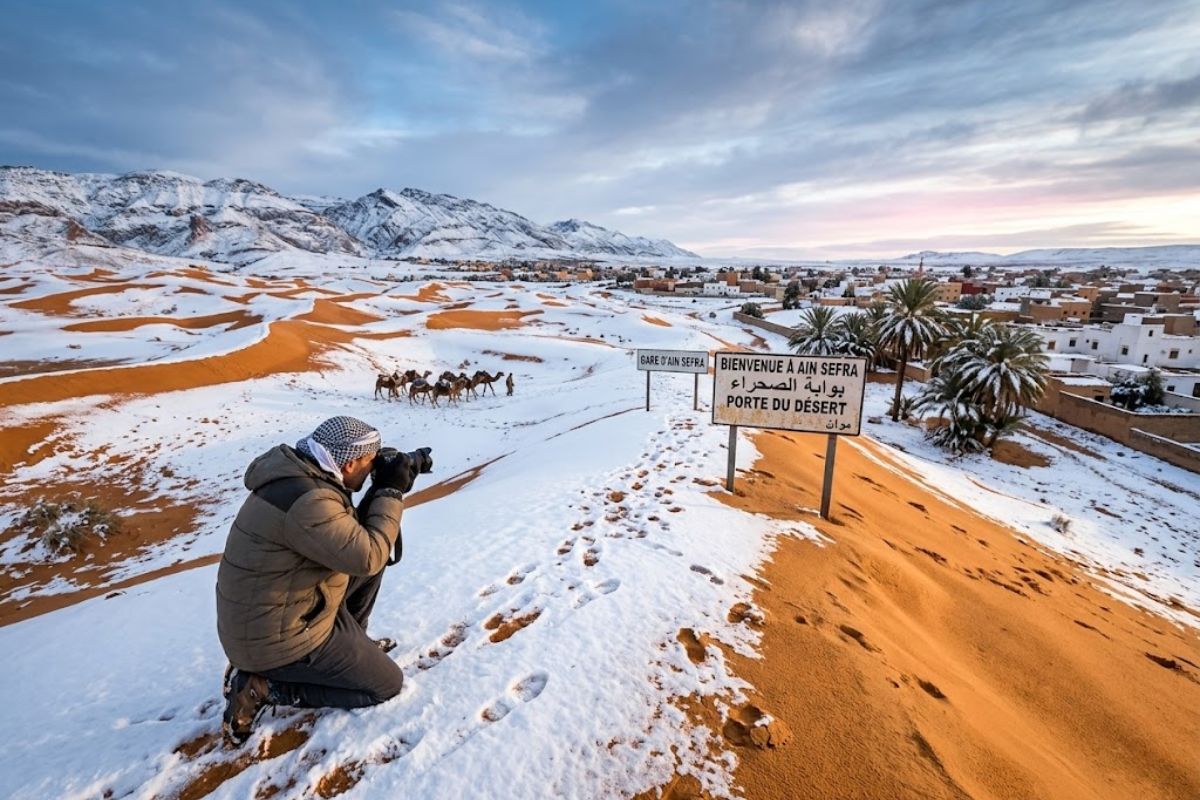


In The Heart Of The Sahara, The Algerian City Of Ain Sefra Woke Up Covered By A Thin Layer Of Snow That Transformed Orange Sand Dunes Into An Unexpected White Scenario In The Desert, A Rare Phenomenon Registered By A Local Photographer That Gained Attention On Social Media
The Sahara, known as the largest hot desert on the planet, was the stage for a rare phenomenon that surprised residents and observers. A thin layer of snow covered sand dunes in the city of Ain Sefra, in western Algeria.
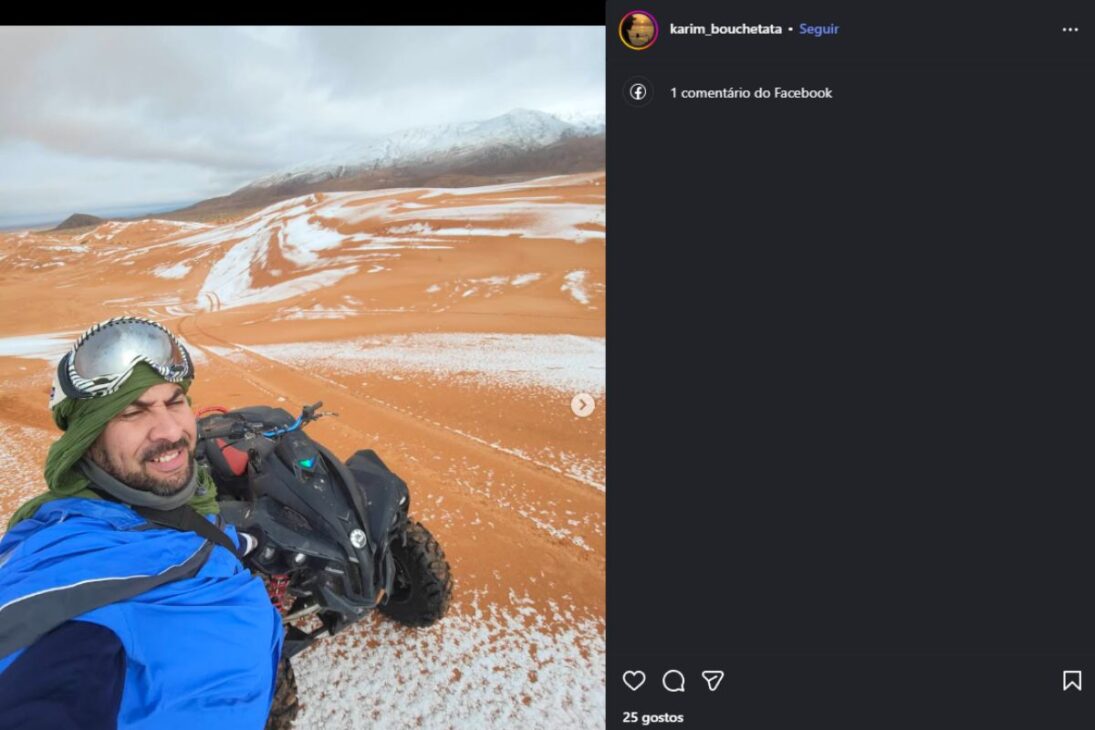
The episode occurred after temperatures fell below zero in the region, creating unusual conditions for solid precipitation. The unexpected scene in the Sahara was captured by photographer Karim Bouchetata, who shared images of the orange dunes covered in white.
The Snow That Transformed The Sahara Scenario
The phenomenon occurred in Ain Sefra, a city known as the “Gateway to the Desert,” located on the northern edge of the Sahara.
-
Realme Launches Affordable 16x 5G Phone with Military Certification, 6,600 mAh Battery, 50 MP Camera, and 6.8-Inch Screen Starting at $320

-
Amazonian Fruit Bacuri: A Nutrient Powerhouse with Antioxidants, Vitamins, and Bioactive Compounds, Ideal for Sweets and Beverages
-
Açaí Genome Sequenced for the First Time, Potentially Tripling the Speed of Developing New Cultivars
-
Geologists Find 4% of Normandy D-Day Beach Sand Still Contains Metal Fragments from WWII Explosions





The region is approximately one thousand meters above sea level, close to the Atlas Mountains, which directly influences the local climate conditions.
When temperatures drop abruptly during the Northern Hemisphere winter, the environment can gather the necessary elements for the formation of snow.
Even so, seeing the Sahara covered in snow continues to be something extremely uncommon.
The images captured by Karim Bouchetata show dunes with a light white layer on the orange sand.
The contrast between the white of the snow and the warm tone of the dunes created an almost surreal landscape.
Why It Can Snow In The Sahara

Although it seems contradictory, the Sahara can register occasional episodes of intense cold.
During the winter in the Northern Hemisphere, especially between December and January, nighttime temperatures can drop dramatically in some regions of the desert.
In certain cases, thermometers can approach or even go below 0°C.
When cold air masses from the north encounter sufficient humidity in the atmosphere, snow or frost formation becomes possible.
These conditions are rare, but scientifically possible on the northern edge of the Sahara.
The altitude of Ain Sefra also contributes to this type of occurrence.
A Rare Phenomenon, But Not Totally Unprecedented
Although it impresses those who see the images, snow in the Sahara is not completely unprecedented.
Experts point out that the phenomenon has been recorded several times in recent decades.
Reports indicate similar episodes in 1979, 2012, 2016, 2017, 2018, 2021, and 2022.
The current event may represent approximately the seventh occurrence in about 40 years in the region.
Even so, each episode continues to be considered extraordinary.
This happens because the Sahara remains one of the hottest and driest environments on Earth.
A Spectacle That Lasts Little In The Desert
Despite the visual impact, snow in the Sahara usually disappears quickly.
Temperatures rise throughout the day, causing the white layer to melt in no time.
Unlike mountainous or polar regions, the warm ground and low humidity accelerate this process.
For this reason, photographic records end up being essential to document the phenomenon.
Within a few hours, the desert typically returns to its original appearance.
The white landscape soon disappears and the orange dunes regain the scene.
The Debate On Climate And Extreme Phenomena
<p.Events like this often raise discussions about climate change.
However, researchers indicate that episodes of snow in the Sahara are not necessarily linked to global climate changes.
They can occur due to natural atmospheric fluctuations that transport cold air and moisture to the region.
When these conditions coincide with altitude and a sharp drop in temperature, snow can form.
The phenomenon remains rare, but is part of the climatic possibilities of the desert.
The snow recorded in the Sahara in Ain Sefra shows how even the most extreme environments on the planet can surprise.
The contrast between orange dunes and a white layer of snow transformed the desert into an unexpected scene that quickly gained attention on social media.
Even though it is temporary, the phenomenon reinforces how nature is still capable of producing rare and impressive images.
Now there’s curiosity.
If you saw snow falling in the Sahara, would you believe what you were seeing or think it was edited?


