






 Portuguese
  Spanish
  4 min of reading
  0 comments


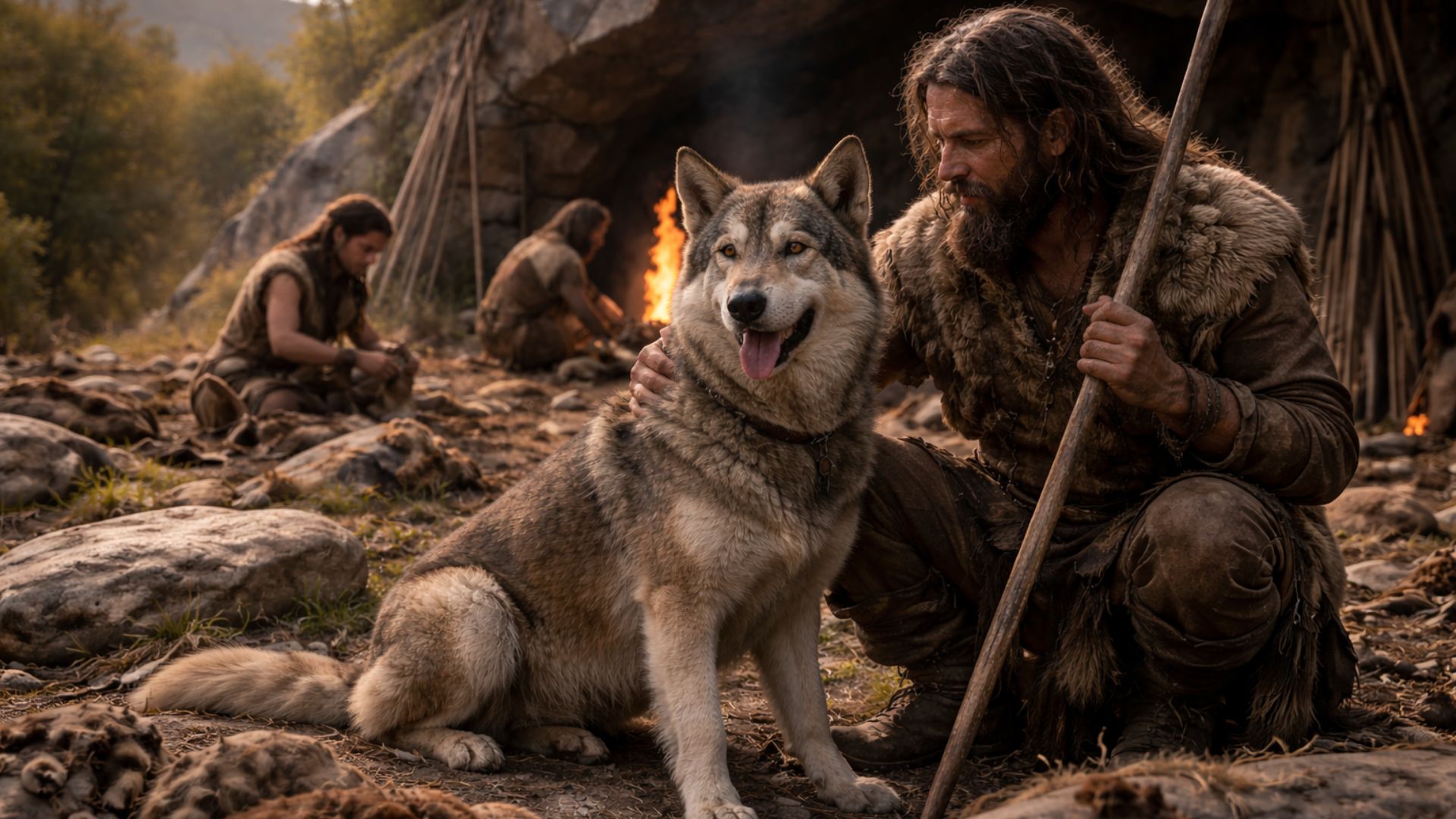
New scientific research reveals how the cohabitation between dogs and humans began much earlier than previously thought and explains its direct impact on human survival throughout prehistory
New scientific evidence is changing the way we understand the relationship between dogs and humans. Recent research indicates that this cohabitation began around 15,800 years ago, long before the advent of agriculture, and may have played an important role in human adaptation.
The studies, published in the scientific journal Nature, analyzed ancient DNA extracted from bones found in different regions of Eurasia. The results suggest that dogs were already integrated into hunter-gatherer groups, reinforcing the hypothesis that this partnership emerged at a critical moment for human survival.
Studies reveal cohabitation between dogs and humans long before agriculture
The studies were conducted by scientists from 17 institutions and involved genetic analyses of fossils found in the United Kingdom, Turkey, Germany, Italy, Switzerland, and Serbia.
-
Survivor of 1966 SS Daniel J. Morrell Shipwreck in Lake Huron Recounts 38-Hour Ordeal in Extreme Cold

-
The Greatest Hoax in World Cup History? The Film That Denied Brazil’s 1958 Victory and Exposed How Fake Evidence Can Seem Convincing on TV
-
Fake South Korean Online Stores Offer Shopping Thrill Without Spending Money or Receiving Products
-
The War of Jenkins’ Ear: How a Severed Ear Sparked One of the 18th Century’s Most Unusual Conflicts


One of the oldest records comes from Pınarbaşı, Turkey, dating back about 15,800 years. In Gough’s Cave, in the United Kingdom, the remains date to approximately 14,300 years. These data extend the previous genetic record by more than 5,000 years, reinforcing that dogs were already living with humans long before the development of agriculture.
According to Anders Bergström, the results indicate a shared origin between dogs from Europe and Asia, which strengthens the hypothesis of a common domestication process.

Expansion of dogs accompanies human migrations and suggests impact on human survival
Another relevant point from the studies is the rapid spread of dogs across Eurasia. Evidence shows that these animals were already widely distributed at least 14,000 years ago.
This expansion seems to be directly linked to the movements of humans, who may have taken dogs with them during migrations and cultural interactions. Even distinct groups shared animals with similar characteristics.
This scenario suggests that dogs may have contributed to human survival, providing practical advantages in challenging environments.
Among the hypotheses raised by researchers, the following stand out:
- Possible assistance in hunting
- Alert against predators and threats
- Surveillance during rest periods
- Support in exploring new territories
According to Laurent Frantz, the maintenance of these animals in contexts of scarcity indicates that they likely played relevant roles.
Evidence indicates that dogs were fed and cared for by humans
The studies also reveal important aspects of the cohabitation between dogs and humans. Isotope analyses showed that some of these animals were fed fish, suggesting active care.
In a context of limited resources, this behavior indicates that dogs were important enough to justify the sharing of food — something relevant for human survival.
Additionally, there is evidence of intentional burials of dogs at some archaeological sites. In Gough’s Cave, for example, bones show marks made by humans, which may indicate a possible symbolic value.
These data suggest a more complex relationship than simple utilitarian cohabitation.

Genetic studies show ancient diversity among dogs
Another important advancement from the studies is the genetic analysis of ancient dogs. Researchers examined genomes from 216 remains of dogs and wolves, identifying patterns of shared ancestry.
One of the oldest specimens confirmed as a dog was found at the Kesslerloch site in Switzerland, dating back about 14,200 years, dated by carbon-14.
The data indicate that the genetic diversification of these animals was already underway at that time. Furthermore, the analyzed dogs show greater proximity to lineages that gave rise to modern breeds from the Middle East and Europe, such as boxers and salukis.
This suggests that the genetic foundations of today’s dogs began to form back in the Paleolithic.

How dogs may have contributed to human survival
Although it is not possible to assert a direct causal relationship, the studies indicate that dogs may have played important roles in the daily lives of prehistoric humans.
Among the most likely contributions are:
- Increased efficiency in obtaining food
- Reduction of risks in dangerous environments
- Greater security during camping
- Support in navigating unknown territories
These functions, although based on scientific inferences, suggest that the presence of dogs may have positively influenced human survival.
Moreover, cohabitation with these animals may have impacted the social organization of human groups, favoring new forms of cooperation.
Origin of domestication still raises questions among researchers
Despite the advancements, the studies still cannot precisely determine where the initial domestication of dogs occurred.
Current evidence points to Asia as a likely region of origin, but the lack of genetic data from East Asia prevents definitive conclusions.
According to Anders Bergström, expanding analyses with new fossils will be essential to clarify this issue. The expectation is that future research will be able to map the early moments of this relationship between dogs and humans more accurately.
An ancient relationship that may have influenced human development
The new studies reinforce that the cohabitation between dogs and humans is much older than previously thought. The presence of these animals 15,800 years ago indicates that this partnership emerged at a fundamental moment in human history.
Although there are still gaps, the evidence suggests that dogs may have contributed to human adaptation to different environments, especially during periods of greater vulnerability.
More than companions, these animals may have played a relevant role in the evolutionary trajectory of our species, helping to shape, even if partially, the paths of human survival over the millennia.





Be the first to react!