






 Portuguese
  Spanish


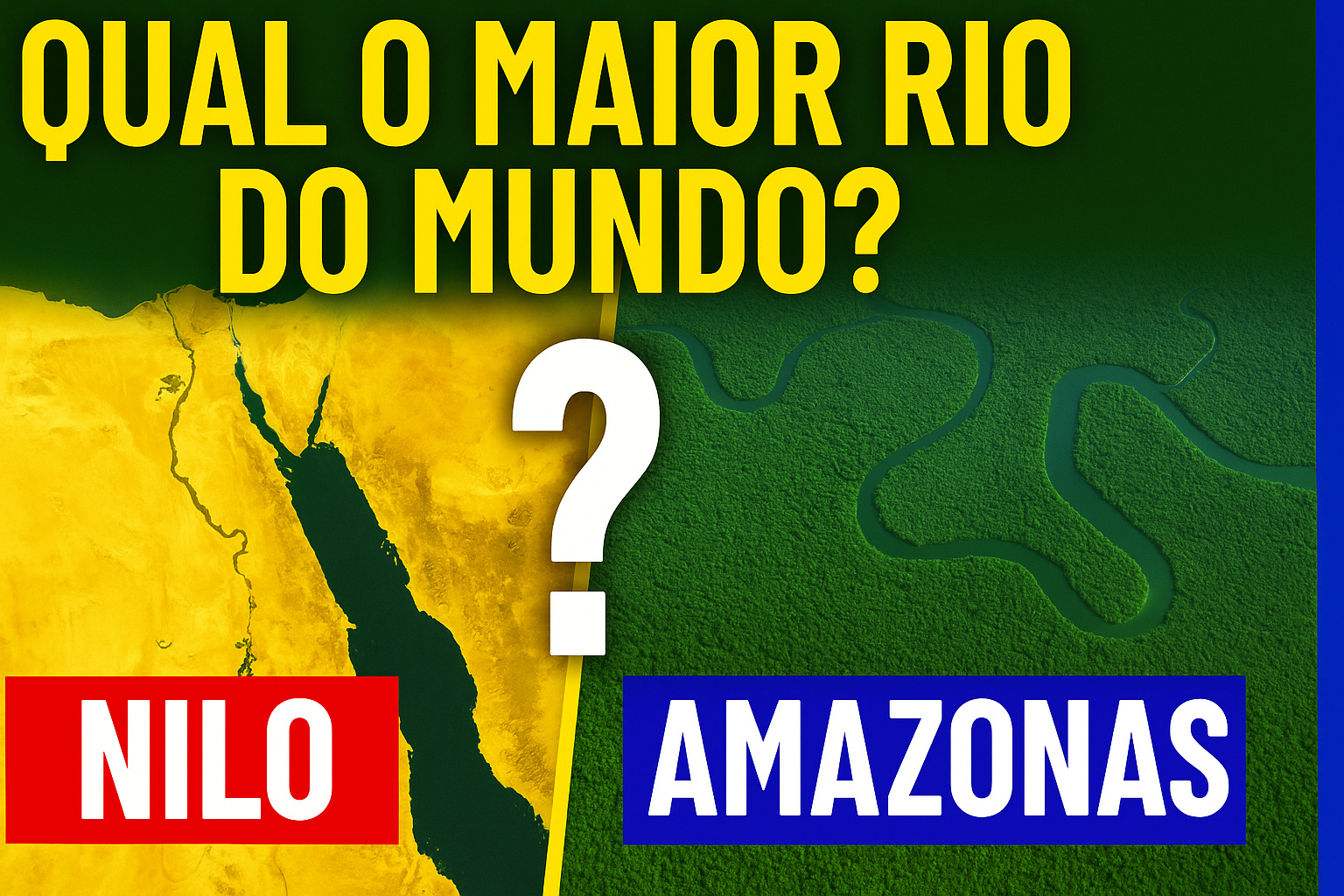
In 2025, Nile and Amazon Continue to Dispute the Title of Largest River in the World. See Why Measurements Still Cause Controversy Among Scientists.
In 2025, the classic dispute between the Nile River and the Amazon River over who holds the title of the largest river in the world continues to divide experts. Although the Guinness World Records still recognizes the Nile, in Africa, as the longest, new measurements from the National Institute for Space Research (INPE) have reignited the debate by indicating that the Amazon, in South America, may be larger than previously thought — at 6,992.06 km in length, surpassing the Nile by 140 km.
However, this conclusion is far from being a consensus. The Encyclopaedia Britannica and the U.S. Geological Survey (USGS) still attribute first place to the Nile at 6,649.81 km. The root of the impasse lies precisely in the difficulty of accurately defining where the Amazon River originates, especially in the mountains of Peru.
The Amazon River: The Water Giant
Regardless of its length, there is an undeniable title: the Amazon River is the largest river in the world by water volume. With an average flow of 210,000 m³ per second, it pours approximately 20% of all the Earth’s river water into the Atlantic Ocean. Its drainage basin is the largest on the planet, crossing countries such as Peru, Colombia, and Brazil, and sustaining a unique biodiversity that plays a vital role in the global climate balance.
-
Oil Company Robots Discover 3,300-Year-Old Canaanite Shipwreck in the Mediterranean, Proving Ancient Mariners Navigated Open Seas by Stars Long Before Historians Thought

-
Facing high rent costs in Brazil, couple swaps apartment for life on a sailboat, reducing expenses significantly.

-
Avoiding the rental cycle, 26-year-old transforms school bus into a solar-powered mobile home for road living, spending up to $35,000 on renovations.
-
Survivor of 1966 SS Daniel J. Morrell Shipwreck in Lake Huron Recounts 38-Hour Ordeal in Extreme Cold


Recent studies by INPE indicate that its true source may be in the Apacheta ravine, at the base of the Nevado Quehuisha in Peru — a location that significantly alters calculations of its length. However, other sources still work with the figure of 6,400 km, which explains the technical impasse.
The Nile River: The River That Shaped Civilizations
The Nile River, at approximately 6,650 km in length, is the most important watercourse in Africa and perhaps the most legendary in the world. It originates in Lake Victoria, passes through countries such as Uganda, Sudan, and Egypt, before flowing into the Mediterranean Sea andthe. Over millennia, it has been the cradle of one of the most influential civilizations in history: Ancient Egypt.
In addition to its historical role, the Nile continues to be essential for agriculture, water supply, and transportation in one of the driest regions on the planet. Its course still defines borders, sustains millions of people, and influences African geopolitics.
Why Is There Still No Consensus in 2025?
The answer lies in methodological differences in measurements. The length of a river essentially hinges on two definitions: where its source begins and what its longest course is to the mouth. In the case of the Amazon, the source in Peru has multiple possibilities — which alters its final length.

Moreover, advances in satellite mapping technologies have changed how scientists assess the topography and geography of rivers. This has led to a reinterpretation of old data and the conducting of new expeditions. Changes in river courses caused by erosion, deforestation, dams, or natural variations also interfere with the measurements.
What Does This Mean for the Planet?
More than a competition of numbers, the debate between the Nile and the Amazon reveals how rivers are fundamental elements for the environment and human history. The Amazon is a key piece in the global climate system, influencing rainfall even in regions like southern Brazil and northern Argentina. The Nile continues to be the “river of life” for millions of people living along its banks in northeastern Africa.
Both rivers are also the stage for growing environmental challenges. Deforestation in the Amazon, dam construction on the Nile, and urban pollution threaten the health of these ecosystems. The search for answers about their lengths is also a way to raise awareness about the importance of their preservation.
Based on the latest estimates from INPE, the Amazon is the longest. But for the Guinness World Records and other international institutions, the Nile is still ahead. The truth is that, whether in length, water volume, or historical and environmental significance, both are vital for the planet — and for the future of humanity.


Be the first to react!