






 Portuguese
  Spanish


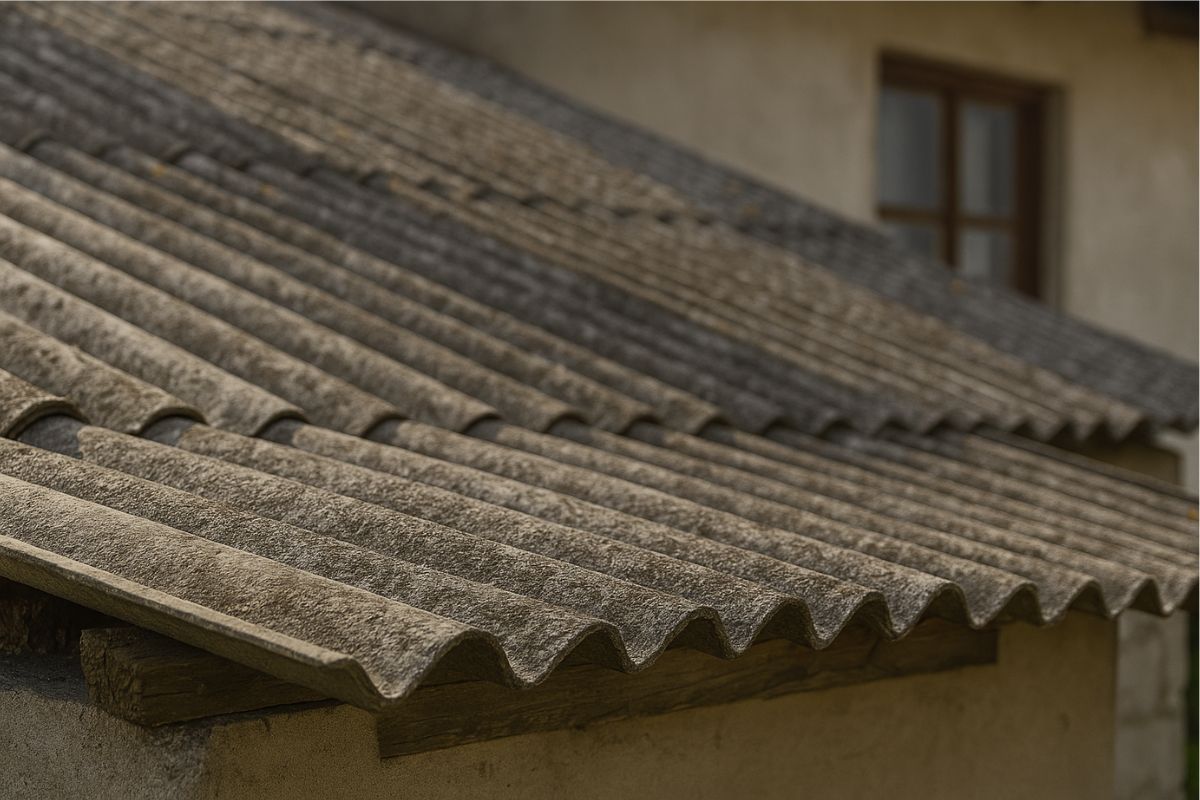

Despite the ban imposed by the STF in 2017, asbestos is still present in millions of structures in Brazil, posing a verified risk to public health and the environment
For decades, asbestos was widely used in Brazilian construction, primarily in the production of roofing sheets, water tanks, and thermal insulation. Its popularity was justified by its low cost, heat resistance, and long durability. However, this apparent “industrial miracle” hides a silent enemy responsible for thousands of deaths worldwide.
In this article, we explain why Brazil banned asbestos, the health risks associated with prolonged exposure, and the current challenges faced by workers, companies, and governments to remove and replace old structures contaminated with the mineral.
What Is Asbestos?
Asbestos, or asbestosis, is a generic name given to a group of fibrous minerals found naturally in rocks. There are two main types:
-
Architect Transforms Tiny 4m² Home in São Paulo Favela into 11m² Living Space with Modern Amenities

-
Single mother of four swaps £3,000 London rent for life on a 60-foot solar-powered boat with Starlink and a washing machine, reducing monthly costs by 75%

-
22-Year-Old Transforms Old Farm Trailer into Two-Story Tiny Home Using Recycled Materials

-
Doctor Revives Ancient Crescent-Shaped Dams in Drought-Stricken Indian Region, Restoring Water to Over 1,000 Villages and Reviving Rivers Dormant for 60 Years


- Chrysotile Asbestos (White Asbestos): the only type that was still legalized in Brazil until 2017.
- Amphibole Asbestos (such as crocidolite): more dangerous and previously banned.
Both have high thermal resistance. Therefore, they were widely used in construction materials, automotive brakes, and industrial equipment.
National Ban and STF Decisions
On November 29, 2017, the Supreme Federal Court (STF) deemed Federal Law No. 9.055/1995 unconstitutional, which still allowed the controlled use of chrysotile asbestos. By a vote of 7 to 2, the ministers decided on a total ban on the extraction, industrialization, and commercialization of the substance throughout the national territory.
According to the then-relator of the case, Minister Dias Toffoli, “the right to health and life must prevail over the economic interests of the industry.” The decision extended across the national territory, even to states like Goiás, where the mining company SAMA was still extracting asbestos for export.
In 2025, the STF reinforced the understanding that it is not possible to maintain asbestos mining in Brazil, even for export, consolidating a complete ban on the production chain.
Serious Health Risks
Inhaling asbestos fibers is extremely dangerous. Because they are microscopic, these particles can remain suspended in the air and be inhaled without the person realizing it. Once lodged in the lungs, they cause inflammation and cellular mutations that can evolve into serious and fatal diseases, including:
- Asbestosis: irreversible pulmonary fibrosis that makes breathing difficult.
- Mesothelioma: a rare type of cancer that affects the lining of the lungs (pleura) or abdomen (peritoneum), with high mortality rates.
- Lung Cancer: significantly increased risk with chronic exposure.
According to the National Cancer Institute (INCA), there is no safe level of asbestos exposure, and even short exposures can be dangerous.
Victims and Real Testimonies
Eliezer João de Souza, president of the Brazilian Association of Asbestos Victims (ABREA), is one of the most active voices in the fight against the substance. A former employee of Eternit, Eliezer developed respiratory problems after years of working with asbestos products.
“Asbestos must be eradicated from the face of the Earth. The longer we take to abolish asbestos, the more people will die because of it,” he stated at an international conference held by the ANAMT.
Another important voice is that of civil engineer Fernanda Giannasi, former auditor of the Ministry of Labor and founder of the Virtual Network for the Ban of Asbestos in Latin America. Giannasi warns:
“Contamination is diffuse, silent, and kills in anonymity. Only examinations and autopsies can relate deaths to asbestos. The industry profits, but society pays with lives.”
Asbestos Roofs Are Still All Over the Place
Despite the ban, millions of Brazilian homes still have asbestos roofs. As the material has a long lifespan, many houses built between the 1970s and 2000s still maintain contaminated structures.
In São Paulo, a survey by the city hall indicated that at least 20% of households in the east zone still have asbestos roofing. The risk increases when the roofs age, crack, or undergo interventions (such as cuts, holes, or breaks), releasing fibers into the air.
Safe Removal: An Urgent Challenge
The removal of roofs with asbestos is not simple or cheap. Brazilian legislation stipulates that:
- Replacement must be carried out by specialized and licensed companies.
- Waste must be contained in waterproof bags, labeled, and disposed of in authorized industrial landfills.
- Workers must use full PPE, including P3 filter masks, disposable coveralls, and gloves.
The city of São Paulo, for example, created a pilot program in 2023 to offer incentives for replacing contaminated roofing in schools and health units, with support from the Ministry of the Environment.
Safe and Sustainable Alternatives
With the end of asbestos roofing production, viable alternatives have emerged in the market:
- Asbestos-Free Fiber Cement Roofing: made with plant fibers, polypropylene, or PVA.
- PVC and Recycled PET Roofing: lightweight and resistant to corrosion.
- Metal and Ceramic Roofing: more expensive but with greater durability.
These materials are already being used in large public works and have approval from the ABNT (Brazilian Association of Technical Standards).
Social Responsibility and Compensation
The recognition of the damage caused by asbestos has resulted in hundreds of lawsuits against companies such as Eternit and SAMA. In 2019, Eternit was ordered to pay R$ 30 million for collective moral damages.
In addition, former contaminated employees are entitled to special retirement, treatment through the SUS, and individual compensation, depending on the proof of causal nexus.
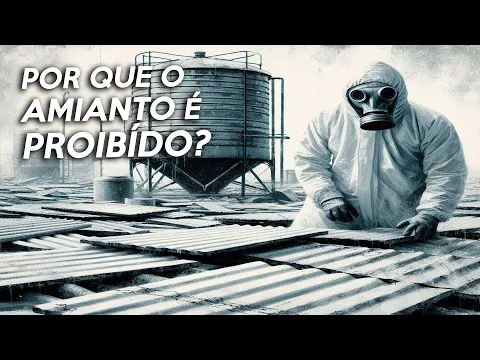

Asbestos represents one of the largest scandals of occupational health in the 20th century in Brazil. Even with the ban, we are still far from resolving the environmental and public health legacies inherited from decades of rampant use.
Safe removal of the roofs, replacement with asbestos-free materials, and monitoring of the victims must be a priority for public policies in the coming years. Knowledge and societal pressure are essential to ensure that the mistakes of the past are not repeated.


A ABREA-Associação Brasileira dos Expostos ao Amianto, que representa os familiares e vítimas do amianto, agradece a excelente matéria sobre o amianto.
Agradeço imensamente pelo reconhecimento e pelas palavras da ABREA. Fico honrado em poder contribuir com a divulgação de um tema tão relevante e sensível, que impacta diretamente a vida de tantas pessoas e famílias. Agradeço também pelo trabalho incansável da associação na defesa dos direitos dos expostos ao amianto. Estou à disposição para continuar colaborando nessa causa tão importante.
Noel, parabéns pelo excelente artigo que, além de didático, demonstra uma ampla pesquisa sobre este mineral cancerígeno e tema tão caro para nós da ABREA-Associação Brasileira dos Expostos ao Amianto.
Muito obrigado pelo retorno tão gentil. Fico muito feliz em saber que o artigo foi bem recebido por vocês da ABREA. É uma honra contribuir com a divulgação de um tema tão importante para a saúde pública e para a valorização da luta dos expostos ao amianto no Brasil. Estou à disposição para futuras colaborações.