





 Portuguese
  English
  Spanish
  3 min of reading
  0 comments



Saudi Arabia Has Announced an Ambitious Plan to Transform Global Air Travel: The New Airport Under Construction, King Salman International Airport, Located in Riyadh and Designed to Become One of the Largest Aviation Infrastructures in the World. Scheduled to Open in 2030, This Project Promises to Create a Profound Impact Not Only for the Country but for the Entire International Air Travel Sector, Connecting Millions of Passengers and Stimulating Regional Development.
The construction project, which is already underway, will feature six runways and an initial capacity to handle 180 million passengers a year. On a large scale, this infrastructure will make Riyadh one of the leading global logistics hubs, capable of accommodating up to 185 million travelers by 2050. The goal is to strengthen Riyadh’s position on the global air transport map, promoting the development of residential and leisure areas across the 57 square kilometers of the complex, creating an environment that goes beyond merely moving passengers.
In addition, the new airport under construction will be designed by the renowned firm Foster + Partners, known for its innovative approach to airport infrastructure. Inspired by Saudi culture, the design will seek to create a travel experience that blends advanced technology with cultural elements. The project is part of the Saudi strategic vision, which already includes grand projects such as Mukaab, Epicon, Jeddah, and The Line, reinforcing the country’s ambition to lead the air travel sector and offer a cultural differential to passengers.
Economic and Social Implications of the New Airport Construction
For the Saudi economy, the new airport under construction is a key piece in the path to making Riyadh one of the ten most economically influential cities by 2030. The Saudi Press Agency highlighted that this expansion will contribute to the projected population increase, estimated to reach between 15 and 20 million residents in the next decade. With the expectation of generating approximately 15,000 direct and indirect jobs, the airport is expected to catalyze growth in other sectors, such as commerce, services, and tourism, and attract foreign investments.
-
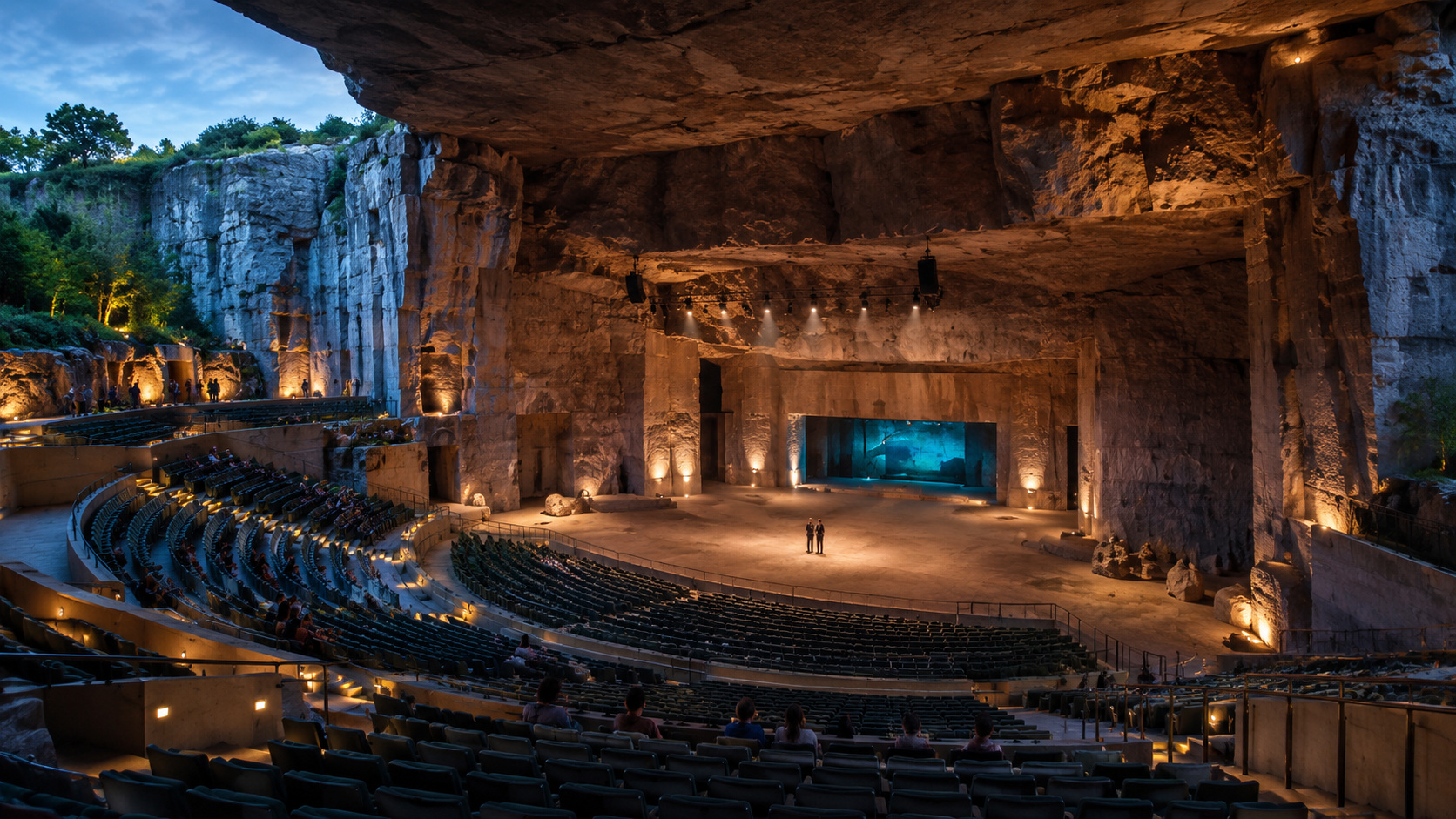
While many modern works still try to hide concrete and steel, in Hungary an ancient quarry used since Roman times has become a cave theater with 760 seats, a stage within the rock, and an area of 4,600 m².

-
Presented as the world’s first floating megacity, the Freedom Ship promises to be 1.6 km long, 30 stories high, and powered by nuclear energy to accommodate up to 80,000 people at sea, in a project valued at around 81 billion reais that still depends on financing.

-
Qatar and Bahrain revive the dream of a nearly 40-kilometer bridge over the sea to connect the two Gulf countries by land.

-
A 98-meter-long tunnel boring machine called Mayrit has already excavated more than 670 meters of tunnel and removed almost 47,000 cubic meters of earth in just 55 days under the streets of Madrid, in the expansion of Line 11 of the metro that will create the great underground diagonal of the Spanish capital.


The infrastructure will also have a significant impact on global air travel by facilitating connections with international markets and increasing the flow of passengers and goods. Additionally, the new airport will contribute to strengthening the country’s transport infrastructure, as it will be a key asset in boosting air travel and transforming Riyadh into a link between East and West.
Other Global Air Travel Initiatives
Foster + Partners, the firm leading the construction project in Riyadh, also spearheads other global initiatives focused on innovation and sustainability in airports. Among them are the Red Sea International Airport in Saudi Arabia and the new CPK airport in Poland. These projects reflect a global trend where airports are becoming more than just transportation points, evolving into cultural and economic centers, connecting regions and promoting cultural exchange.
The construction of the new airport in Saudi Arabia symbolizes a movement of innovation that is set to shape the future of air travel. The demand for airports that add cultural and economic value and promote a differentiated experience for passengers is on the rise, and Riyadh, with King Salman International Airport, seeks to play a prominent role in this global scenario. The combination of bold design, high capacity, and strategic location makes this project essential for the evolution of air travel in the 21st century.




Be the first to react!