Portuguese
  Spanish


In the Xinjiang desert, an automated industrial hub advances over a gigantic coal reserve, bringing together mining, heavy chemicals, energy, and technology in a project linked to Chinese energy security.
China has expanded the development of an automated coal-chemical hub in Zhundong, in the Xinjiang desert, to transform a large coal reserve into industrial inputs used in the production of plastics, fertilizers, textile fibers, energy, and base materials.
The area sits on a deposit estimated at 390 billion tons of coal, identified by China Daily and the South China Morning Post as the largest continuous reserve of its kind in the country.
Located on the southeastern edge of the Junggar Basin, the Zhundong National Economic and Technological Development Zone has a planned area of 15,500 square kilometers.
-
OnePlus N6 Smartphone to Launch in India with 8,000mAh Battery and 45W SuperVOOC Charging, Lasting Up to Three Days

-
Scientists Plan to Release Air Bubbles Underwater to Protect Antarctica’s “Doomsday Glacier” from Melting

-
Chinese R6000 Drone Combines Airplane and Helicopter Features, Carries Up to 12 People for Multiple Missions
-
In the World’s Most Densely Populated Desert, Families Dig Funnel-Shaped Underground Cisterns to Capture Rare Rainfall and Store Drinking Water for Up to Eight Months



According to official information published by China Daily, the reserve represents about 7% of the national total coal and 17.8% of Xinjiang’s reserves.
The geographical position helps explain the logic of the project.
Xinjiang is far from the ports and the main consumer centers of eastern China, making the transportation of large volumes of raw ore more complex.
Therefore, the strategy adopted combines extraction, power generation, chemical processing, and industrial production in the same region.
The declared goal by Chinese authorities and companies is to reduce the country’s exposure to fluctuations in the external supply of oil and gas.
In an international scenario marked by trade disputes, logistical crises, and instabilities in energy-producing regions, Beijing has started to treat coal-linked industrial chains as part of its energy security policy.
Chemical factory in the middle of the Xinjiang desert
Zhundong functions as a large-scale industrial integration complex.
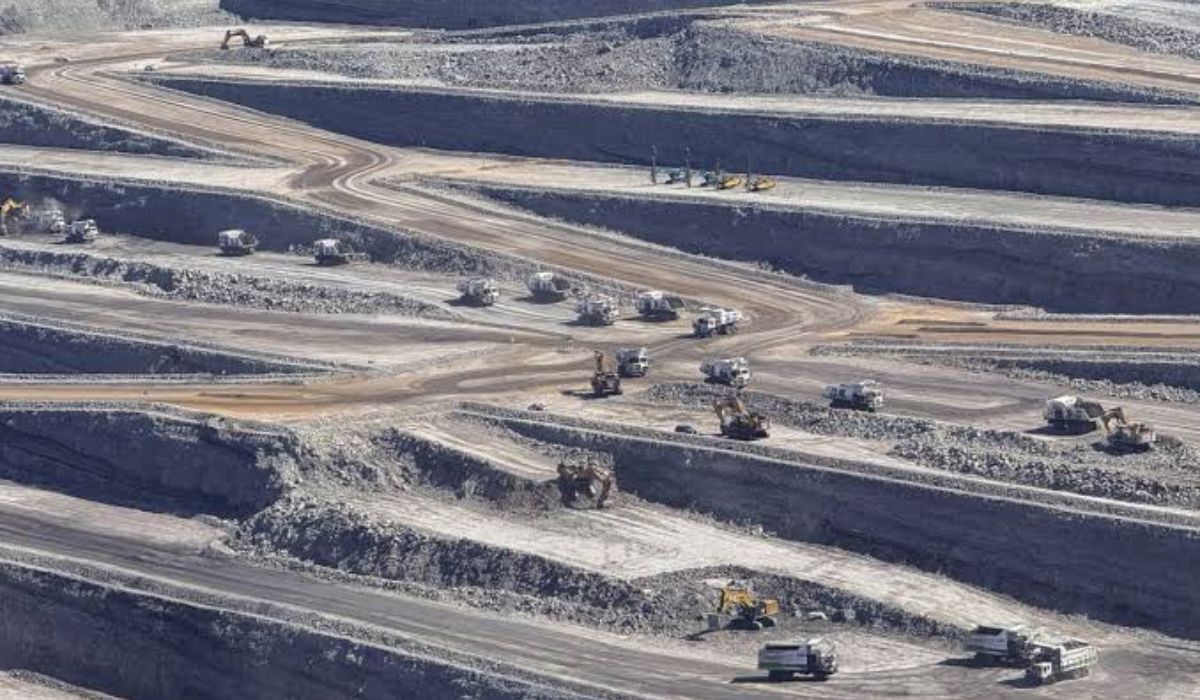
The coal extracted from open-pit mines is sent to nearby units, where it can be used for electricity generation or converted into chemical raw materials through processes such as gasification and industrial synthesis.
This organization reduces the need to transport the ore over long distances and allows part of the added value to be generated in western China itself.
In practice, coal ceases to be just fuel for thermoelectric plants and starts to feed chains linked to heavy chemistry, metallurgy, and the production of materials used by different sectors of the economy.
The choice for local processing also addresses an infrastructure limitation.
Although China has one of the largest railway networks in the world, the continuous transport of large volumes of coal between Xinjiang and the coastal provinces would require additional logistical capacity and permanent costs.
By transforming part of the resource within its own territory, the hub changes the flow: instead of moving only coal, it starts to send electricity and industrial products.
The project brings together mines, thermoelectric plants, coal chemical plants, metallurgical facilities, and units associated with the production of high-demand materials.
This concentration explains why Zhundong has come to be described by Chinese and international media as one of the main industrial hubs in the interior of the country.
Autonomous trucks advance in Zhundong mines
Automation is one of the most visible aspects of the expansion in Zhundong.
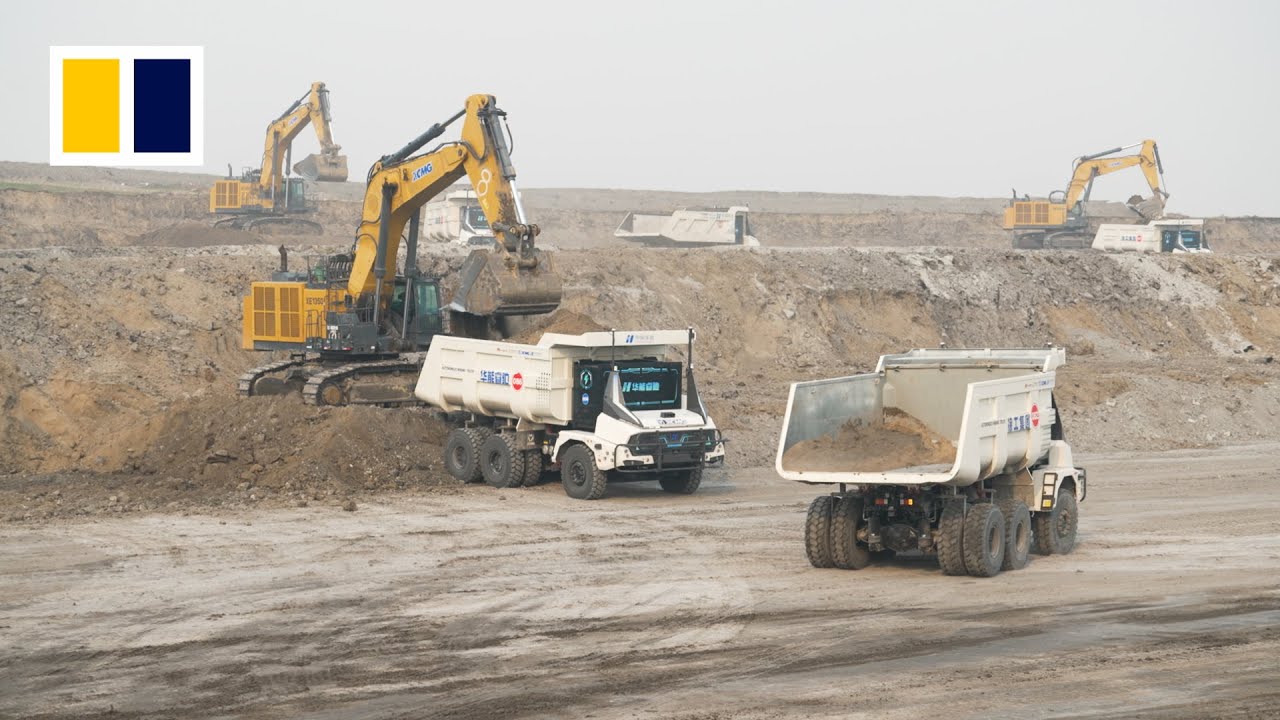
A report by the South China Morning Post describes an operation with almost 300 electric and autonomous trucks in open-pit mines, on routes controlled by digital systems and supported by communication technologies, sensors, and precision mapping.
According to the report, the vehicles head to automated stations when battery charge falls below a certain level.
At these points, robotic arms remove the discharged set and install another in about six minutes, enough time to maintain the internal transport flow with fewer interruptions.
The use of these trucks reduces human presence in certain areas of operational risk and replaces part of the diesel-powered fleet in transportation within the mines.
This change, however, does not alter the fact that the energy base of the complex remains linked to coal, a source associated with high carbon emissions when compared to lower fossil intensity alternatives.
Energy experts assess that automation can increase productivity and reduce operating costs, but it does not eliminate the environmental challenges linked to mining and coal chemical conversion.
The discussion mainly involves emissions, water consumption, industrial waste, and impacts on fragile ecosystems.
Ultra-high voltage line connects Xinjiang to eastern China
The distance between Xinjiang and the more industrialized coastal areas required investments in electrical transmission.
One of the main examples is the Changji-Guquan line, an ultra-high voltage direct current system of ±1,100 kilovolts, which connects the Changji region in Xinjiang to Anhui province in eastern China.
According to electric sector companies involved in the project, the connection spans over 3,000 kilometers and has a transmission capacity of 12,000 megawatts.
The line is presented as one of the milestones of Chinese engineering in long-distance transmission, combining high voltage, large capacity, and extensive reach.
This infrastructure allows part of the electricity generated in the west to be sent to more populous consumer regions.
At the same time, the availability of local energy attracts electricity-intensive industrial activities, such as metallurgy and chemical input production.
The model reinforces Xinjiang’s role as an energy and industrial base.
The region, previously treated mainly as a supplier of natural resources, has started to concentrate more complex transformation stages, with economic, logistical, and environmental impacts concentrated in the same territory.
Coal, aluminum, and materials for solar energy
The growth of Zhundong is also connected to production chains that depend on a large volume of energy.
Among them are aluminum metallurgy and the production of polysilicon, a material used in the manufacture of solar cells and panels.
The presence of these activities shows how sectors associated with the energy transition can depend, in part of their chain, on energy produced from fossil sources.
In the case of Xinjiang, the abundant supply of coal and electricity favored the establishment of energy-intensive industries seeking lower production costs.
Reports and studies on the Chinese energy sector indicate that this combination is a recurring feature of recent industrialization in the west of the country.
The region offers natural resources, extensive areas for large-scale projects, and connection with national economic development policies.
In Zhundong, this movement has altered the local landscape.
Areas once marked by scattered occupation have come to host open-pit mines, transmission lines, factories, accommodations, residential zones, and support centers for workers and companies.
Wucaiwan, one of the areas associated with the hub, appears in reports as an expanding urban-industrial nucleus.
Water consumption limits carbo-chemical advancement in the desert
The advancement of the hub occurs in an arid climate region, making water consumption one of the most sensitive points of the project.
Carbo-chemical processes usually require large volumes for cooling, treatment, gasification, environmental control, and complementary industrial stages.
Researchers and energy experts state that water availability may limit the expansion of such projects in northwest China.
Kevin Tu, general director of Agora Energy China, told the South China Morning Post that the region’s environmental capacity needs to be considered as a constraint for industrial growth.
Studies on Zhundong also point to risks associated with land use changes, pressure on fragile ecosystems, and industrial waste management.
The combination of open-pit mining, chemical plants, and intensive water consumption requires constant monitoring, especially in desert or semi-desert areas.
For the Chinese government, the hub is part of an energy security and industrial modernization policy.
For environmental specialists, the case highlights the limits of projects that use advanced automation and transmission technologies but remain dependent on a high-impact fossil fuel source.
Chinese energy security and coal use
The case of Zhundong brings together elements that help understand the Chinese energy strategy.
The country leads sectors such as ultra-high voltage transmission, electric vehicles, batteries, and solar energy, while maintaining coal as an important component of its energy matrix and base industry.
In the Xinjiang hub, autonomous trucks operate in open-pit mines, robotic systems swap batteries, electric lines carry energy over thousands of kilometers, and chemical factories transform coal into industrial inputs.
The operation combines abundant natural resources, state planning, heavy infrastructure, and automation.
The expansion also raises questions about environmental costs, water usage, and emissions.
Experts state that these factors will be decisive in assessing the real scope of the project, especially since the region combines great industrial potential with known ecological limitations.
Zhundong, therefore, has become a showcase of the Chinese attempt to use technology to enhance the efficiency of a coal-based chain.