Portuguese
  Spanish


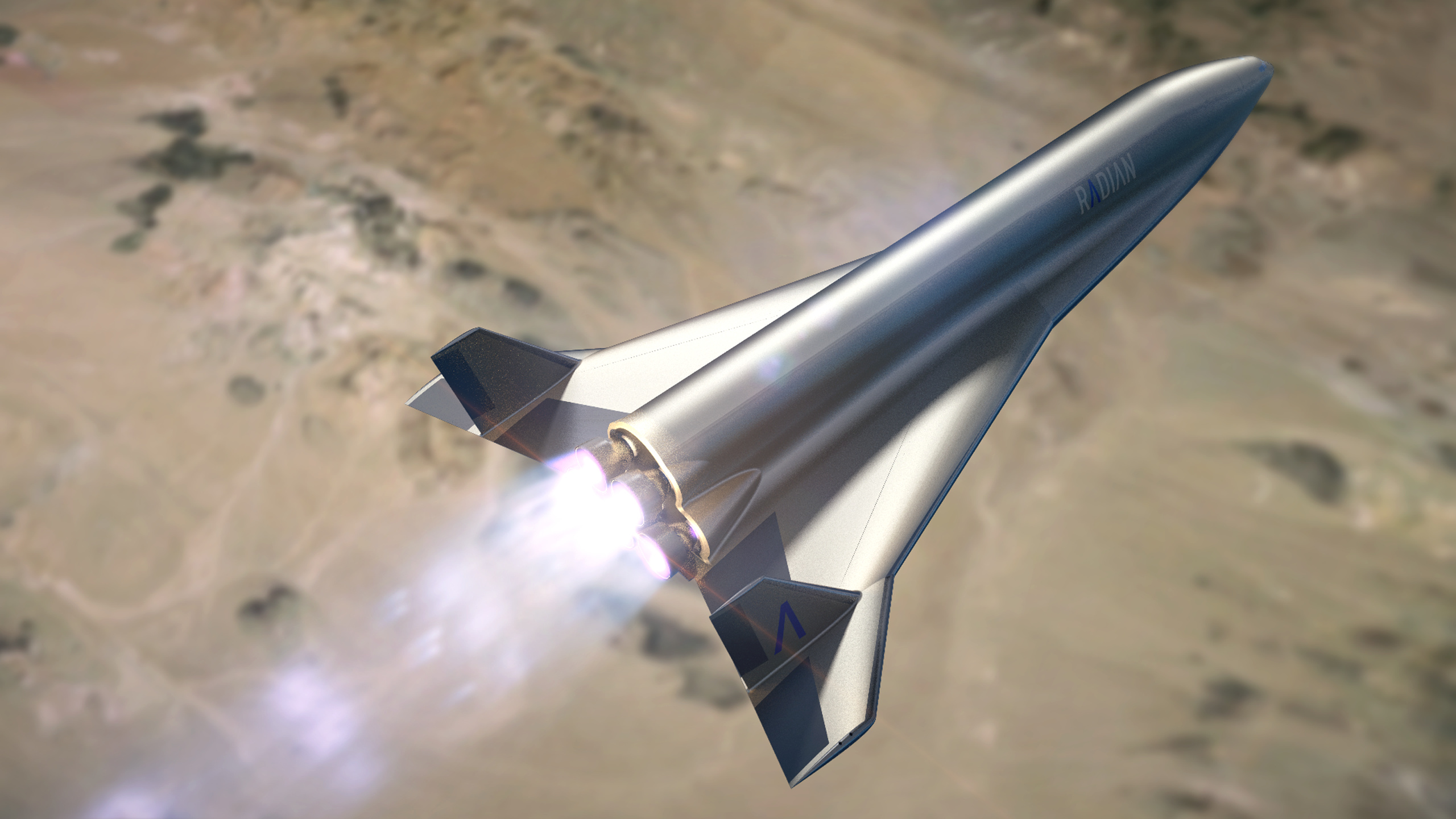

Radian One is the American reusable spaceplane project that aims to reach orbit without discarding stages and return to the runway in 48 hours.
Since the early years of the space race, engineers have been trying to solve a problem that continues to haunt the aerospace industry: creating a spacecraft capable of reaching orbit without discarding parts along the way. While modern rockets reuse only some components and still rely on multiple stages, an American company wants to directly tackle what many experts call the “Holy Grail” of space aviation”: a fully reusable orbital vehicle capable of taking off, reaching space, returning, and flying again without losing any stage. The project is called Radian One and is developed by the American company Radian Aerospace, based in Seattle.
The proposal is to build a single-stage-to-orbit spaceplane, known by the acronym SSTO (Single Stage To Orbit), capable of transporting people and cargo to low Earth orbit, returning by landing on a conventional runway, and repeating this cycle in just 48 hours. If it works as planned, the system could become one of the most ambitious attempts ever made to transform orbital access into an operation similar to that of commercial aircraft.
Radian One attempts to do something that no operational orbital spacecraft has achieved to date
The SSTO concept is considered one of the most difficult challenges in aerospace engineering. The idea is to create a vehicle capable of leaving the Earth’s surface, reaching orbital velocity, and returning without discarding boosters, tanks, or intermediate stages during the mission.
-
Brazilian Researcher Develops Protein Supplement from Tilapia Waste, Combining Innovation and Sustainability with Economic Potential

-
Women in São Paulo Unknowingly Tracked by Coin-Sized Tags Hidden in Cars and Belongings, Raising Stalking Concerns
-
Near a $750 million AI data center in Brazil, a resident’s well runs dry, leaving her unable to afford the $25,000 needed for repairs.

-
16-Year-Old from Brazil’s Sertão Wins Young Scientist Award for AI Predicting Rainfall with 94.5% Accuracy to Aid Farmers


According to Radian Aerospace itself, the goal is to build the world’s first fully reusable SSTO spaceplane.
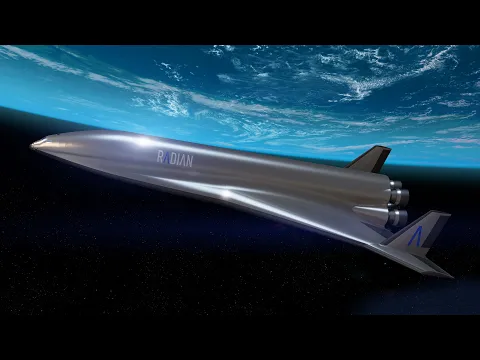

The problem is that reaching orbit requires speeds close to 28,000 km/h, which normally forces rockets to shed mass along the flight to continue accelerating.
It is precisely this physical limitation that has led virtually all modern orbital systems to adopt multiple stages.
Spaceplane was designed to transport up to five people to low orbit
The configuration released by the company envisions a cabin capable of transporting between two and five people.
Additionally, the Radian One was designed to carry up to 5,000 pounds of payload, about 2,270 kg, to low Earth orbit.
The company also claims that the vehicle will be able to bring back approximately 10,000 pounds, about 4,540 kg, to Earth. This return capability is considered one of the main commercial bets of the program.
Instead of taking off like a rocket, the craft will use a nearly 3-kilometer propelled rail
One of the most unusual features of the project is the launch system. According to Radian Aerospace, the Radian One will not perform a conventional vertical takeoff.
The vehicle will be accelerated by a system called a rocket-powered rail sled, a type of sled propelled by rockets that runs on rails before the aircraft separates.
Sources connected to the project describe a structure close to 3,000 meters in length, created to reduce part of the energy needed during the initial phase of orbital flight.
On-demand operation in 90 minutes aims to bring space and commercial aviation closer
Radian claims it intends to operate the vehicle very differently from traditional space launches. According to materials released by the company, the goal is to achieve mission readiness in approximately 90 minutes.

Today, orbital launches typically require long operational windows, complex integration, and extensive preparation.
The Radian One proposal is to drastically reduce this interval to allow for more frequent and flexible operations.
Project promises to return to space after just 48 hours
Another number that draws attention is the reuse time. The company claims that each vehicle was designed to return to service after approximately 48 hours.
If this goal is achieved, the interval between missions would be extremely low by orbital standards.
Currently, even advanced reusable systems require extensive inspections and significant preparation after space missions.
Goal is to reuse each aircraft up to 100 times
Reuse is at the core of the program’s strategy. According to Radian Aerospace, each unit of the Radian One was planned to perform up to 100 reusable missions.
The logic follows the transformation that has occurred in the space sector in recent years. Companies have come to realize that recovering vehicles can drastically reduce the cost of access to space compared to the traditional model of disposal after each launch. Like an airplane, the Radian One should return using horizontal landing.
The company claims that the spacecraft was designed to land on any compatible runway approximately 10,000 feet long, about 3 kilometers.
This eliminates the need for splashdowns, recovery ships, or landings in isolated regions. According to the company, the proposal significantly expands the operational flexibility of the system.
Structure will have dimensions close to large commercial aircraft
The planned dimensions show the scale of the project. Technical reports associated with the development indicate that the vehicle will have a length similar to that of a Boeing 787 and a width comparable to that of a Boeing 737.
This places the Radian One far above small experimental spaceplanes typically seen in research programs.
The proposal is to operate a large orbital platform capable of combining human transport, cargo, and specialized missions.
Company has already started tests with subscale prototype
Although the complete orbital vehicle is still distant, the company has already started test campaigns. In 2024, Radian Aerospace announced the conduct of taxi tests with the PFV01 prototype, a scaled-down aircraft that shares aerodynamic characteristics of the final project.
According to the company, the tests served to validate aerodynamic models, control systems, and operational behavior of the planned configuration. Despite the ambition of the program, the aerospace community itself recognizes the extreme degree of difficulty of the concept.

Technical discussions and expert analyses often classify SSTO vehicles as one of the greatest challenges ever faced by orbital launch engineering.
The reason is simple: carrying enough fuel to reach orbit without discarding mass makes every kilogram of the vehicle extremely important. Therefore, several historical SSTO projects ended up canceled before reaching practical operation.
Technical Specifications of Radian One
- Company: Radian Aerospace
- Country: United States
- Category: reusable SSTO spaceplane in development
- Configuration: single stage to orbit (Single Stage To Orbit)
- Crew capacity: up to 5 people
- Payload to orbit: up to 5,000 pounds (2,270 kg)
- Return payload: up to 10,000 pounds (4,540 kg)
- Reuse goal: up to 100 missions per vehicle
- On-demand preparation time: about 90 minutes
- Planned time between missions: approximately 48 hours
- Landing type: horizontal on conventional runway
- Launch system: rocket-propelled rail sled
- Current status: in development; PFV01 prototype has already conducted ground tests
For decades, engineers have tried to create an orbital craft that functions more like an airplane than a rocket.
The Radian One still needs to prove it can overcome physical barriers that have defeated numerous previous projects, but the ambition remains gigantic: to transform access to space into a repetitive, reusable, and fast operation enough so that reaching orbit no longer seems like an exceptional mission and starts to function as a new form of transportation.