Portuguese
  Spanish


Instead of exporting from home and encountering European tariffs, companies from the Asian giant are setting up factories a few hours by boat from Spain. Brussels fears an indirect route for their products. Morocco and Chinese companies, however, reject the accusation and speak of genuine development and partnership.
China found a loophole and is reportedly entering Europe through the back door by setting up a network of battery, tire, and auto parts factories on the other side of the Strait of Gibraltar, in Morocco. According to an analysis by the Financial Times, this structure would allow bypassing tariffs of up to 45% that the European Union created precisely to curb the entry of Chinese electric cars, although Morocco and the companies involved deny that this is the goal, defending it as legitimate industrial development.
The report, published at the end of May 2026 by the Financial Times and echoed internationally, describes a rapidly growing Chinese industrial hub in the regions of Tangier and Kenitra. It is important to clarify from the outset that this article only reports the debate and available data, without taking sides: on one side are the fears of European authorities and analysts; on the other, the response of the Moroccan government and Chinese companies, who reject the idea that they are merely circumventing the rules, as we will see below.
China’s Strategy in Morocco
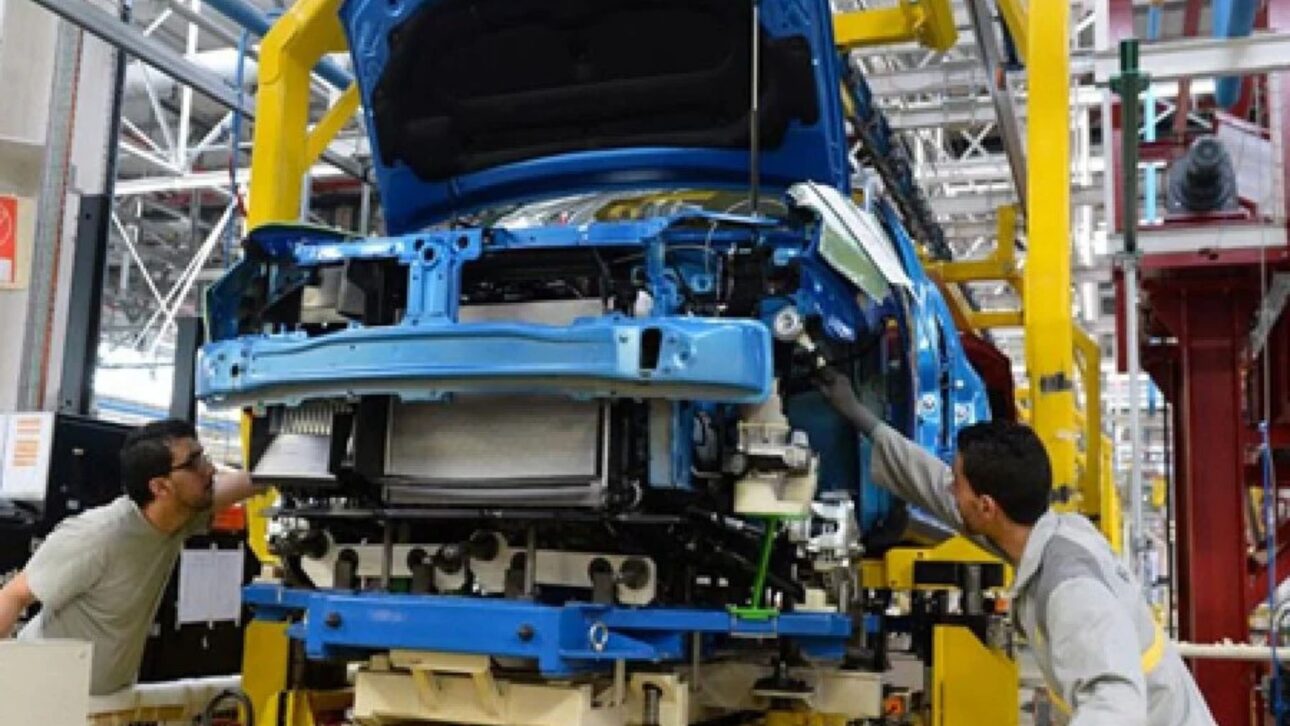
Chinese companies have been investing billions of dollars in Morocco, building what analysts describe as an increasingly complete supply chain for electric vehicles, ranging from battery materials to tires, brakes, and electronic components, concentrated mainly around the cities of Tangier and Kenitra.
-
Brazil’s 2026 Tax Refund: Record 9.58 Million Filers in Largest Payout Ever, But a Key Detail on Priority Recipients Draws Nationwide Attention

-
Itaú Alters Hybrid Work Model, Increasing Office Days from 2028, Prompting Employees to Adjust to New Routine
-
Facing Labor Shortage, Japan Plans to Invest $34 Million to Attract Foreign Workers in Construction, Healthcare, Industry, and Commerce

-
Brazilian City Makes Remarkable Leap, Becomes 4th Wealthiest in the Country with GDP of R$ 134.1 Billion




According to data from the Rhodium Group cited by the press, the announced Chinese investment in Morocco amounts to about $6 billion since the pandemic.
The logic, from the Chinese perspective, would not be to abandon Europe, but to get even closer to it: instead of transporting finished products over thousands of kilometers from China, companies can manufacture components and vehicles just a few hours from the main European markets, reducing costs and commercial risks.
Why Morocco Became the Preferred Destination
The North African country offers a rare combination of advantages.
Morocco offers geographical proximity to Europe, competitive labor costs, renewable energy, tax advantages such as a five-year tax exemption, and a wide network of about 50 trade agreements, providing access to a vast consumer market, including the European Union and the United States, according to the Financial Times.
Adding to this is the country’s logistics infrastructure, notably the Tangier Med port, now one of the largest in the Mediterranean and Africa.
For many Chinese companies, producing in Morocco has become more attractive than continuing to manufacture in China and facing increasing Western trade barriers.
Not surprisingly, according to industry reports, the country has been receiving successive delegations of potential Chinese investors interested in setting up there.
The Factories That Are Already Being Built
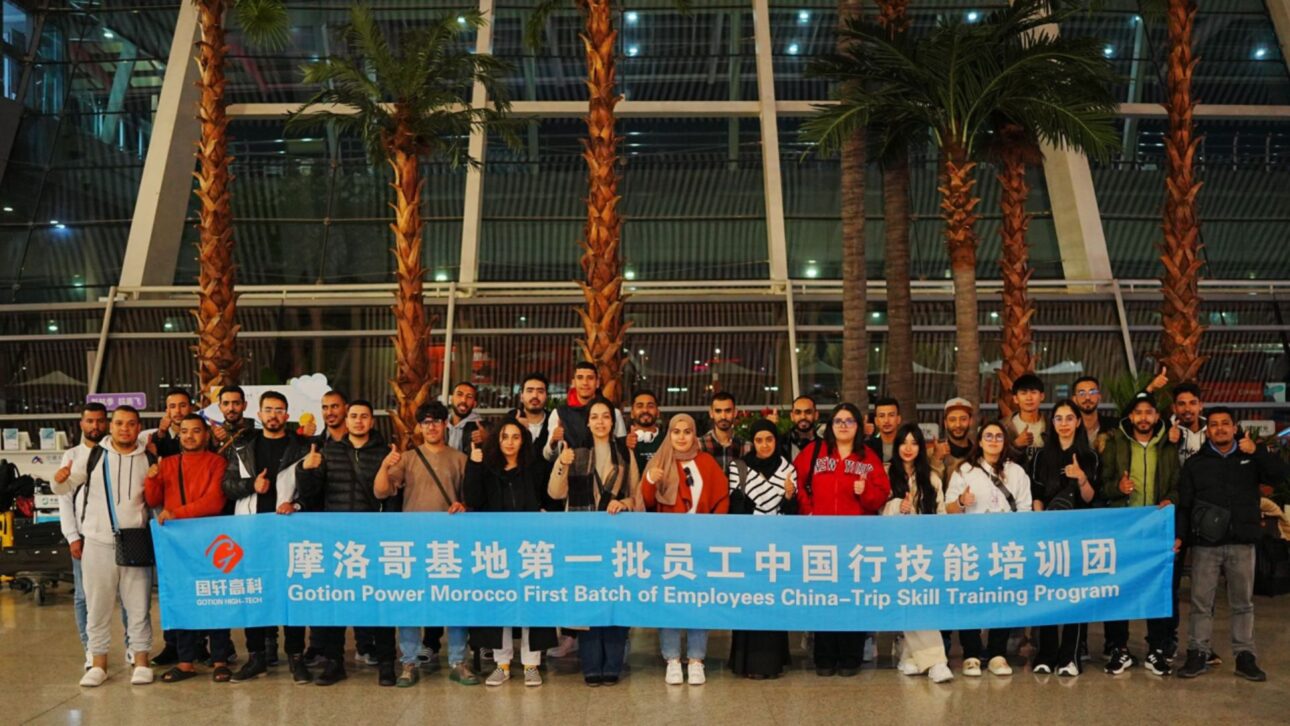
Among the most notable investments is the Gotion High-tech battery gigafactory, budgeted at $1.3 billion, under construction in Kenitra, which is expected to become the largest unit of its kind in Africa, while in the Tangier industrial zone companies like tire manufacturer Sentury Tire and battery materials company BTR New Material Group are operating or setting up, along with brake manufacturer APG, with a $70 million plant.
A relevant detail is that the Western industry itself participates in this ecosystem: the German Volkswagen, for example, holds a stake of about 25% in Gotion High-tech, which shows how the boundaries between Chinese and European capital are not always clear.
The automaker Stellantis, owner of brands like Peugeot and Fiat, also has operations in Kenitra, reinforcing Morocco’s role as an automotive hub attracting investors from different origins.
Brussels’ Fear and the Tariff Issue
This is where the most sensitive and controversial point of the debate resides.
European Union authorities fear that Morocco will become an indirect channel for the entry into the European market of products supported by Chinese capital, technology, and subsidies, taking advantage of the country’s trade agreements to escape tariffs of up to 45% imposed on Chinese electric vehicles, according to the Financial Times.
The European Union’s Trade Commissioner, Maroš Šefčovič, told the newspaper that Chinese investments in Morocco reflect Beijing’s effort to offload excess production, classifying the trend as a major problem for the European economy.
The challenge pointed out by Brussels is distinguishing where Morocco’s genuine industrialization ends and where a strategy to circumvent tariffs begins, a fine line that becomes harder to draw as production chains become more complex.
The other side: the response of Morocco and China
For a fair picture, it is essential to hear from those who are the target of the suspicions.
The Moroccan government rejects the idea that its special economic zones will be used by China to export excess production to Europe, and argues that the country is building its own value chain, with the goal of supporting significant electric vehicle production per year, generating jobs, infrastructure, and economic growth.
On the business side, Chinese executives argue that Europeans, Moroccans, and Chinese can share the benefits of this collaboration, with factories that combine local labor and materials with Chinese technology.
There is also a technical aspect in dispute: the so-called rules of origin require that products undergo sufficient local transformation to enter Europe without tariffs, although some analysts have doubts about the extent to which this criterion will be met.
The debate, therefore, is far from a simple answer.
Why this matters to Brazil
The Moroccan case helps to understand a phenomenon that is also arriving here.
Brazil has been receiving Chinese investments in the electric vehicle and battery sector, with the arrival of manufacturers like BYD, and also discusses the balance between attracting these factories and protecting the national industry, in a debate similar to what is seen in Europe, although with its own context.
Following China’s strategy of approaching large markets through third countries helps to understand the transformations of global trade and the automotive industry, of which Brazil is also a part.
The way Europe, the United States, and emerging countries will deal with the Chinese industrial expansion will be one of the most important economic themes of the coming years, with direct impacts on jobs, prices, and technology on a global scale.
The construction of a Chinese industrial hub in Morocco, at the gates of Europe, is a vivid portrayal of the global economic competition surrounding electric vehicles and production chains.
On one side, China seeks new routes to keep its enormous productive capacity active in the face of Western barriers; on the other, Europe tries to protect its industry without closing the doors to investment.
In the middle is Morocco, which sees the investments as a chance for development.
More than pointing fingers, the episode raises a central question for the global economy: to what extent can tariffs truly contain such a global and adaptable industrial movement?
And you, what do you think of China’s strategy to produce in Morocco to get closer to Europe? Do you believe tariffs can slow down the advance of Chinese products? Leave your comment, respecting different opinions, participate in the debate cordially, and share the article with those interested in economics, the automotive industry, and geopolitics.