






 Portuguese
  Spanish
  4 min of reading
  0 comments


Scientists Reveal Mirasaura Grauvogeli, A New Species of Reptile with Feather-Like Crest That Lived 100 Million Years Before Dinosaurs, Changing the History of Paleontology.
A fossil about 247 million years old revealed a creature as strange as it is fascinating, capable of rewriting part of the history of life on Earth. Named Mirasaura grauvogeli, the newly discovered species lived long before the dinosaurs and intrigues paleontologists with its unique features: a body only 15 centimeters long, a prehensile tail like that of a monkey, feet adapted for grasping branches, and a rigid and colorful crest that resembled feathers — even without any direct connection to birds.
The discovery, published in July 2025 in the journal Nature, is being considered one of the most significant finds in recent paleontology. This is because it reveals that feather-like and hair-like structures — previously thought to be exclusive to lineages that gave rise to birds and mammals — emerged much earlier than previously imagined, in an ancient branch of the reptile family.
A Fossil Before the Dinosaurs Changes History
The fossil of Mirasaura dates back to the Triassic period, over 100 million years before the first flying dinosaur appeared. This timeline is impressive: until now, it was believed that complex body covering structures, like feathers, were restricted to more recent evolutionary groups.
-
Survivor of 1966 SS Daniel J. Morrell Shipwreck in Lake Huron Recounts 38-Hour Ordeal in Extreme Cold

-
The Greatest Hoax in World Cup History? The Film That Denied Brazil’s 1958 Victory and Exposed How Fake Evidence Can Seem Convincing on TV
-
Fake South Korean Online Stores Offer Shopping Thrill Without Spending Money or Receiving Products
-
The War of Jenkins’ Ear: How a Severed Ear Sparked One of the 18th Century’s Most Unusual Conflicts


The animal, with an elongated body and narrow face resembling that of a bird, climbed trees in an ecosystem that existed millions of years before the Jurassic giants dominated the Earth.
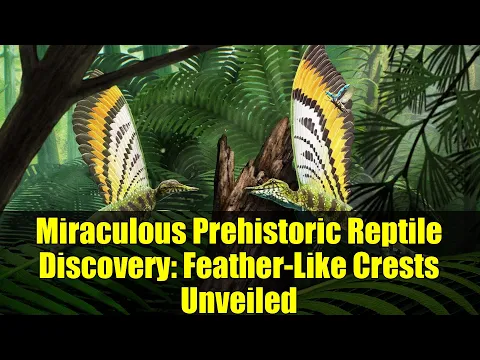

For scientists, the discovery reinforces the idea that the paths of evolution were much more diverse and creative than previously thought. “I’m shocked and perplexed. It’s been a long time since I’ve been so impressed by a new fossil discovery,” admitted Steve Brusatte, a paleontologist at the University of Edinburgh.
The Strange Anatomy of the Prehistoric Animal
Mirasaura belongs to a little-known group of arboreal reptiles called drepanosaurs. These animals, found in North America and Europe, had barrel-shaped bodies, curved shoulders, and large forward-facing eyes, in skulls with beaks resembling those of birds.
Many had opposable thumbs and prehensile tails, some even with claws at the tips, in an adaptation that resembles modern primates more closely.
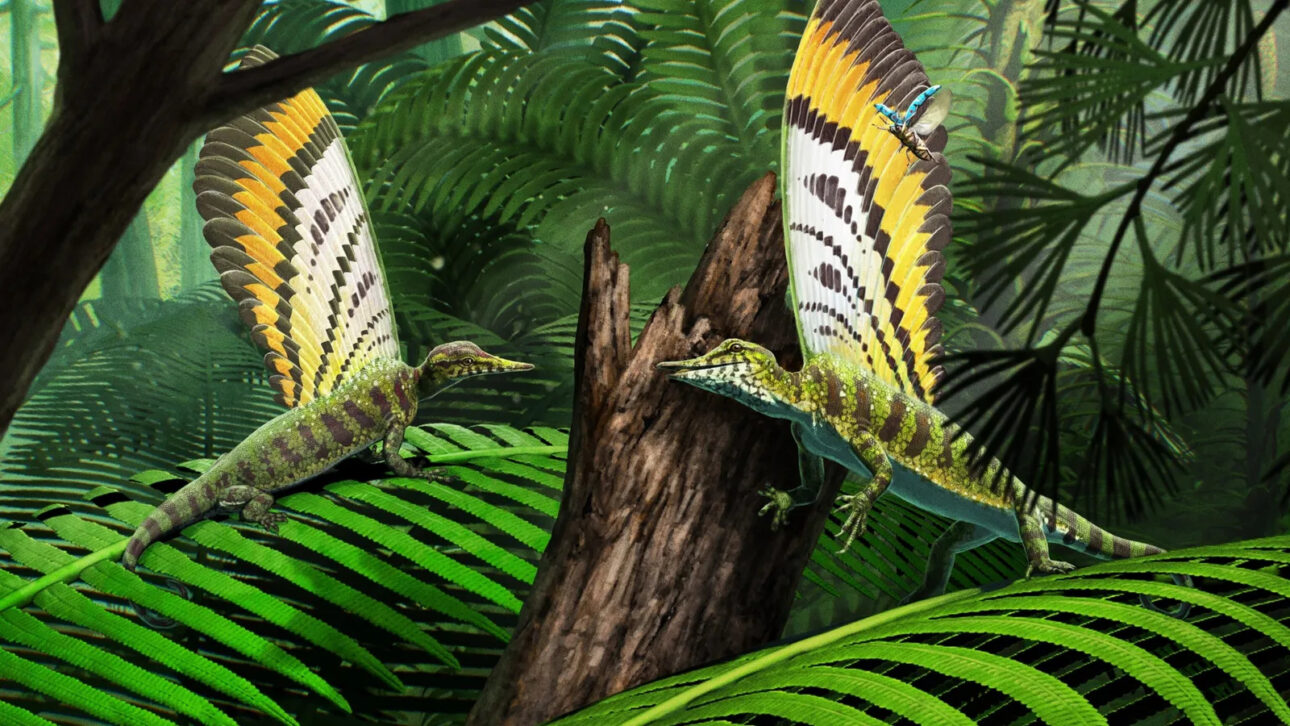
Stephan Spiekman, a paleontologist at the State Museum of Natural History in Stuttgart and one of the authors of the study, compares the creature to a “pygmy anteater with chameleon traits.” The discovery of its rigid crest, made up of overlapping keratin structures, intrigued scientists: the “plumes” resembled feathers, but were biologically different, indicating a unique evolutionary innovation.
New Species of Fossil and A Mystery Solved
The find also helped to solve a paleontological puzzle that lasted for decades. In 1970, scientists described a reptile called Longisquama, found in Kyrgyzstan, which had long feather-like structures.
For years, it challenged the theory that birds descended from dinosaurs, as it suggested that feathers could have emerged in other groups.
With the analysis of Mirasaura, researchers were able to classify Longisquama as another member of the drepanosaur group. “The mystery is now solved,” stated Michael Buchwitz, a paleontologist at the Natural History Museum of Magdeburg.
Paleontology and the Discovery of Convergent Evolution
The discovery of Mirasaura grauvogeli reinforces the concept of convergent evolution, where different species develop similar characteristics independently. The animal’s crests resemble feathers but lack the typical branched structure found in birds. They likely served for visual communication, defense, or attracting mates, possibly reflecting light and creating vibrant color effects.
Microscopic analyses revealed melanosomes — pigment-producing cells — similar to those found in modern birds. This suggests that the crests could have had complex color patterns, something surprising for a reptile that lived millions of years before the dinosaurs.
A Fossil Forgotten for 80 Years
Interestingly, the first traces of Mirasaura were found in 1939 by Louis Grauvogel, a fossil collector in France.
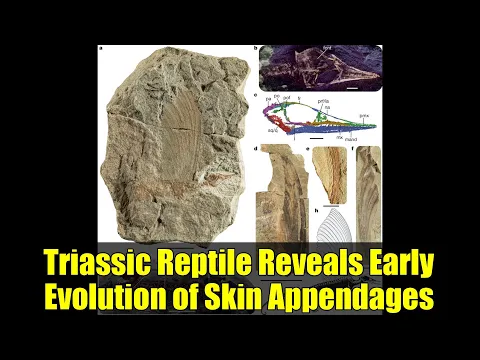
He believed he had found fish fins or fossilized insect wings. Decades later, in 2019, the State Museum of Natural History in Stuttgart acquired Grauvogel’s collection. Only then did paleontologists notice thin ribs and bone fragments, linking the structures to a single animal.
The analysis of more than 80 fragments revealed that juvenile specimens were about 15 cm long, but isolated crests suggest that adults could measure over 30 cm. The name Mirasaura grauvogeli literally means “miraculous reptile of Grauvogel,” in honor of the man who collected the fossils.
Implications for Science and The Future of Discoveries
The revelation that feather-like structures emerged in such ancient reptiles suggests that the evolutionary “manual” for creating hair, feathers, and scales may have developed very early in vertebrate history. This opens the door for bold hypotheses: could other groups of fossil reptiles have had colorful and showy structures like those of Mirasaura?
For Spiekman, the answer is promising: “The discovery changes our understanding of what a reptile is (or was). Perhaps we have underestimated how colorful and diverse the past was.”
Mirasaura is not just a new name on the tree of life — it challenges how we understand evolution, the origins of structures like feathers, and the appearance of creatures that inhabited the Earth before the dinosaurs.
The discovery shows that paleontology still has many secrets to reveal. Every fossil hidden in ancient rocks can rewrite entire chapters of natural history and, in the case of Mirasaura, brought back to life a “miraculous reptile” that lived nearly 250 million years ago, hanging on branches, displaying a crest that shone under the sun of a lost world.





Be the first to react!