Portuguese
  Spanish


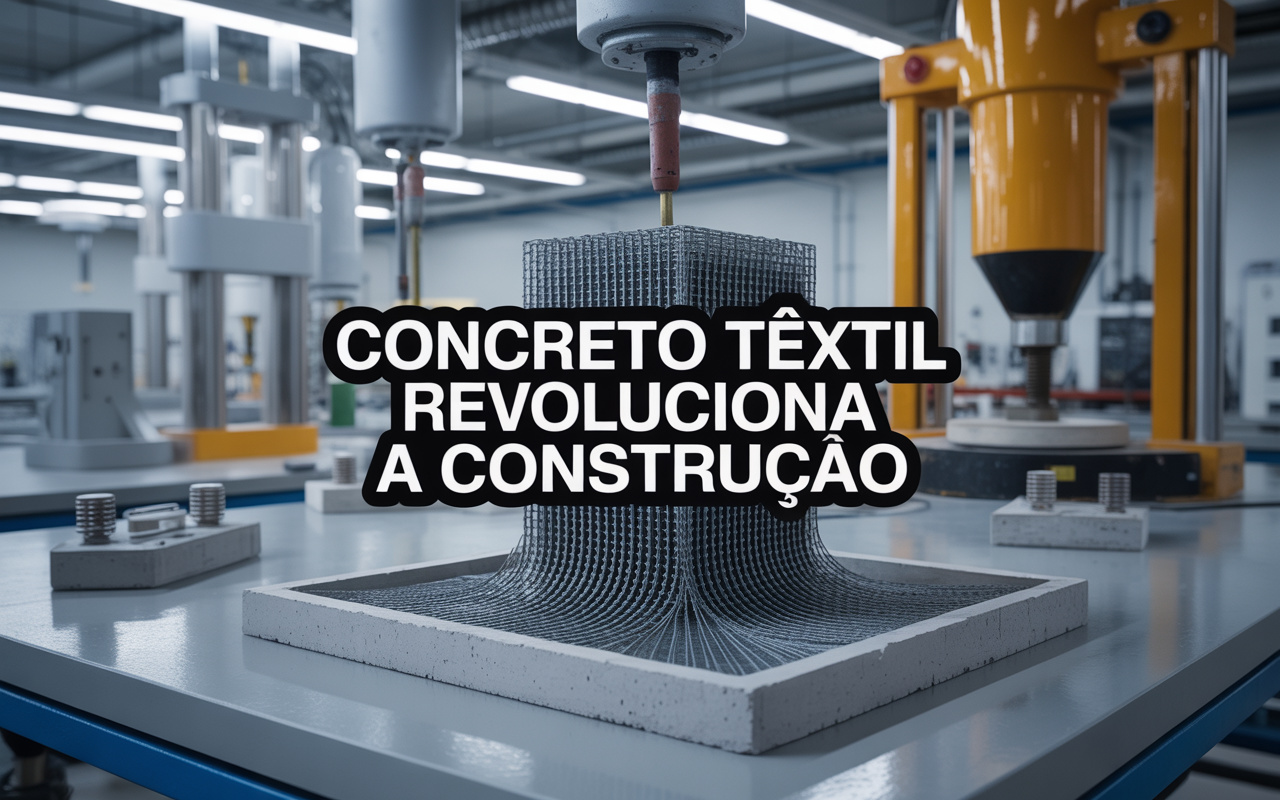


Textile Concrete Uses Fibers Instead of Steel, Reduces Thickness by Up to 80% and is Already Appearing in European Works as a Lightweight, Durable, and Corrosion-Resistant Solution.
In recent years, research centers and construction companies in Europe have been adopting a technology capable of profoundly altering how slabs, facades, structural reinforcements, and panels are produced: textile concrete, also known as TRC (Textile Reinforced Concrete). Developed more advancedly at the Technical University of Dresden (TU Dresden) in Germany, the material combines high-strength concrete with textile meshes made of fiberglass, carbon, or basalt. The result is a structure that is up to seven times lighter, corrosion-resistant, and up to 80% thinner than conventional reinforced concrete.
This advancement is not experimental; it is already being applied in bridges, thin slabs, facades, and reinforcements of existing buildings, especially in Germany, where the C³ – Carbon Concrete Composite program, funded by the government, has been promoting the technology since 2014.
What Makes Textile Concrete So Different from Traditional Reinforced Concrete
The main differentiator is the textile reinforcement, which completely replaces steel in various applications. The technical fiber meshes do not oxidize and can be positioned closer to the surface, eliminating the generous thicknesses needed to protect steel from corrosion.
-
Brazilian Fishing Couple Spends 4 Years Building Solar-Powered Floating Home on the Paraguay River, Now a Navy-Approved Vessel with Leisure Area and Tour Demand

-
While the World Opens New Airports and High-Speed Trains, Brazil Rushes to Complete Projects Stalled for 40 Years
-
Brazil Invests in Massive Waterway to Transport Soybeans by Barge, Reducing Costly Truck Reliance
-
Bridge Rebuilt in Just One Year Reconnects Two Brazilian States


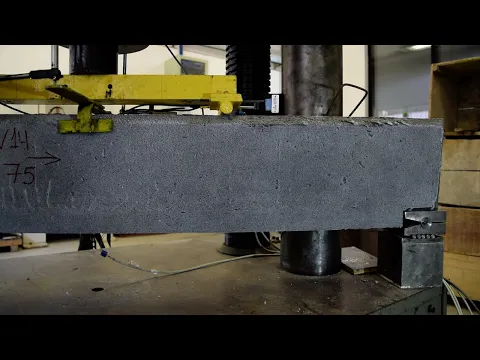

This allows structural elements to be:
- much thinner (in some cases, only 2 to 3 cm),
- lighter and easier to transport,
- less dependent on thick coverings,
- more durable, as there is no risk of rust.
The tensile strength of carbon fibers, for example, exceeds that of steel by up to six times, maintaining integrity even under significant deformations.
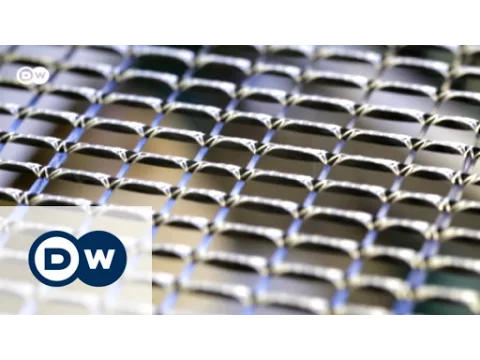
This behavior allows for the creation of curved slabs, architectural panels, and extremely thin reinforcements, previously impossible with metal reinforcements.
Real-Wold Applications Already Built Prove the Viability of the Technology
Textile concrete has moved from the lab to the real world. In Germany, several projects are already using TRC:
- The Albstadt Pedestrian Bridge, built with carbon fibers, is 80% lighter than an equivalent traditional reinforced concrete bridge.
- Facades of the CUBE Project in Dresden demonstrate superior strength with only a few centimeters of thickness.
- Thin Roof Slabs in public buildings are using TRC to reduce weight and load on the foundations.
- Structural Reinforcements in existing buildings (retrofit) eliminate the need for steel and add load capacity with thin layers applied as “structural fabrics.”
All these projects are documented by TU Dresden, the C³ consortium, and German technical agencies.
The Direct Impact on the Construction Site: Less Weight, Less Material, and More Durability
The ability to manufacture much thinner pieces has immediate impacts:
- Reduction of up to 50% to 70% in the volume of concrete used.
- Drastic decrease in the total weight of the structure.
- Fewer trucks, fewer forms, fewer shoring.
- Greater freedom for complex geometries and curved slabs.
- Longer lifespan, as there is no internal oxidation.
In a scenario where the cost of steel and the environmental impact of cement are under pressure, TRC emerges as a competitive, sustainable, and technically advanced alternative.
A Future Where Steel May No Longer Be Mandatory in Various Applications
Research is still advancing, but the reality is already clear: textile concrete is not a promise; it is a technology that is already being used and whose adoption is likely to grow.
It may not completely replace traditional reinforced concrete in all situations, but:
- it may retire the use of steel in various types of slabs, facades, and reinforcements;
- it may reduce thicknesses to unprecedented levels;
- it may decrease the weight of buildings, allowing for more economical designs;
- it may extend the lifespan of structures exposed to moisture or corrosive environments.
If it is already transforming European works today, tomorrow it may be present in commercial, residential, industrial buildings, and even infrastructures worldwide.