Portuguese
  Spanish


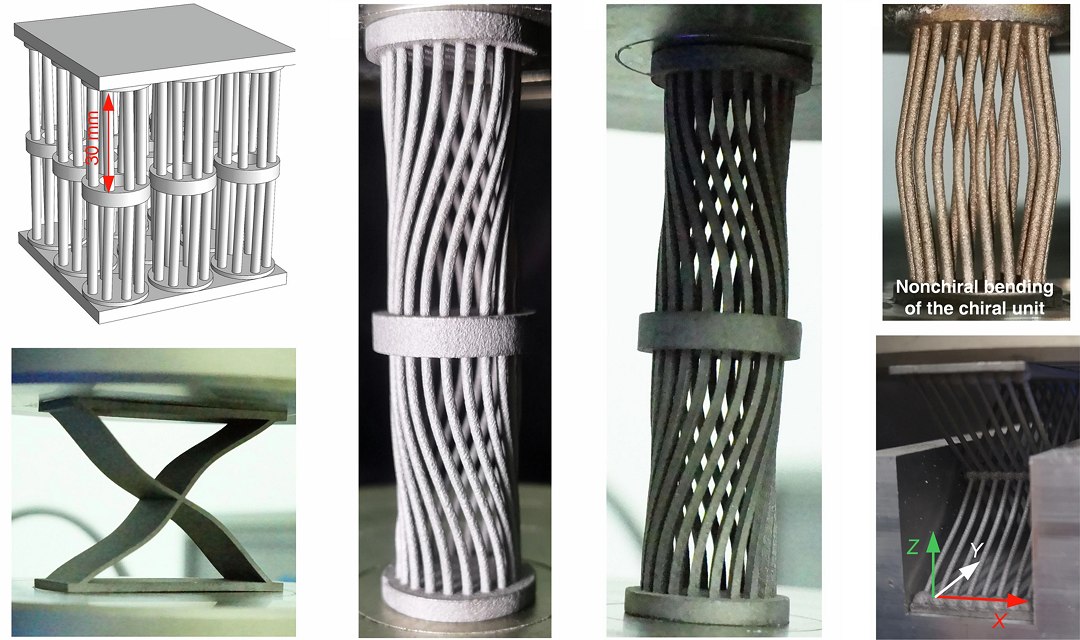


A Surprising Innovation Is Catching Attention In The Field Of Engineering: Twisted Rods That Can Store Huge Amounts Of Mechanical Energy. With Performance Superior To That Of Traditional Springs
A innovation in the field of materials could change how we handle the storage of mechanical energy. Researchers at the Karlsruhe Institute of Technology in Germany developed a new type of metamaterial based on twisted rods, leading to new springs with superior performance. The result is a much higher elastic energy density than what was known until now.
This technology has the potential to transform various applications, such as robotics, shock absorbers, and even renewable energy systems.
The secret lies in the use of intensely twisted rods, which deform helicoidally. This gives the material a rare combination of high stiffness, strength, and deformation capacity.
-
New Study Finds Brief Stress Episodes Can Alter Blood and Increase Risk of Clot Formation

-
Ukraine Escalates War Efforts with Plan to Deploy 25,000 Ground Drones, Test Phantom MK-1 Humanoid Robot, Use Armed Mini-Tanks, and Expand Automated Attacks up to 15 km from Frontline

-
New Superfiber Developed by Imperial College Researchers and Approved by the EU Promises to Increase Satiety and Help Prevent Weight Gain
-
Harvard Researchers Develop Biological Clock to Estimate Life Expectancy, Potentially Transforming Human Aging Studies


The Basis Of The Innovation
Metamaterials are artificial materials whose properties depend on how they are structured, rather than just their composition. Although these materials are best known for dealing with electromagnetic waves, research has shown that the concept goes far beyond.
The group led by Xin Fang combined this structuring with the use of torsion. This allowed for an elastic energy density much higher than that of other materials. In other words, the new metamaterial can efficiently absorb and release large amounts of energy.
Intensely Twisted Rods: Mechanical Energy In Focus
Mechanical energy is present in various everyday devices. Springs, flexible rods, and shock absorbers operate based on this type of energy. They are fundamental elements in shock absorption, energy storage, and the functioning of various mechanisms.
With the new twisted metamaterials, the efficiency of these technologies can improve significantly. They can also enable completely new applications, thanks to their ability to store energy more intensely.
The Role Of Enthalpy
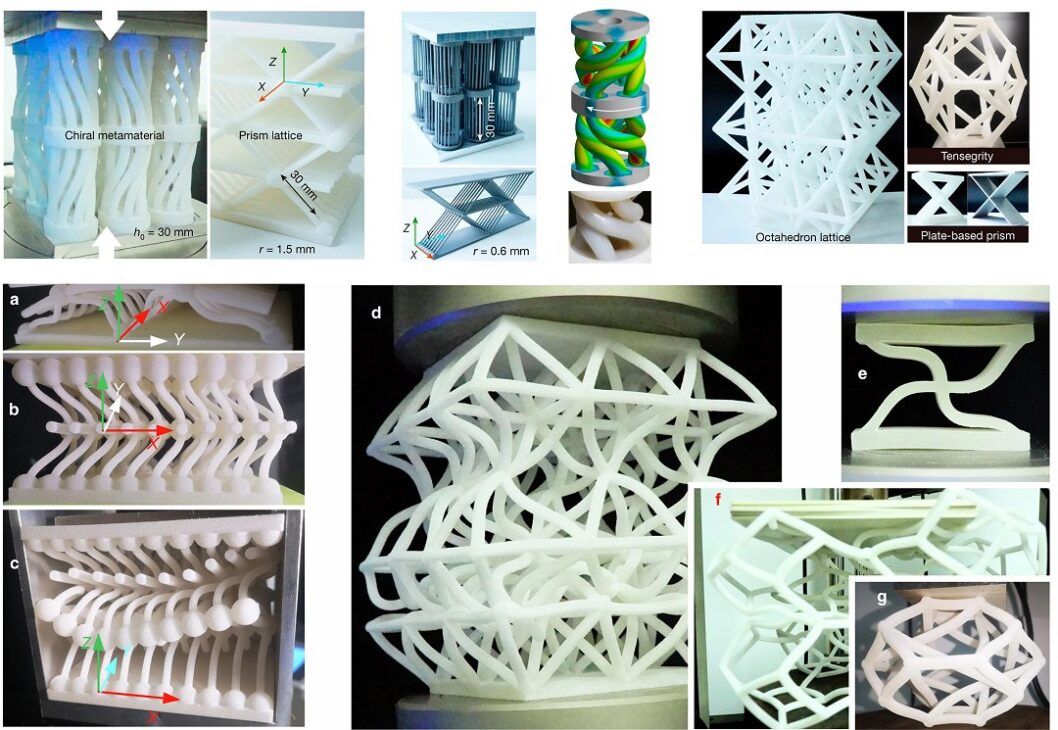
One of the key terms in this research is enthalpy. It refers to the energy density that can be stored and then recovered in each component of the material. The elements of the metamaterial, called meta-atoms, were designed to maximize this potential.
Professor Peter Gumbsch, one of the researchers involved in the study, explained that the main difficulty was combining properties that typically conflict: stiffness, strength, and deformation.
“First, we detected a mechanism to store a large amount of energy in a simple round rod without breaking or permanently deforming it,” said Gumbsch. “By defining a smart arrangement of the rods, we then integrated this mechanism into a metamaterial.”
The team then strategically arranged these rods within a structure. The result was a material that can be used on a large scale while maintaining its properties under pressure.
The Difference Between Torsion And Bending
Traditional springs operate through bending. However, this type of deformation has limits. Stresses concentrate on the top and bottom surfaces of the spring, which can lead to breaking or permanent damage. The internal volume of the spring, in these cases, does not contribute to energy storage.
With torsion, it’s different. The entire surface of the rod is used to withstand stresses. This reduces the internal area that is not utilized. For this to work well, the torsion needs to be high, creating a helicoidal shape. This was exactly the concept that the researchers were able to apply.
Promising Results Of The New Springs
The new material showed performance far superior to the mirrored chiral metamaterials tested by the same team. The resulting new springs exhibited enthalpy 2 to 160 times greater, indicating an advancement in terms of elastic energy storage.
Peter Gumbsch highlighted the versatility of the result. “Our new metamaterials, with their high capacity for elastic energy storage, have the potential to be used in various areas in the future where both efficient energy storage and exceptional mechanical properties are needed.”
The research paves the way for developing more efficient solutions in different sectors, using an innovative structural approach based on torsion.
With information from Inovação Tecnológica.