Portuguese
  Spanish


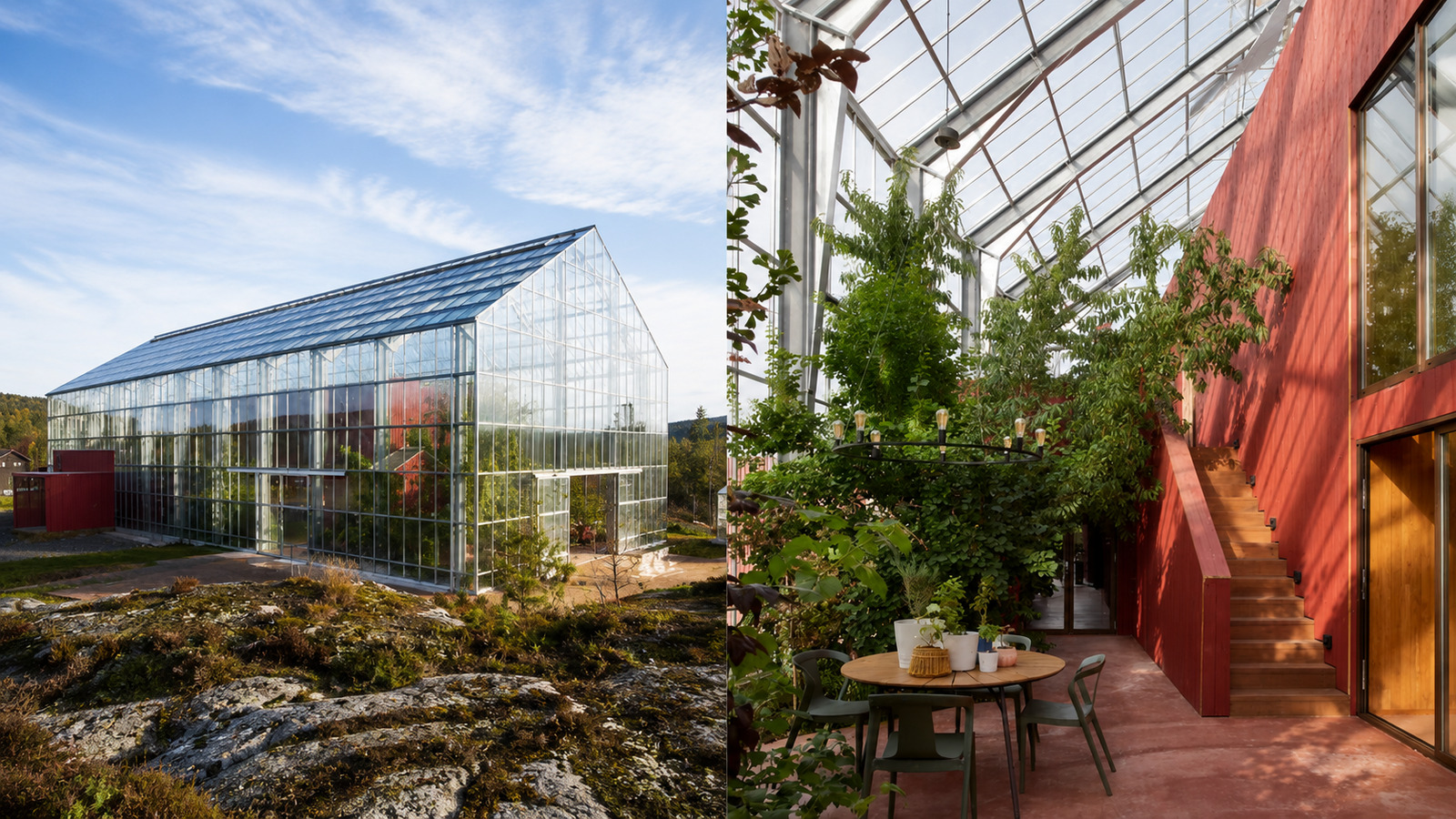


Architect Margit Klev’s project protects the residence in an 11.5-meter glass structure, allows fruit cultivation in the Norwegian cold, and combines own water, solar panels, biomass, and micro-hydroelectric
A house inside a greenhouse has transformed a rural property in Norway into an unusual model of sustainable living. Created by architect Margit Klev, the project houses the family in a large glass structure, allows fruit cultivation in winter, and combines own water, solar panels, biomass, and micro-hydroelectric. The family’s creation was featured in 2025 in an article by The Guardian.
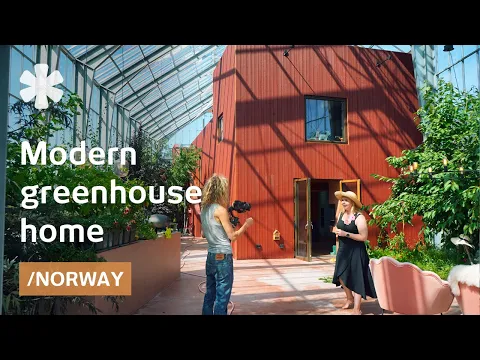

House inside a greenhouse protects the home from the Norwegian cold
The residence is located on a farm in a rural area west of Drammen and Oslo, surrounded by trees and pastures. Margit Klev grew up on the property, where her parents, brother, and sister still live nearby.
Upon inheriting a plot of land there, she and her husband, Arnstein Norheim, decided to build a house that would keep the family close to nature all year round. The solution was to create a house inside a greenhouse, protected by a large glass structure.
-
At 54, Brazilian Artisan Turns Textile Waste into a Successful Handbag Brand, Earning Over $6,000 Monthly

-
Brazilian Entrepreneur Sells $50,000 Monthly in Sustainable Luggage Made from Recycled Bottles, Eyes International Market
-
Chinese Man Transforms Home into 10-Story Pyramid Over 8 Years, Defying Authorities Before Demolition

-
Faced with College Costs, Brazilian Student Lived in a Minivan for Nearly Two Years to Graduate Debt-Free

The greenhouse was manufactured by Drivadan in Denmark, delivered as a kit, and assembled on the site in just two weeks. Before that, the family prepared a concrete base to receive the structure.
The result is a glass shed 11.5 meters high, which encloses the main house, houses internal gardens, and creates annexed areas used by the family in different seasons.
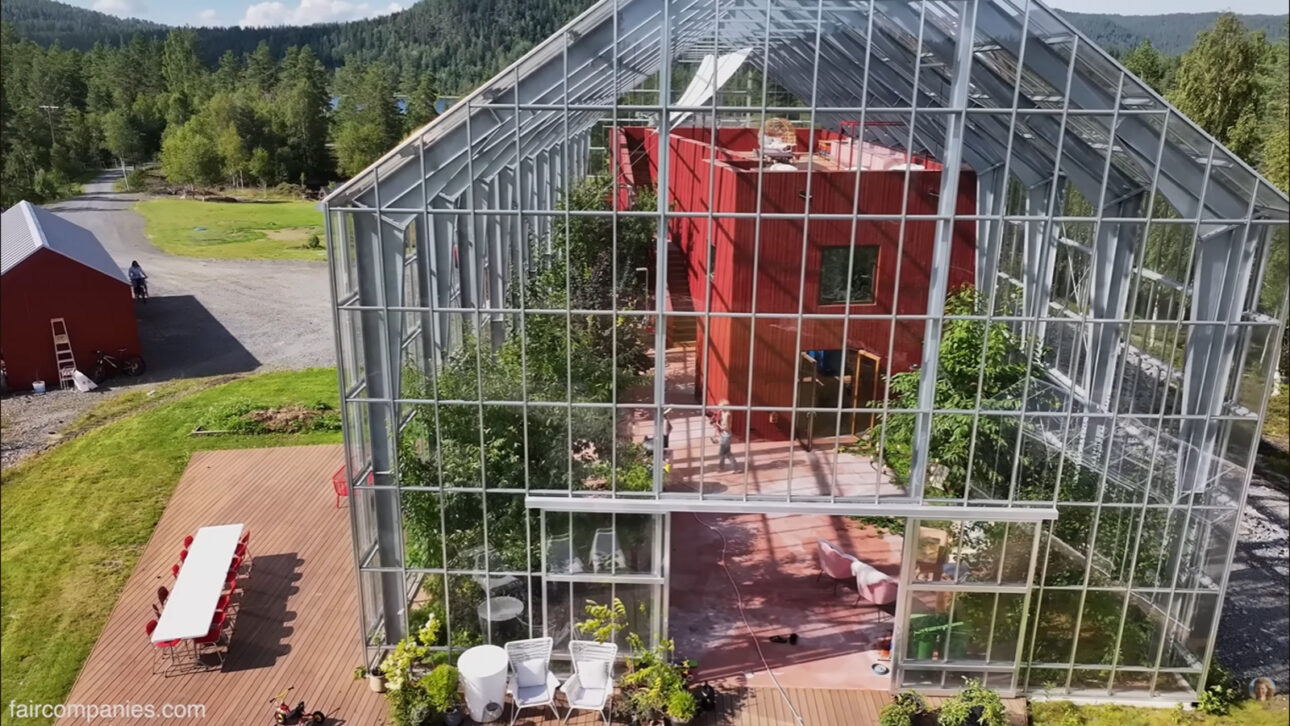
Glass structure allows planting fruits that wouldn’t survive the winter
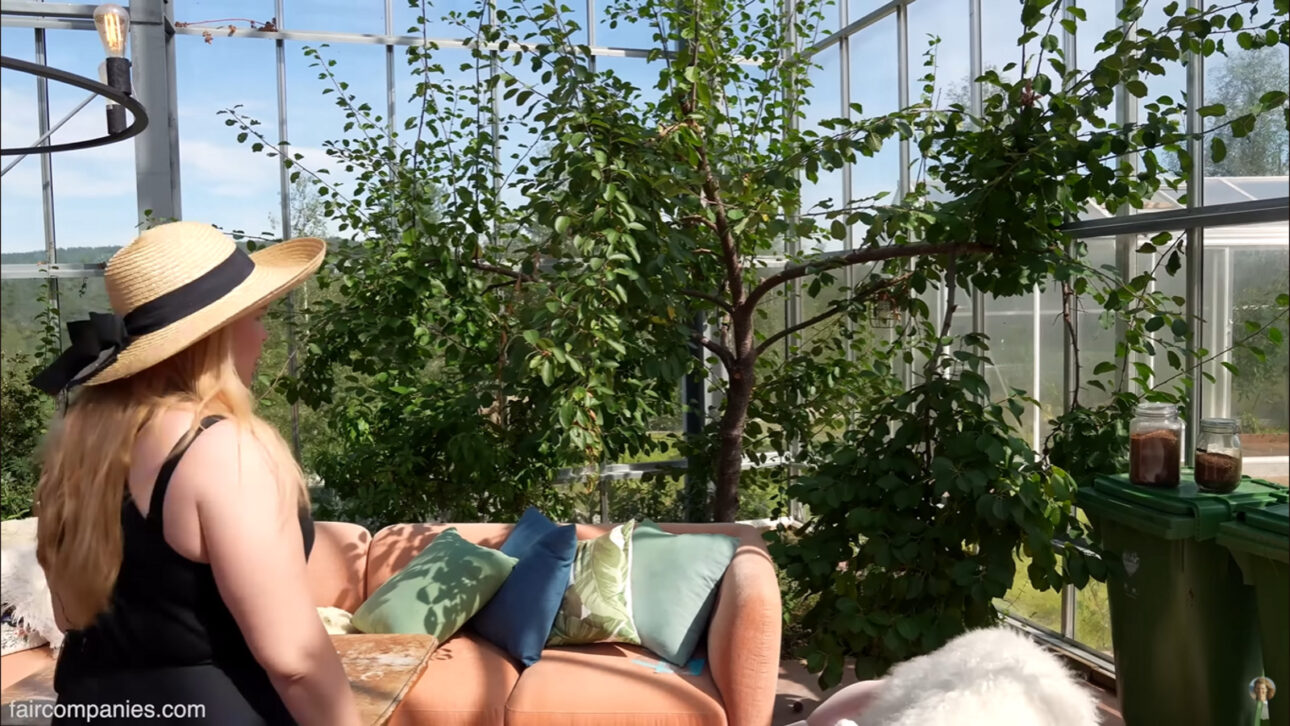
Inside the greenhouse, Klev can cultivate species that would not normally survive the Norwegian winter. According to her, the space allows planting grapes, apricots, nectarines, and peaches.
The family also grows herbs such as parsley, sage, and lemon balm. Additionally, the greenhouse is used to produce seedlings from seeds, which can later be transferred to outdoor areas in the spring or early summer.
This protected environment allows the garden to continue being used even during the colder periods. Thus, the structure not only functions as a house covering but also as a productive extension of the rural property.
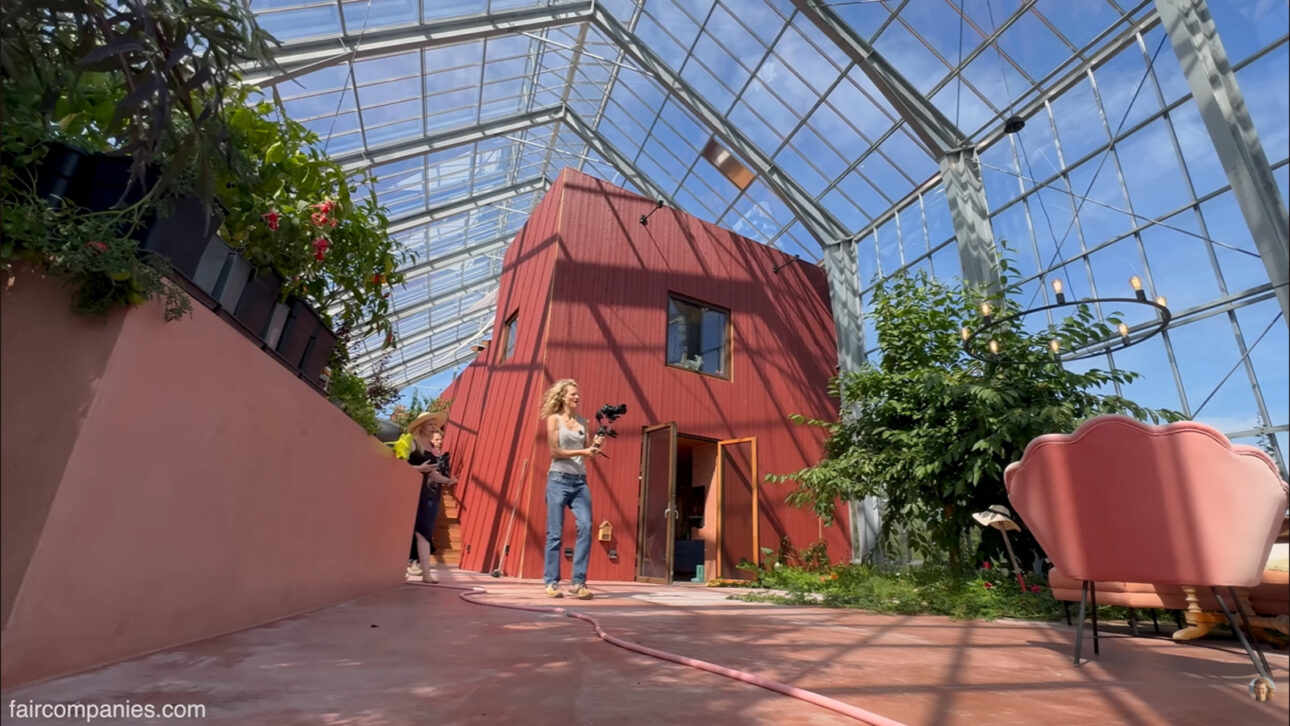
House design balances comfort, ventilation, and contact with nature
The house was designed to maintain contact with the external environment without sacrificing thermal comfort. Klev states that he wanted to ensure windows facing fresh air in all the main rooms, and not just towards the interior of the greenhouse.
Therefore, bedrooms and important areas were positioned to the north or east. This choice helps to keep the temperature more pleasant during the summer.
The kitchen occupies a central area in the residence and also includes a dining room and a small living area, with direct access to the internal gardens. The house also features a library, offices, four bedrooms, a main living room, and a suite.
Since the internal construction has a flat roof, the family uses this area as a terrace. The space serves to host guests and can also be used as an extra sleeping area in the spring and fall.
The greenhouse has integrated ventilation, with openings in the roof to aid in natural cooling during the warmer months. At night, as there is no public lighting on the farm, Klev says it is possible to see the stars through the glass roof.
Self-sufficiency combines own water, solar energy, biomass, and micro-hydroelectric
Sustainability appears as one of the foundations of the project. The property is described as almost entirely self-sufficient, with its own water source, solar panels, a biomass plant, and a micro-hydroelectric plant recently installed by Klev’s father.
The biomass uses wood from nearby forests owned by the architect’s sister. This system heats the houses and provides hot water.
The family’s lifestyle also follows this logic. Klev grows fruits and vegetables, uses manure from his sister-in-law’s horses in the garden, and seeks to obtain food and animals locally, including raising sheep.
Thus, the greenhouse house functions as an architectural solution adapted to the climate, food cultivation, and the pursuit of greater self-sufficiency on a Norwegian rural property.
This article was prepared based on the information provided in the source material, with data, numbers, and statements preserved as per the consulted content.