Portuguese
  Spanish


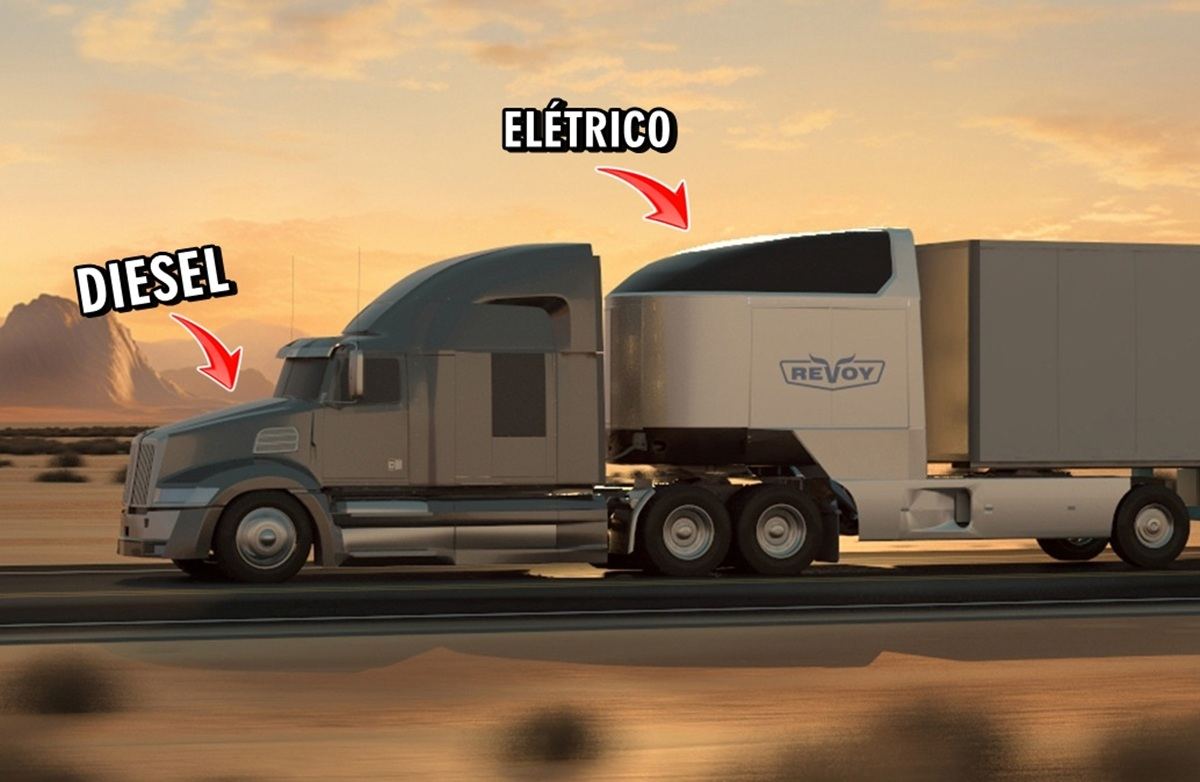


A Company Developed an Innovative Solution for Road Transport: An Auxiliary Electric Axle That Easily Attaches to Diesel Trucks and Helps Reduce Fuel Consumption.
In the United States, transportation accounted for 28% of greenhouse gas emissions in 2022, according to the EPA. And nearly a quarter of that total came from heavy-duty vehicles, such as diesel trucks, exceeding even passenger cars.
This positions road freight transport as a promising front in the fight against climate change — through electrification.
Obstacles Hinder Truck Electrification
Despite its potential, the electrification of heavy-duty trucks still faces many hurdles.
-
Scientists Convert Food Waste into Aviation Fuel, Successfully Test 50% Blend with Conventional Kerosene to Cut Emissions and Promote Sustainable Flights

-
OnePlus N6 Smartphone to Launch in India with 8,000mAh Battery and 45W SuperVOOC Charging, Lasting Up to Three Days
-
Scientists Plan to Release Air Bubbles Underwater to Protect Antarctica’s “Doomsday Glacier” from Melting

-
Chinese R6000 Drone Combines Airplane and Helicopter Features, Carries Up to 12 People for Multiple Missions




Compared to diesel engines, electric vehicles are expensive, have reduced range, and require long recharge times.
Moreover, the road transport sector is primarily composed of small businesses that operate with very tight margins.
There are fast chargers available for trucks, but they are scarce in the United States.
And the situation is unlikely to improve without investors seeing real demand.
Thus, even with advantages such as lower operating costs and smoother drivability, the high initial investment continues to deter fleet operators from electrification.
As a result, electric vehicles still represent only a fraction of heavy truck sales in the country.
Revoy’s Bet: A Cart That Pushes Diesel Trucks
The California startup Revoy believes it has found a practical way to break this deadlock.
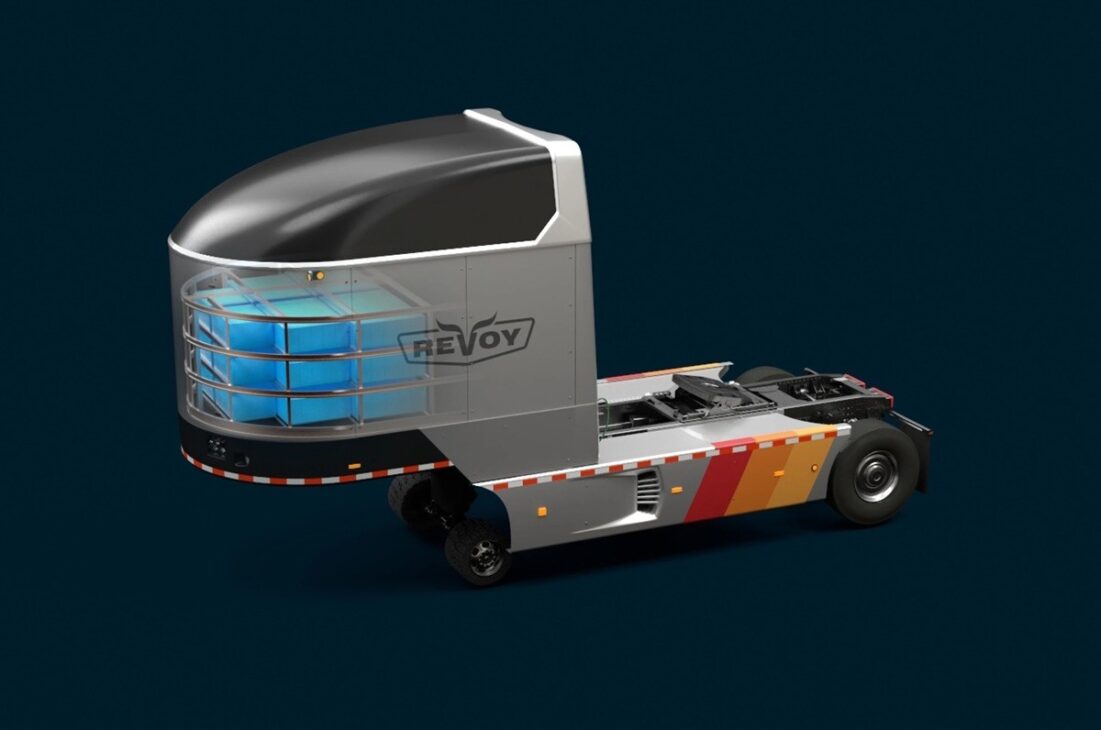
The company developed an auxiliary cart that fits between the tractor and the trailer of any standard diesel truck and powers it through an electric axle.
The equipment carries a 575 kWh battery — comparable to that of fully electric vehicles — and provides a range of about 400 km.
A higher capacity version is in the works. The great advantage is that neither the truck nor the trailer needs to be adapted.
The cart connects to the vehicle’s traditional hitch and adds sensors that capture the signals from the air and electricity lines.
Improved Driving and Assistive Technology
Although it weighs 11 tons, Revoy’s cart promises to enhance the driving experience.
The only interface with the driver is a mobile app. Still, the equipment offers functionalities such as assisted steering correction — useful against crosswinds — regenerative braking, automatic reversing, and blind spot detection.
This last feature is displayed directly on the app screen.
The company does not detail exactly how these functions are managed, but CEO Ian Rust’s background in autonomous vehicles may help explain the level of automation involved in the system.
Cart Swap Faster Than Refueling
To facilitate operations, Revoy is developing swap stations along strategic routes.
At these points, an attendant can replace a discharged cart with another charged one in about four minutes — less time than a diesel refueling.
The stations will also have refreshments for drivers.
If the truck driver needs to continue beyond Revoy’s network, they can simply leave the cart at the last swap station and continue using only the diesel engine.
This flexibility expands adoption possibilities without requiring drastic changes to operations.
Tests Have Already Started in Three States
In December 2023, the company launched a pilot program with a fleet operator, utilizing swap stations in Texas and Arkansas.
A second test is scheduled for this year, along with the installation of a third swap point in Washington state.
Revoy’s business model is simple: the startup rents the cart by the mile traveled. According to the company, this cost already takes into account fuel savings, allowing truckers to operate, in the worst-case scenario, at break-even.
Extra Weight Is a Challenge But Not a Hindrance
One of the few drawbacks is the additional weight of the cart, which can exceed the federal gross weight limit of 40 tons on interstate highways.
However, Revoy argues that most loads are limited by space, not weight.
More than 60% of trucks on American roads would therefore be within the margin to utilize the cart.
Limitations Outside the United States
It is still unclear whether the system would work in countries like Australia or Canada, where B-Doubles with two trailers are common. Revoy has not commented on this possibility.
Nonetheless, it is possible to imagine the model’s application in places like the 4,000 km road link between the coasts of Australia, with solar-powered stations in the Outback.
If it can scale its model, Revoy could transform the electrification of heavy transport into a real alternative — without requiring new trucks or large investments from drivers.
The solution that seemed distant may be becoming feasible, one mile at a time.