Portuguese
  Spanish


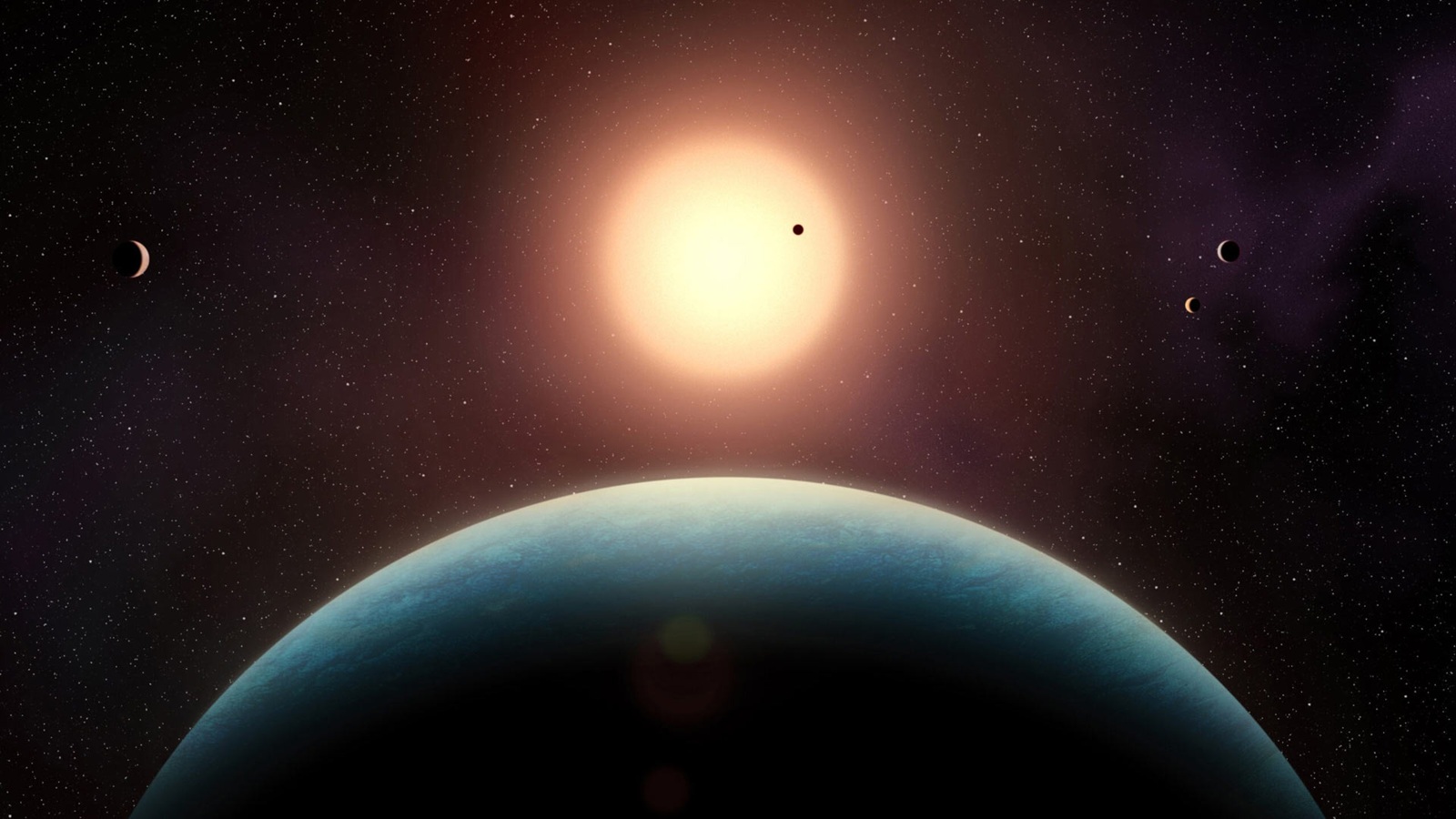

Astronomers Confirmed The Existence Of A Fifth Planet In The L 98-59 System, Located 34.5 Light-Years From Earth. The New World, Named L 98-59f, Is In The Habitable Zone Of The Star And May Contain Liquid Water.
A New Planet Has Been Confirmed By Astronomers In The L 98-59 System, Located 34.5 Light-Years From Earth, In The Constellation Of Volans. Called L 98-59f, It Is The Fifth Planet Identified In The System And The Most Interesting So Far.
This Is Because It Is Situated In The Habitable Zone Of The Star, Where Liquid Water May Exist On Its Surface.
The Most Important Thing Is That This Discovery May Help To Understand How Planets Form Around Small Stars. L 98-59 Is A Red Dwarf Star, With Only One-Third The Mass Of The Sun.
-
To Aid Mars Missions, 12 Volunteers to Spend 60 Days in Bed Without Getting Up, Earning €18,000 in Study Starting 2026

-
Extreme Heat of 41.3°C Warps Roads in Germany, Causes Autobahn Asphalt to Crack, Injures People, and Forces Snowplows to Cool Down Highways

-
AI Security System in Brazil Aims to Cut False Alarms by Differentiating Pets from Intruders, Enhancing 24/7 Monitoring for Homes and Businesses

-
Archaeologists Discover 1,500-Year-Old Byzantine Mosaic with Greek Biblical Inscription in Israel, Uncover Ruins of 10 Buildings Near Kiryat Gat




In 2019, Three Transiting Exoplanets Had Already Been Detected Via The TESS Satellite, With Very Close Orbits Of 2.25, 3.7, And 7.45 Days. A Fourth Planet, Without Transit, Was Confirmed In 2021.
Now, With The Confirmation Of L 98-59f, The System Counts Five Planets, All Different In Size, Mass, And Composition.
More Precise Measurements With Combined Data
The Discovery Is The Result Of A Thorough Analysis Conducted By Charles Cadieux From The University Of Montreal And Colleagues From The Trottier Research Institute In Exoplanets.
The Team Combined Data From The TESS Satellite, The ESPRESSO And HARPS Spectrographs, And Also From The James Webb Space Telescope.
This Made It Possible To Calculate The Sizes And Masses Of The Planets With Unprecedented Precision. The Radii Of L 98-59b, C, And D Were Adjusted To 0.84, 1.33, And 1.63 Times The Radius Of The Earth.
The Masses Were Also Refined: 0.46 For Planet B, 2 For Planet C, And 1.64 For Planet D. Planet E Has A Minimum Mass Of 2.82 Earth Masses.
L 98-59f, The New Member Of The System, Has An Orbit Of 23 Days And A Minimum Mass Of 2.8 Times That Of Earth.
It Does Not Transit In Front Of The Star, Which Makes Its Detection More Complex.
Even So, The Obtained Data Confirm Its Existence And Location In A Cooler Temperature Region.
System May Help Answer Big Questions
In Addition To The Confirmation Of The Fifth Planet, The Study Revealed That The Four Planets Closest To The Star Have Almost Perfectly Circular Orbits. This Favors Future Analyses Of The Atmospheres Of These Worlds.
According To René Doyon, Director Of The Trottier Institute, The L 98-59 System Is A True Space Laboratory.
It Allows For Direct Study Of The Differences Between Super-Earths And Water-Rich Planets, As Well As Evaluating Whether Rocky Worlds Around Red Dwarfs Can Maintain Atmospheres Over Time.
The Team Will Publish The Results In The Astronomical Journal.