






 Portuguese
  Spanish


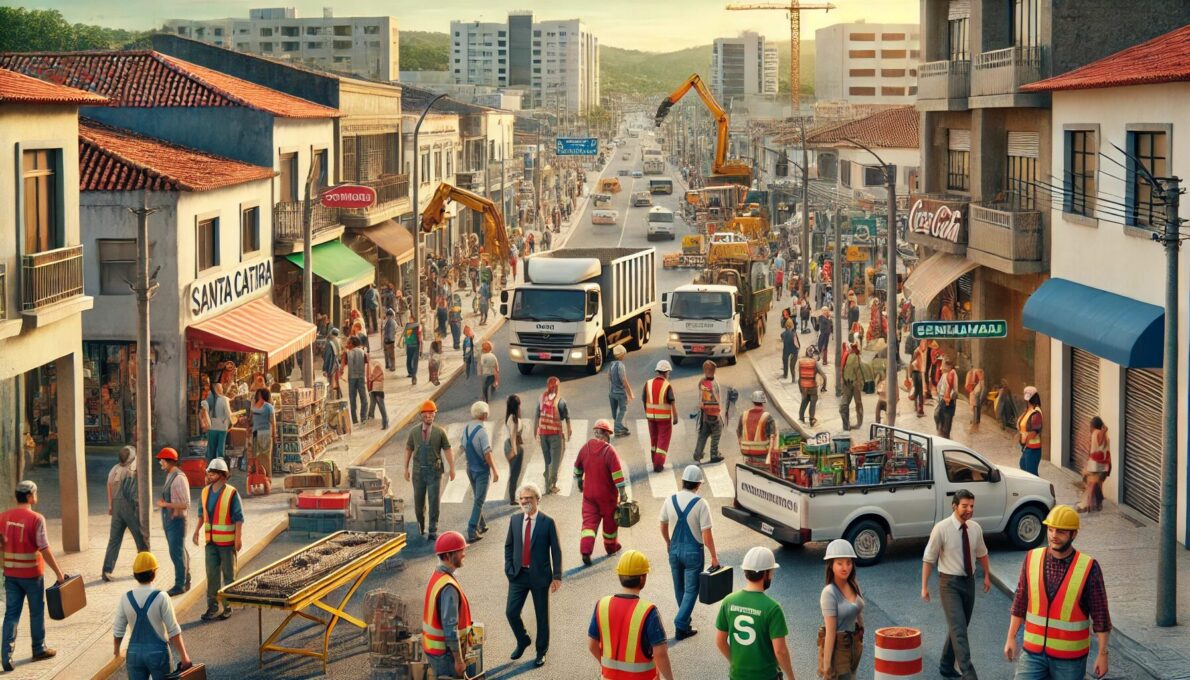


State Approves New State Minimum Wage of R$ 1,844.40, Surpassing the National Value. Divided into Four Ranges, the Increase Aims to Meet the Specific Needs of Sectors and Boost Consumption.
The purchasing power of residents in Santa Catarina is about to change with a new measure that could directly impact the wallets of thousands of workers in the state.
In 2024, Santa Catarina made a decision that promises to revolutionize the job market and increase consumption: a new state minimum wage, higher than the national floor, has been approved.
The measure not only reflects the cost of living in the region but also meets a long-standing demand from workers, bringing debates about the economy and quality of life to the forefront.
-
Major Brazilian Supermarkets, Including Carrefour and Assaí, May Close Earlier to Prevent Price Increases

-
Coca-Cola Shuts Down 100-Year-Old Factory in the U.S., Impacting 85 Workers and Shaking Local Community with Historic Consequences
-
Bianca Andrade Invests $30 Million of Her Own Money in Boca Rosa, Launches Over 100 Products in a Year, Aiming for $400 Million by 2026
-
Belo Horizonte Becomes First Brazilian City to Fund Housing, Utilities for 100 Homeless Families with $900,000 Initiative


However, what does this change really mean for those living and working in the state?
The new minimum wage in Santa Catarina, set at R$ 1,844.40, was established after intense negotiations among representatives from unions, employers, and the state government.
According to the website of Rádio Tupi, the adjustment, officially sanctioned by the Legislative Assembly, highlights the state by offering a value higher than the national minimum wage, currently at R$ 1,412.
The initiative seeks to address local economic challenges, providing a significant boost to the purchasing power of Santa Catarina workers.
According to Mário Cezar de Aguiar, president of the Federation of Industries of Santa Catarina (FIESC), the discussions aimed to reach an agreement that balanced the needs of employers and employees, aiming for stability in the job market.
The Four New Salary Ranges in Santa Catarina
To address the specifics of different sectors, the new state minimum wage has been divided into four salary ranges, which vary according to economic activities.
This segmentation allows distinct categories to receive remuneration appropriate to their realities. According to the guidelines, the established values are as follows:
First Range – R$ 1,612.26
This category includes workers from the agricultural, construction, and domestic service sectors. These areas face specific challenges and represent a significant portion of the workforce in the state.
Second Range – R$ 1,670.56
Targeted at key categories for the economy of Santa Catarina, the second range covers various activities, allowing for adjustments across different sectors.
Third Range – R$ 1,769.14
This category includes workers from the chemical, pharmaceutical, food, and retail industries, sectors that demand higher remuneration to keep pace with sector costs.
Fourth Range – R$ 1,844.40
Represents the state ceiling for high-skilled and responsible categories, requiring specialized professionals in more complex activities.
These salary ranges reflect the needs of the job market and the economic conditions in Santa Catarina, aiming to meet the cost of living and the specific challenges of each sector.
Expected Effects on the Economy of Santa Catarina
With the wage increase, economic impact is already anticipated. The increase in purchasing power is expected to boost consumption and, consequently, local commerce.
With more money circulating, the state economy may experience growth in areas such as retail and industry, as well as a potential increase in tax revenue.
These factors are essential to fostering job creation, contributing to a more dynamic and promising economic landscape.
According to experts, the new salary could create a chain of events that will benefit society as a whole, encouraging investments and strengthening the market.
Regional Disparities and the National Context
Despite the progress in Santa Catarina, Brazil still presents significant salary variations across different regions.
The South and Southeast regions tend to maintain higher salaries compared to the North and Northeast, where the cost of living is generally lower.
These disparities reflect economic differences that influence the salary policies adopted by each state.
In comparison to the national minimum wage, the wage floor in Santa Catarina represents a step forward in the quest for fairer working conditions.
The minimum wage, established in Brazil in 1940 during Getúlio Vargas’ government, has undergone various revisions to keep pace with the country’s economic and social demands.
In Santa Catarina, this update seeks to promote social justice and strengthen the regional job market.
Social Impact: Workers and Employers Must Adapt
The implementation of the new minimum wage affects not only purchasing power but also brings significant changes in the relationship between workers and employers.
The wage adjustment offers better conditions for workers but also requires employers to adapt to the new market conditions, adjusting their budgets and hiring strategies.
According to Mário Cezar de Aguiar, president of FIESC, this change is essential to ensure a healthy and balanced economy, benefiting the population and the productive sector.
With the approval of this new value, the state seeks not only greater social justice but also establishes a milestone in valuing workers, contributing to a fairer and more sustainable work environment.
The measure reinforces Santa Catarina’s commitment to providing adequate conditions and protecting labor rights, reflecting a more inclusive economic scenario.
The increase in the minimum wage in Santa Catarina is an important step but raises questions: does this amount truly meet the needs of all workers?
In your view, what would be the ideal minimum wage, reader? Leave your answer in the comments and participate in this discussion! See you next time!







Não faz diferença; o salário aumenta, depois os preços aumentam também. Isso só serve para mostrar que o governo se importa, mas eles não estão nem aí. O desemprego continua alto e a educação está péssima. As pessoas podem até se contentar com isso, mas boa parte delas é leiga. Só vão enxergar o aumento de salário como uma vantagem quando, na realidade, é só um valor fácil de ser subtraído. Resumindo, não mudou nada; continua ruim e sempre será assim. Não adianta recebermos mais, sendo que está tudo inflacionado devido a esse governo ****.
Agora sim, vai vir um bando de todo canto do país, criticando a cultura, votando ao oposto do que o estado sempre pregou, alevando preços de aluguéis….afff
Pelo fato do nosso país o salário hoje justo, conforme a constituição, seria 6800, para atender toda a demanda de uma família com 1ca dois filhos