Portuguese
  Spanish


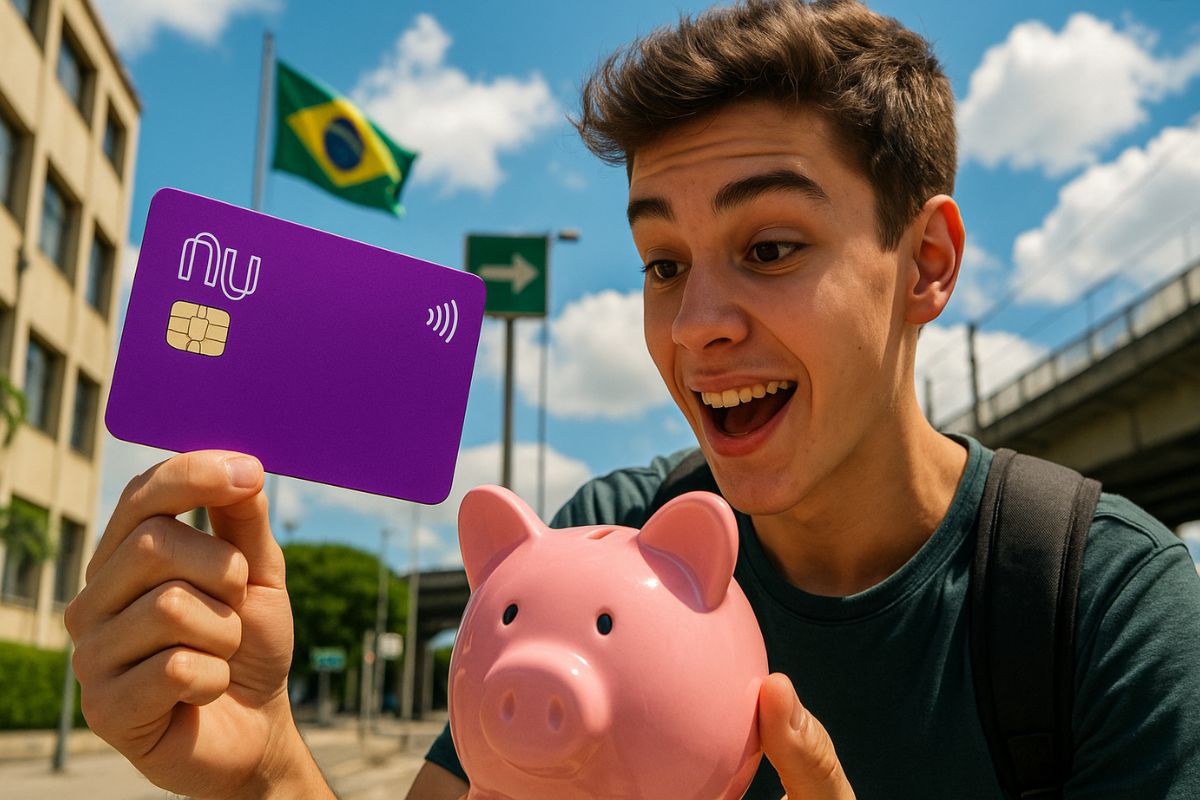

New Modality Targets Young People Aged 16 and 17 and Includes Parental Supervision to Stimulate Financial Responsibility from an Early Age.
The Nubank Launches Credit Card for Teenagers Aged 16 and 17, with a limit linked to the amount reserved in Piggy Banks within the account. The initiative aims to teach young people to manage finances gradually, with direct monitoring from parents or guardians.
According to the TechTudo portal, if the bill is not paid, the amount is automatically deducted from the Card Piggy Bank, ensuring greater security and avoiding the risk of early debt.
How the New Feature Works
Parents can now monitor their children’s spending in real-time, setting limits and supervising credit transactions.
-
Brazilian Workers and Instructors to Train in China on Electric Car Technology Ahead of New Factory Opening in Brazil

-
Viral Message Claiming Government Will Deposit Money for Registering CPF as Pix Key Debunked

-
Embraer Acquires Full Control of Mexican Aircraft Interiors Manufacturer EAI to Reduce Supplier Dependence and Protect Margins Amid Global Aviation Competition

-
Controversial Amazon Highway BR-319 to Receive $1.3 Billion for Road Upgrades and $570 Million for Territorial Governance in Brazil


The model also includes educational challenges that teach, in practice, concepts of economics and financial planning.
According to Nubank, almost half of the young clients already use Piggy Banks to save money, which motivated the choice of this resource as the basis for the credit limit.
The proposal is to allow teenagers to use the card in everyday situations, such as online shopping and digital subscriptions, in a controlled and educational environment.
What Experts Say
For economist Tiago Velloso, from Santander Private, the tool can be an important step in the financial education of young people.
He explains that parental control ensures security, while also opening up space for dialogues about mindful consumption and financial discipline.
However, the expert warns that, without adequate supervision, the card can encourage early consumption and impulsive spending behavior. To avoid this, it is recommended to treat the resource as part of the family budget rather than as an extension of income.
“The model is almost a turbocharged prepaid card, as the limit depends on the amount reserved by the parents. This reduces the risk of default and teaches young people to respect their own limits,” Velloso assesses.
How to Apply for the Card for Minors
To enable the credit card, the guardian must be a Nubank client and already have requested the account for the young person in the app.
The feature will be gradually released, and the guardians will receive notification by e-mail.
It’s worth remembering that the bank already offers the Nu Account for Minors from the age of 6, but without the credit function.
Now, with the new modality, teenagers aged 16 and 17 will be able to experience using the card under specific rules and strict family supervision.
The launch of the credit card for teenagers from Nubank represents an innovation in the Brazilian market, balancing early access to financial services with mechanisms for protecting against debt.
The initiative can serve as a tool for practical financial education, but it directly depends on the active involvement of parents in the process.
And you, do you believe this model will really help young people develop financial responsibility or could it pave the way for early and problematic consumption? Leave your opinion in the comments — we want to hear from those who live this experience in practice.