






 Portuguese
  Spanish


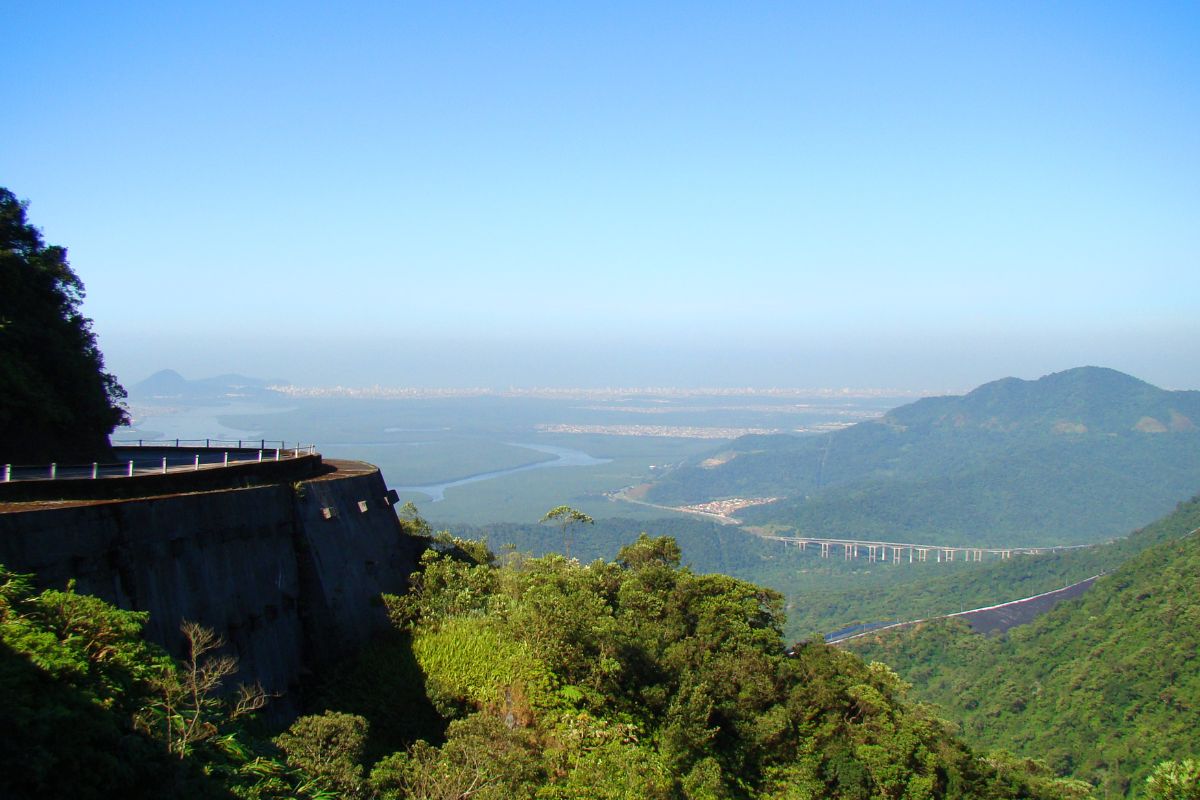

The Famous Petrobras Road Is a Paradise for Cyclists, But the Route That Winds Through the Serra do Mar Has a History Linked to Oil and Strict Rules for Being Traversed.
In adventure cycling groups, the legend of a secret “Gold Trail” that cuts through the Atlantic Forest and connects the São Paulo highlands to the coast fuels the desire for an epic challenge. This route, known as Petrobras Road, is one of the most coveted destinations in Brazilian cycle tourism, promising breathtaking landscapes and a test of physical endurance.
But the truth behind the romantic nickname is even more fascinating. This is the story of a road built for the ‘black gold’ of oil, which has been the stage for environmental conflicts and has been reborn as a regulated bike trail, with access and safety rules. This is the ultimate guide to uncover the history, challenges, and secrets of the true Petrobras Road.
The True History of the Petrobras Road, From the Coffee Era to the Oil Pipeline
It is essential to clarify from the start: the Petrobras Road has no connection to the historic ‘Gold Trail’ of the colonial era. The nickname, although popular, was created by modern cyclists, and the true origin of the road is industrial, not mining. Its oldest routes date back to paths used by cattle drovers and the “Padre Dória Road” from the 19th century, used to transport coffee from the Paraíba Valley to the port of São Sebastião.
-
Award-Winning Japanese Restaurant Reveals It Has Preserved Part of the Same Frying Oil for 66 Years

-
American Youth Transforms from Severe Obesity to U.S. Air Force Enlistment, Losing 90 Kilograms in Two Years
-
11-Year-Old Entrepreneur Sells 60 Homemade Sweets Daily, Mastering Cost Calculation, Social Media Promotion, and Client Negotiation Since Age 7

-
Peruvian Mountain’s 5,200 Aligned Holes May Unveil Ancient Indigenous Market for Corn and Cotton


The defining chapter, however, came in the 1970s. Petrobras built the modern road with an industrial purpose: to serve as access and maintenance for a strategic oil pipeline that connects the terminal of São Sebastião (SP) to the refinery in Paulínia (SP). Therefore, the road literally follows the path of the “black gold”, and that is where its name comes from. For years, it was an uncontrolled access route to the Serra do Mar State Park, facilitating illegal hunting and predatory extraction of palm hearts, until its recent regulation.
The Challenge of the Serra do Mar: The 70 Km Route, the 1,200-Meter Ascent, and the Technical Descent
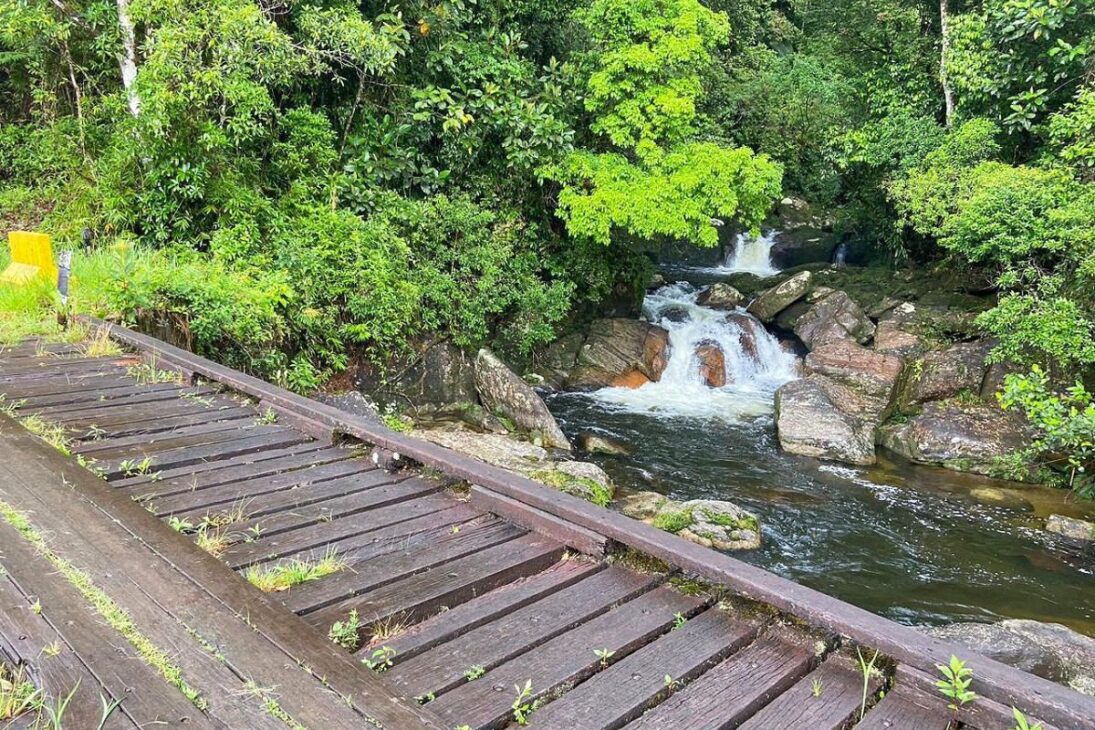
The classic route of the Petrobras Road connects the municipality of Salesópolis, in the highlands, to Caraguatatuba, on the coast, in a stretch of approximately 70 to 72 km almost entirely on dirt. The difficulty is defined by the elevation profile.
The cyclist starts from about 800 meters above sea level and faces an unrelenting climb to the highest point of the mountain, at 1,200 meters. After the main ascent, the route becomes a treacherous ‘serrote’ — a sequence of short, steep climbs followed by rapid descents that require constant effort — before finally beginning the long descent to the coast. This section is extremely technical and dangerous, described as “full of rocks, ditches, slime, and sharp turns”. Powerful and well-maintained brakes are not a recommendation, but a mandatory safety item.
Beyond the Trail: The Route Options to Continue the Bicycle Journey to Paraty
An important point is that the Petrobras Road does not end in Paraty. It leads to the northern coast of São Paulo, and from there, the cyclist needs to choose how to continue the journey.
Option 1 (Along the Coast): The most direct route is to follow the Rio-Santos Highway (BR-101), passing through Ubatuba. The stretch is paved, with beautiful views of the sea, but is marked by constant “little hills” (short, steep ascents and descents) and, mainly, by heavy traffic, which requires great attention.
Option 2 (Through the Mountains): The more adventurous alternative is to climb the mountain again towards Cunha (SP) and, from there, descend via the famous park road to the historic center of Paraty. It is a much longer and demanding option, turning the crossing into a multi-day expedition.
The Trail in 2025: The New Rules, Mandatory Scheduling, and How to Traverse the Path Safely
The current Petrobras Road is an official and regulated bike trail. After a major landslide that closed it in 2020, the route was reopened on April 9, 2022 with a new management system to ensure safety and preservation.
To traverse the path, strict rules must be followed:
Mandatory Scheduling: Access is controlled and must be scheduled at least 24 hours in advance through the official website “Ingressos Parques Paulistas”, searching for “Crossing of the Rio Pardo Road”.
Minimum Group: The crossing is only allowed for groups of at least three cyclists. This rule is a vital safety measure: in a remote trail with no signal, a solitary injured cyclist would be in great danger. The group ensures that if one gets hurt, one can stay to provide assistance while the other seeks help.
No Support Vehicle: Following by support vehicles within the park limits is prohibited. The cyclist must be fully self-sufficient.
This new management has greatly increased safety on the trail, which features radio communication between watchtowers and monitoring.
Tips From Those Who Have Done It: What You Need to Know Before Facing the Petrobras Road


The cycling community is unanimous: the route is difficult, but the reward is worth it. You must be in good condition and have experience in mountain biking.
Bicycle preparation is essential. Powerful brakes and MTB tires with good treads are essential. Prepare for total self-sufficiency, as there is no cell signal over a stretch of 30 km. Carrying a complete tool and repair kit, as well as water and food for a journey that can last over seven hours, is mandatory. The final tip is to take it slow to enjoy the scenery, the waterfalls, and the immersion in nature that only the Petrobras Road can offer.


