Portuguese
  Spanish


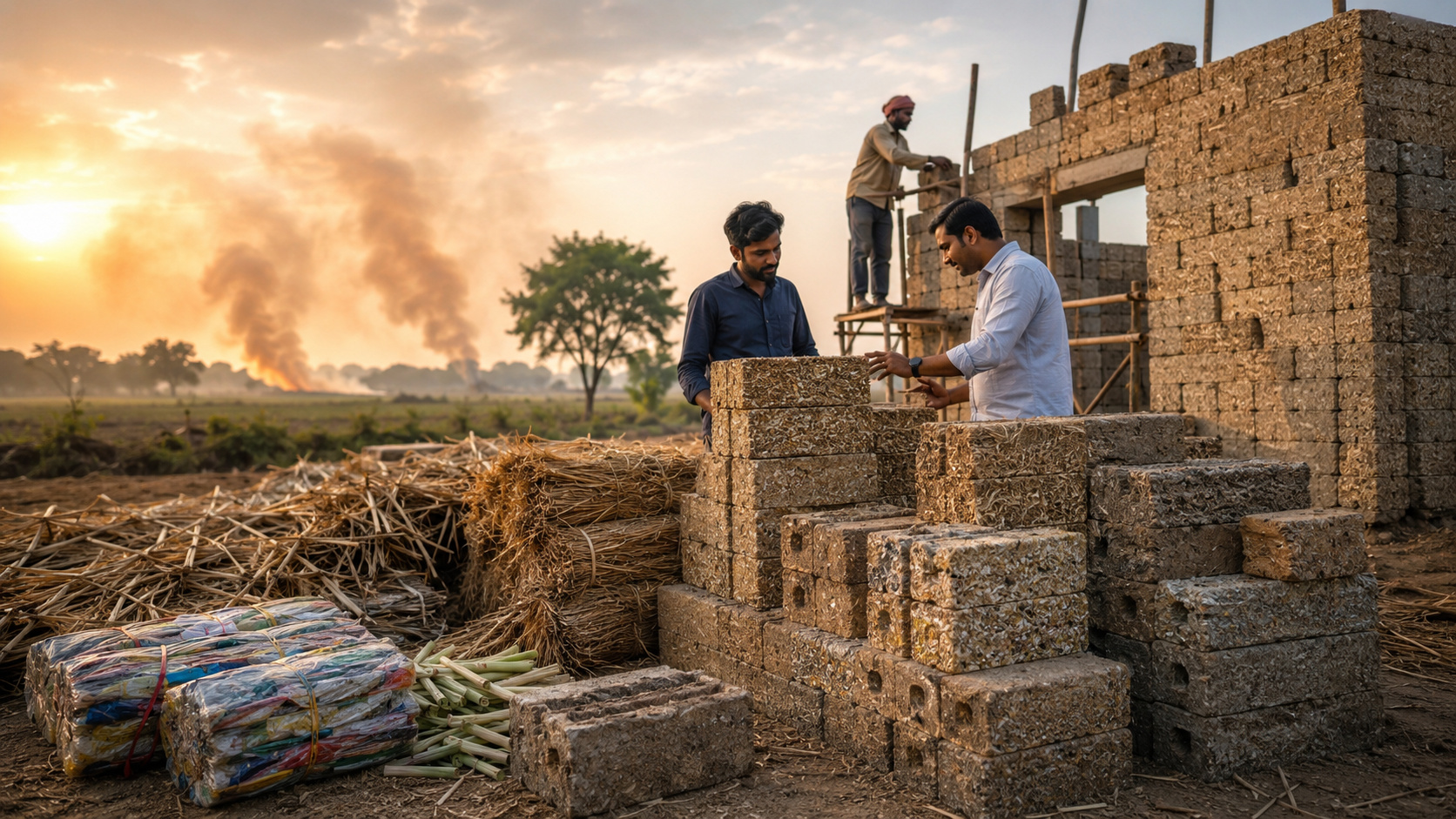


The technology in question creates straw bricks and agro-plastic blocks with agricultural waste, reuses plastic without recycling, eliminates the need for a kiln in production, and aims to build cheaper rural housing with less environmental impact
Cities choked by smoke and fields scarred by straw burning have found an unexpected answer in India: sugarcane bagasse, rice straw, wheat straw, and non-recyclable plastic have become the base for construction bricks.
The information was released by Times of India, an Indian English-language newspaper. The technology was presented by IIT Jodhpur and includes two materials: Bio Bricks, made with agricultural waste without kiln firing, and Agro Plastic Blocks, which combine field waste and non-recyclable plastic through heating and compression.
The proposal targets well-known problems: air pollution, plastic disposal, thermal comfort, and the cost of rural housing. In practice, what was once leftover from the harvest or became difficult-to-reuse waste now serves a purpose within walls and structures.
-
Prefabricated Home Assembled in Days Offers Cleaner, More Efficient Construction with Factory-Made Panels, Requires Technical Design to Prevent Moisture Issues

-
Chinese Manager Accused of Whipping Worker Sparks Protest by 1,200 Employees at Major Brazilian Factory

-
Single Mother Working Three Jobs Receives 111 m² 3D-Printed Home with Concrete Walls Built in 12 Hours, Featuring 3 Bedrooms, 2 Bathrooms, and a Printer for Replacement Parts
-
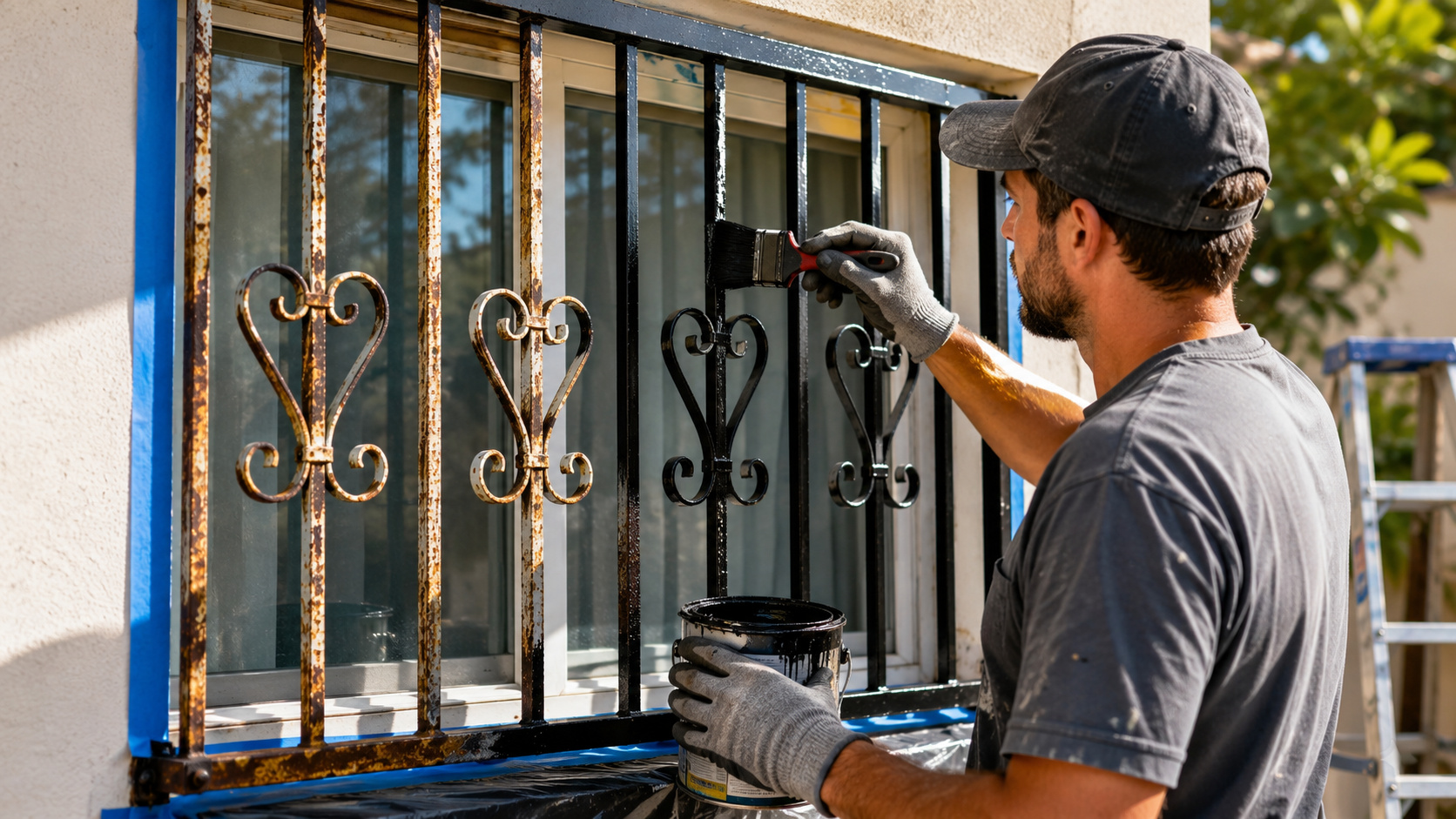
Simple Technique to Restore Rusty Metal Window Grilles Gains Attention for Revitalizing Old Structures Without Full Replacement



Straw brick transforms harvest waste into construction material without a kiln
The bricks use agricultural waste such as rice straw, wheat straw, and sugarcane bagasse. These materials usually appear in large volumes after harvest and, when burned, increase smoke in the air.

The central difference lies in the non-kiln firing process. This makes the technology more appealing, as the material originates from a simpler route linked to the reuse of agricultural waste.
The result is a brick made from raw material that already exists in agricultural regions. Instead of becoming waste or smoke, the plant residue can be incorporated into rural construction as part of a local solution.
Agro-plastic block combines agricultural waste and non-recyclable plastic in one piece
The Agro Plastic Blocks combine agricultural waste with non-recyclable plastic. Manufacturing uses heating and compression to transform this mixture into blocks.
This point is noteworthy because non-recyclable plastic is one of the most difficult wastes to manage. When used in the block, it ceases to be mere waste and gains a new function in construction.
The technology unites two problems into a practical solution. On one side, there is harvest waste. On the other, there is plastic that does not find an easy path in recycling. In the middle, a material emerges for local walls and infrastructure.
IIT Jodhpur has already demonstrated prototype structures on campus
IIT Jodhpur has already presented prototype structures on campus. The team is led by Professor Priyabrata Rautray, linked to the development of Bio Bricks and Agro Plastic Blocks.
Times of India, an Indian English-language newspaper, detailed the main points of the technology. The project involves agricultural waste, non-recyclable plastic, and materials aimed at housing and local infrastructure.
The demonstration in physical structures shows that the idea has advanced beyond the laboratory. Still, the scale for broader use in rural housing depends on the further development of the solution itself.

Less straw burning can alleviate the smoke that hangs over the countryside and cities
Straw burning appears as one of the problems the technology tries to address. When straw is used in brick production, it gains value and is no longer simply discarded or burned.
This can reduce some of the smoke linked to agricultural waste. It can also create an alternative for regions that deal with large volumes of straw after harvests.
The strongest point lies in the change of logic. Waste is no longer seen as a problem without a destination and begins to be treated as a resource for more accessible rural construction.
Rural housing can get simpler materials linked to its own territory
Technology targets local housing and infrastructure. The use of straw, sugarcane bagasse, and non-recyclable plastic can bring material production closer to the regions where they are needed.
Another effect mentioned is **thermal comfort**. In simple terms, this means helping the house stay more pleasant inside, with less sensation of extreme heat or cold.
For rural communities, this type of material can have a direct impact on construction cost and quality. The gain is not just in the block, but in the chance to transform nearby waste into part of the dwelling.

India shows how plastic waste and valueless straw can become walls
The IIT Jodhpur case is noteworthy because it transforms common waste into construction material. **Rice straw, wheat straw, sugarcane bagasse, and non-recyclable plastic** cease to be mere leftovers and become components of blocks.
The solution addresses three challenges simultaneously: air pollution from burning, plastic disposal, and the need for cheaper rural housing. It’s a simple idea to understand, but with potential environmental and economic impact.
India shows that innovation can also arise from materials seen as problems. When agricultural waste and non-recyclable plastic become walls, rural construction gains an alternative closer to local reality.
Would you live in a house made with straw, sugarcane bagasse, and non-recyclable plastic if it helped reduce burning, waste, and construction costs? Share your opinion.