





 Portuguese
  English
  Spanish
  8 min of reading
  0 comments


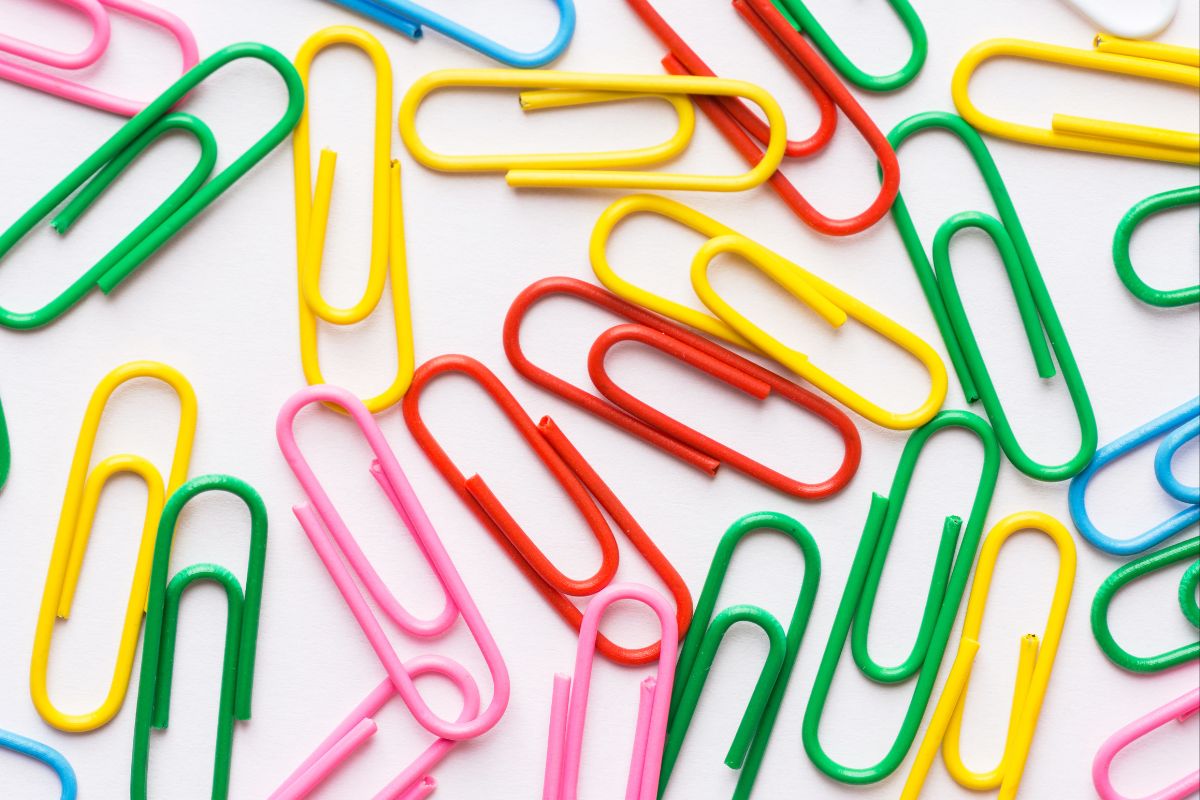
He Is Tiny, Discreet, and Lives Forgotten at the Back of the Drawer — But When the Mess Gets Tight, He’s the One Who Saves the Day. The Surprising Story Behind This Common Object, Which Has Even Been a Symbol of Resistance During the War.
Do you know that item that lives there, in the corner of your drawer or tossed on the table, that you hardly notice, but that, when you least expect it, you end up missing? That’s right… we’re talking about it: the paperclip. A little piece of metal that, although it seems to make no noise, saves our skin more times than we tend to admit.
In this article, I want to show you that the paperclip is much more than a simple office decoration. Besides having an interesting history, it also offers creative uses and, above all, can be a true ally in your day-to-day life.
See Also: The Zipper – From Rejected Invention to Presence in Billions of Clothes Worldwide
-
Far from football, São Paulo idol and former national team player becomes a wine producer in Italy, transforms the nickname “Prophet” into his own brand, and now runs a winery, restaurant, and hotel in Piedmont.

-
Train of up to 111 tons leaves China for Brazil, crosses almost 20,000 km in up to 70 days by ship, and arrives in São Paulo in such a tight operation that a truck even had to deflate its tires to pass under a viaduct.
-
A small town with 800 inhabitants in the interior of the United States is giving away free land, with water, electricity, and paved streets, and even offers a cash allowance for families with children, all to attract residents and escape the depopulation threatening rural villages.

-
At about 9 meters deep in the sea of Sicily, divers recovered a 2,500-year-old marble horse attributed to the colossal Temple of Zeus in Agrigento, a piece that, if confirmed, would be the largest archaeological discovery in the region in a century.




How the Paperclip Was Created
You may have never stopped to think about where the paperclip came from. And that’s okay. In our busy day-to-day life, filled with commitments and distractions, it’s normal to forget about the little things. But the truth is that the history of this simple item is so curious that it’s worth — a lot — taking a few minutes to get to know.
Back in the late 1800s, a Norwegian named Johan Vaaler had one of those ideas that seem obvious only after someone has it: what if there were a practical way to hold sheets without having to punch or glue anything? That’s when the first model of the paperclip was born. It was a bit clunky, but it was already a promising start. So much so that in 1899, Johan proudly registered the patent.
However, meanwhile, on the other side of the map, a British company called Gem was also developing a similar model. And it was this one that ended up becoming popular worldwide. That’s why, to this day, the version we know the most is called the Gem clip. In other words, even though we have an official inventor, the model that ended up conquering the world became everyone’s favorite — working almost like an unspoken partnership between Norway and the United Kingdom.
And there’s more: during the Second World War, the paperclip gained an even more special meaning. In Nazi-occupied Norway, people began to wear it on their clothes as a form of silent protest. It was a symbol of unity, resistance, of “we are together,” but without saying anything.
Why This Remarkable Little Item Works So Well
At first glance, the paperclip seems like just a bent wire. But there is a whole engineering behind it. It was made to hold sheets securely, without crumpling, tearing, or gluing. All this without using energy, without needing batteries, without Wi-Fi. Just it, you, and your papers.
Moreover, it is reusable (as many times as you want), takes up zero space, and is very light. In other words, it fits in your pocket, in your planner, in your pouch… and even in that little box that nobody knows why is kept at the back of the drawer.
And the versatility? Here are some situations where the paperclip saves the day:
- Holds papers without tearing or mess.
- Helps reset electronics.
- Works as a bookmark for those who keep forgetting where they stopped in a book.
- Used to close snack packages.
- Organizes cables that insist on nesting on top of the table.
With a little creativity, the paperclip becomes a hundred and one utilities.

How to Use the Paperclip to Make Your Life Easier
People really do like practical things. And in this regard, the paperclip is perfect for that. Just take a look!
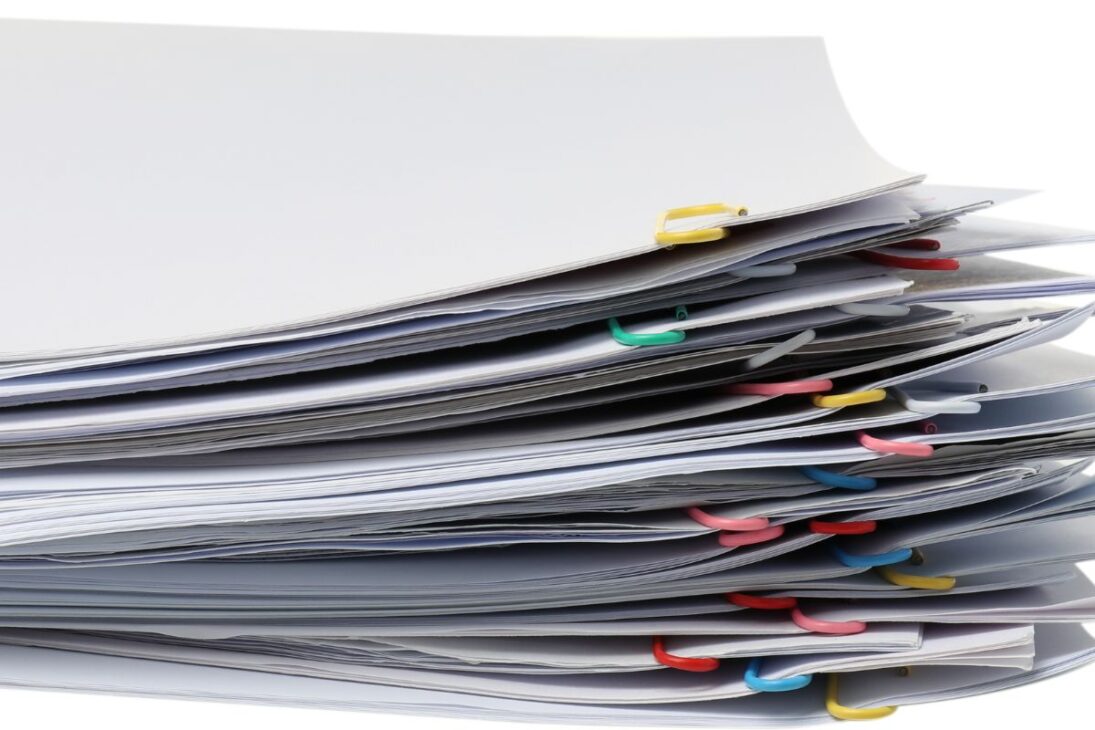
- Organize by Colors: Use colored clips to separate bills, documents, or tasks.
- Improvised Label: Write the name of the wire on a little paper and hold it with a clip.
- Temporary Closure: Important envelope? Use a clip. That way you can open and close it as many times as you want without ruining it.
- Bookmark: Stick a label on the end and it becomes a bookmark.
And the best part: all this with something that costs cents and that you probably already have nearby.
Not All Clips Are the Same: Get to Know the Types
It may all look the same, but there’s a variety of paperclips out there. And each type serves a purpose. Check out this table:
| Type | Characteristics | Usage |
|---|---|---|
| Gem (traditional) | Thin, metallic, basic | Day to day, few sheets |
| Butterfly (binder clip) | With folding “handles” | Large groups of papers |
| Colored Plastic | More delicate and fun | Organization by theme or color |
| Magnetic | With built-in magnet | Boards, refrigerators, and notices |
How the Clip Helps Your Productivity
When we feel overwhelmed, anything that makes things easier is welcome. And the paperclip has this power.
- Helps You Visualize Better: By grouping similar documents, you gain clarity.
- Saves Time: No more spending five minutes looking for “that lost paper” in the pile.
- Makes Everything More Beautiful: Organization brings a sense of peace.
- Prevents the Temptation of Mess: With everything secured and divided, chaos can’t come close.
Historical Curiosities
During the Second World War, besides being a symbol of resistance in Norway, the paperclip was also used to hide microfilms in secret espionage actions. What seems like just a bent wire has already been a tool for secret agents.
Another curious fact is that there are collectors of paperclips around the world, who seek rare, old, or unusual-shaped models. And in Oslo, Norway, there is even a giant monument in the shape of a clip — a tribute to everything it represents for the country.
The Paperclip as a Symbol of Creativity
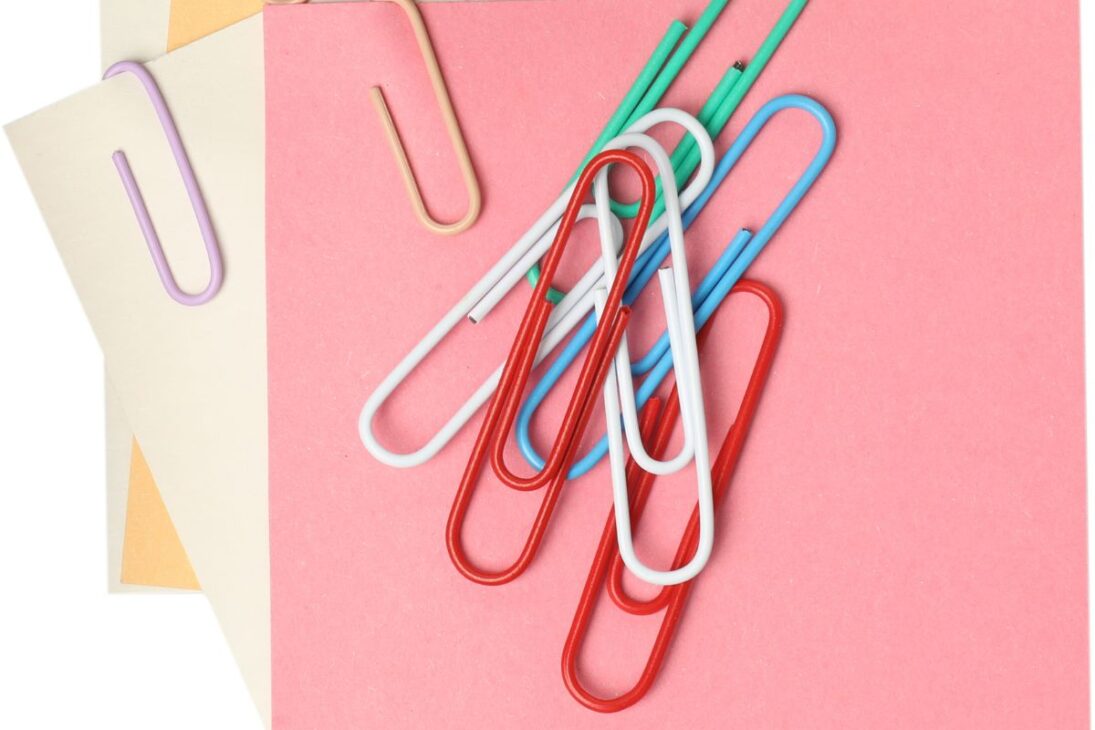
In creativity dynamics, especially in selection processes and training, the paperclip is used in a classic challenge: “List as many alternative uses for a clip as possible.” It seems simple, but it really stimulates creative thinking.
It has also been used as an example in design classes to illustrate how something extremely simple can be genius.
Educational Applications of the Paperclip
In early childhood education and elementary school, the clip is more useful than it seems. Teachers use it to teach grouping, separation of contents, logic, and even basic math, as a manual counter.
In addition, it is used in sensory activities to develop fine motor skills in children. An inexpensive material full of possibilities!
Paperclip and Sustainability
If you like a more conscious and minimalist lifestyle, the clip is a great ally. It can replace disposable staples, adhesive tapes, and even labels — all without generating unnecessary waste.
Moreover, many models are made with recyclable materials and can last for years. A perfect example of conscious consumption: useful, simple, inexpensive, and eco-friendly.
Creative DIY Ideas with Paperclips
The “do it yourself” universe loves a clip! You can create photo stands, improvised frames, decorations for planners, and even jewelry like earrings and bracelets.
A tip is to take colored clips, open them a bit, and turn them into hooks to decorate panels or hang notes. It looks charming and functional.
Paperclip in the Technology World
Remember Clippy? That animated assistant from Microsoft Word in the ’90s? Well, it was a clip. And it made its mark — whether for its charisma or for its unexpected interruptions.
These days, the clip still appears as an improvised item in movies, series, and even technical manuals. Not to mention that many people use the clip itself to open the chip tray of their phone. A practical and instant solution.
Comparison with Other Organizational Items
Want to understand why the clip is still irreplaceable? Take a look at this simple comparison:
| Item | Reusable | Punches Paper | Compact | Sustainable |
|---|---|---|---|---|
| Paperclip | Yes | No | Yes | Yes |
| Stapler | No | Yes | No | No |
| Rubber Band | Sometimes | No | Yes | Little |
| Plastic Folder | Yes | No | No | Depends |
Where to Buy and Which Models are Worth It
If you want to invest in beautiful, durable, and functional clips, some reliable brands are: Acco, Molin, Tris, Maped, and DAC.
In addition to the classic models, these days there are clips in the shape of hearts, stars, animals, letters… Each more creative than the other. Ideal for those who use planners, bullet journals, or like a touch of style in their paperwork.
The Hidden Power in Simple Things
In the end, the paperclip teaches us something we often forget: many times, the simplest is precisely what works best. It is small, discreet, inexpensive… but at the same time, it has a huge impact. It takes care of the mess, organizes ideas, and, above all, reminds us that order is possible — even amid chaos.
So next time you find a clip lost around the house, don’t throw it away. On the contrary, save it, use it, and enjoy it. After all, even the smallest details can make a big difference.
Did you like these ideas? I sincerely hope so! Additionally, if you have any story with clips (even if unusual), let me know here in the comments. It will be a great pleasure to continue this conversation with you!
Now I Want to Know About You!
- What was the most creative use you’ve ever given to a clip?
- Do you usually use clips in your day-to-day life?
- Do you have any cool tips to share with us?
FAQ – Questions You May Have
No! That’s one of the reasons why it is so loved. It holds without tearing, puncturing, or crumpling, and can be used multiple times.
Colored plastic clips are great for separating subjects by color and theme. Plus, they make everything look nicer and lighter.
To a certain extent, yes. But if it’s a large bundle, the best option is to use a butterfly clip (the one with handles).
Store them in a dry place and, if possible, use models with coating. There are clips with beautiful colors that also protect against rust.
Yes! Many are made from recyclable materials. And since they are reusable, they generate much less waste than adhesives and staples.








Be the first to react!