






 Portuguese
  Spanish


New System Promises to Revolutionize the Use of Ethanol in Heavy Engines, Fully Replacing Diesel Without Block Modifications, Reducing Emissions and Costs, With Commercialization Set to Begin in 2026.
Brazil may gain an immediate alternative to diesel in heavy engines.
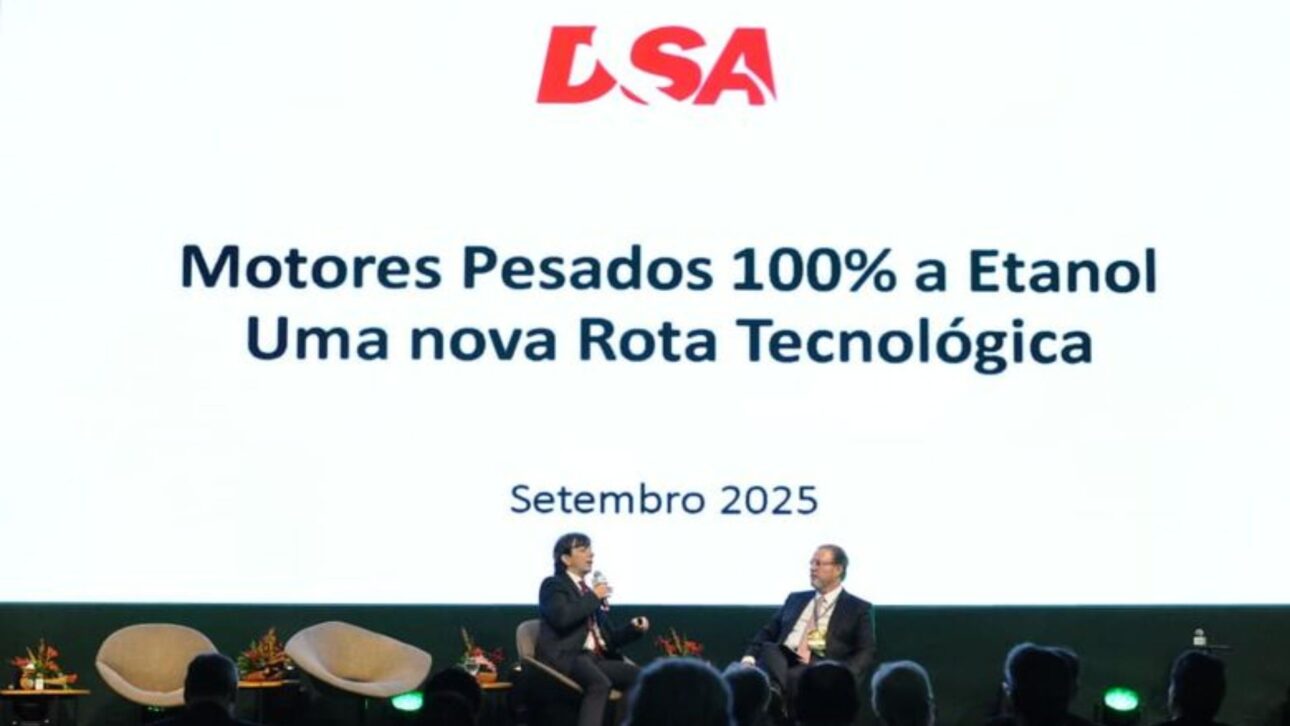
Introduced at the North-East Forum 2025 this Monday (01), the DSA Ethanol System promises to make diesel engines operate 100% on ethanol without changes to the block, with decreased emissions and increased thermodynamic efficiency.
The technology was detailed by DSA’s founder, Daniel Sofer, in a panel dedicated to the topic.
-
In a Degraded Atlantic Forest Area, a São Gonçalo Resident Transforms Land into a Living Eco-Museum, Now a Model for Environmental Education

-
World’s First Lithium-Sulfur Battery Factory Launches, Promising to Double Range Without Relying on China

-
AI Data Centers Now Feature Built-In Nuclear Power Plants and Have Ordered Non-Existent Reactors
-
In India, thousands earn about $2.50 an hour cooking and cleaning with a phone strapped to their heads, as every move is recorded to train humanoid robots for jobs they might one day replace.



How The DSA Ethanol System Works
DSA describes the system as a new injection arrangement capable of controlling the combustion of ethanol in diesel cycle engines.
According to Sofer, the solution introduces a third way to combust fuel in internal combustion engines.
“We created a new fuel injection system that allows for the first time, in 150 years of the internal combustion engine, for a fuel to be burned in a cycle that is neither an Otto cycle nor a Diesel cycle. We are bringing a third way to combust fuel, which materializes the best of both worlds,” he stated.
According to the executive, the key lies in the technology embedded in the injectors developed by the company.
“This is thanks to the technology within the injectors we created, which allows flexibility of application to all diesel engines one can imagine,” he said.
In practice, the set of injectors and combustion management would enable the use of hydrated ethanol in heavy engines without reworking the block or making deep interventions in the original architecture.
Thermodynamic Efficiency and Operation with Ethanol
DSA emphasizes that the conversion not only maintains but can also increase thermodynamic efficiency — the portion of fuel heat that converts into useful work.
Sofer asserted that the installation of the DSA injector “reinvents engine usage,” allowing full operation with ethanol while preserving expected performance in heavy applications.
The proposal targets agricultural, logistical, and industrial fleets, where reliability, torque, and availability are crucial.
Meanwhile, ethanol, already widely produced in the country, stands out as the reference fuel for the system.
The company emphasizes that the solution should not be confused with traditional conversion kits: the combustion strategy would be proprietary, and the control of ignition and combustion of ethanol would occur under parameters defined by the new injection, without resorting to the Otto cycle or the Diesel cycle.
Environmental Impact and Emission Reduction
The company associates the technology with a direct environmental benefit.
In 2024, Brazil consumed nearly 70 billion liters of diesel, according to cited data from ANP, which would correspond to around 240 million tons of CO₂ emitted.
By replacing diesel with ethanol in the daily operation of heavy engines, DSA projects a significant decrease in sector emissions.
Sofer argued that the aggregated effect would be substantial. “The potential environmental impact of this is enormous. It’s even hard to calculate,” he said.
He also stated that, considering the selling price of ethanol, there would be an economy of R$ 8 billion per crop and “almost 10 million tons of CO₂ not emitted,” in addition to mentioning a reduction of “3.5 times” in emissions in its comparison.
The estimates are presented as a reference to gauge the magnitude of potential gains, especially in diesel-intensive production chains.
Operational Costs and Economic Viability
In addition to the environmental argument, DSA claims that the system can reduce operational costs.
Ethanol typically has a price dynamic linked to agribusiness and domestic supply, which, in some scenarios, lessens exposure to international volatility of petroleum derivatives.
Since the proposal does not require structural changes to the engine, the expectation is to minimize long downtimes and retrofit costs, concentrating investment on the injection set and combustion control.
On the other hand, the company positions the solution as a model for scaled adoption.
The system provides for application in engines already in use in agricultural fleets, trucks, and machinery, which can speed up the implementation curve in environments with consolidated ethanol infrastructure.
Commercialization, Partnerships, and Business Model
DSA projects the start of commercialization in 2026. The plan, according to Sofer, is to offer the system via leasing, rather than direct sales to end users.
The strategy targets distilleries and companies with high consumption of heavy machinery and vehicles, prioritizing performance contracts and ongoing support.
The company cites negotiations and partnerships with Germek Equipamentos, Grunner, Adecoagro, and São José Agroindustrial as the basis for their entry into the market.
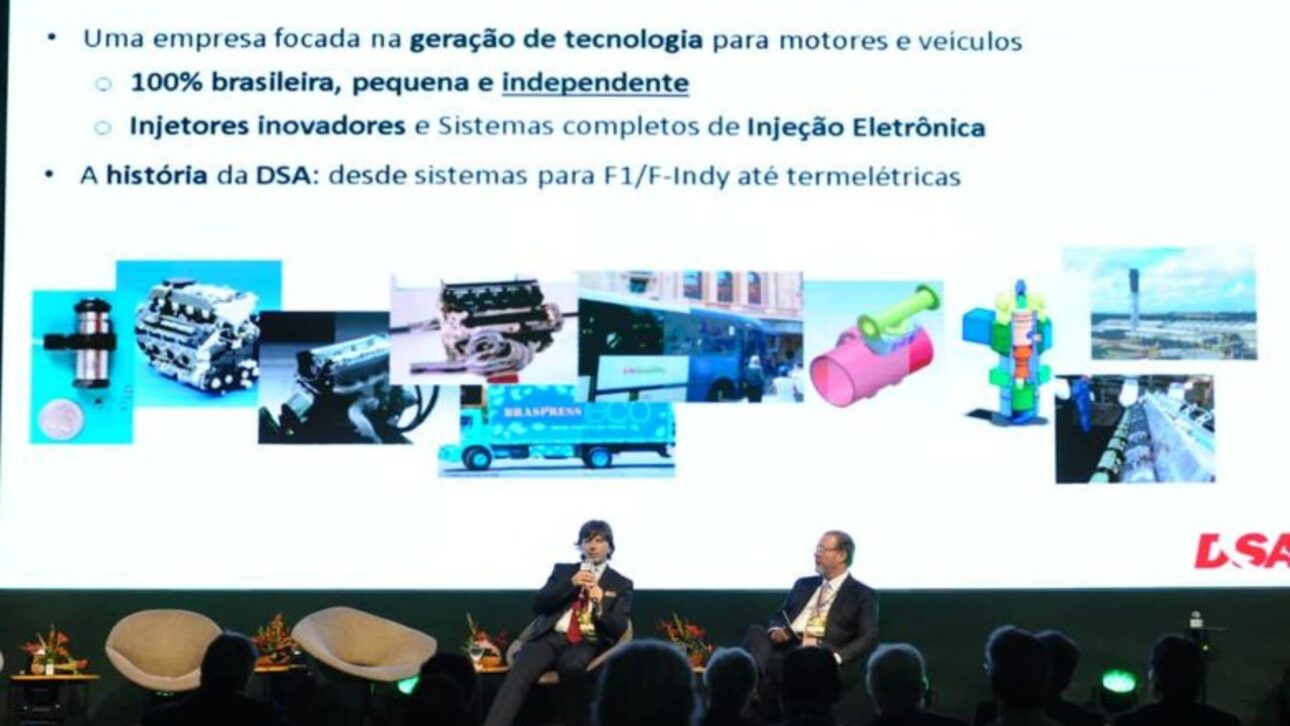
According to the founder, DSA is a technology company; thus, the commercial interface should be handled by dedicated structures created to scale distribution and technical assistance.
The approach is presented as a way to accelerate adoption, maintain installation standards, and ensure result measurements in the field.
Presentation at the North-East Forum 2025
The announcement took place at the North-East Forum 2025, in a panel titled “Heavy Engines 100% on Ethanol — A New Technological Path,” held this Monday.
The event brought together public and private actors and, in this edition, was sponsored by Banco do Nordeste, Suape, FMC, Sudene, Copergás, and Neoenergia.
It also received support from the Government of Pernambuco, the City Hall of Recife, Fertine, and NovaBio, as well as technical support from Sindaçúcar-PE.
The event was organized by the EQM Group. In this context, DSA sought to engage with sectors that have historically depended on diesel and have logistics based on heavy engines.
By presenting the system to an audience with a strong presence from agribusiness and industry, the company aims to validate the proposal in environments with high scaling potential for ethanol.
For you, which segment do you believe will be the first to adopt a complete conversion to ethanol in engines originally designed for diesel?





A matéria só vendeu as queda na emissões. E o consumo? Quantos km um caminhão faz por litro, em comparação ao diesel?
Para DSA o melhor dos mundos seria os ****-bientalista (que defendem a preservação das girafas da Amazônia 🤦♂️) decretarem por força de lei o fim do diesel.
E quando o açúcar der mais lucro no mercado internacional? O governo vai proibir a exportação. A não ser que todas as fazendas e usinas sejam propriedade do Estado, como uma boa democracia russa, chinesa ou norte coreana.
Só de terem apresentado no nordeste, tem tudo para dar errado kkkkkk
Isso é coisa desse febrento que está no poder, esse cachaceiro já deve ser dono de quase todas as usinas de álcool!
Dono, dono, dono não.
Mas um uma rápida pesquisa sobre o setor sucroalooleiro dá pra perceber que mais de 90% são devedores de impostos, tanto federais quanto estaduais.
E o governo tem a capacidade de intervir nestas usinas com a desculpa de que é para o bem do Brasil, só que no fundo mesmo a verdade será outra.