






 Portuguese
  Spanish


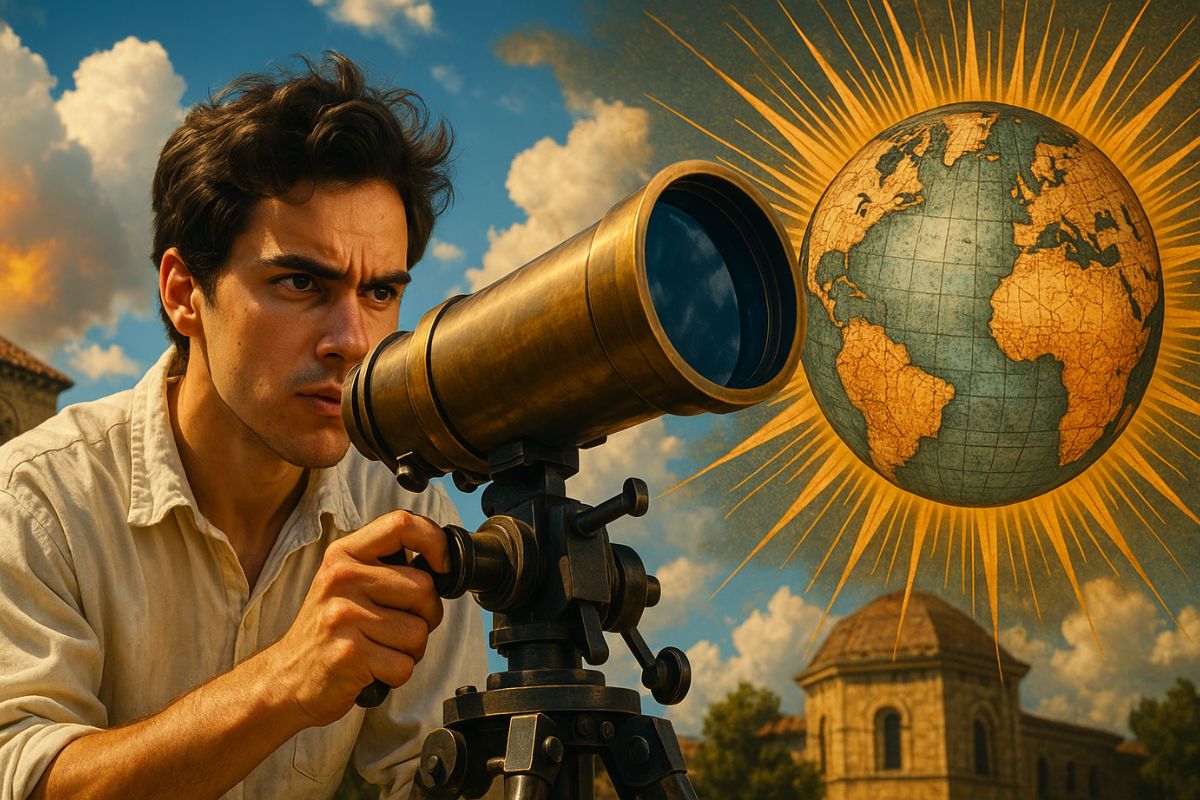


The Journey of the Gifted Youngster Who Gave Up Medicine, Perfected a Handmade Telescope, and, with Unprecedented Observational Evidence, Shook a Thousand-Year-Old Belief System and Launched a Rigid Method of Scientific Investigation
The gifted young man born in Pisa began his Medical training due to family pressure, but diverted the course of his own life by embracing Mathematics and natural philosophy. This turnaround took him from the classroom to the experimental workshop, where methodical curiosity replaced traditional authority and paved the way for discoveries that reconfigured astronomy and physics.
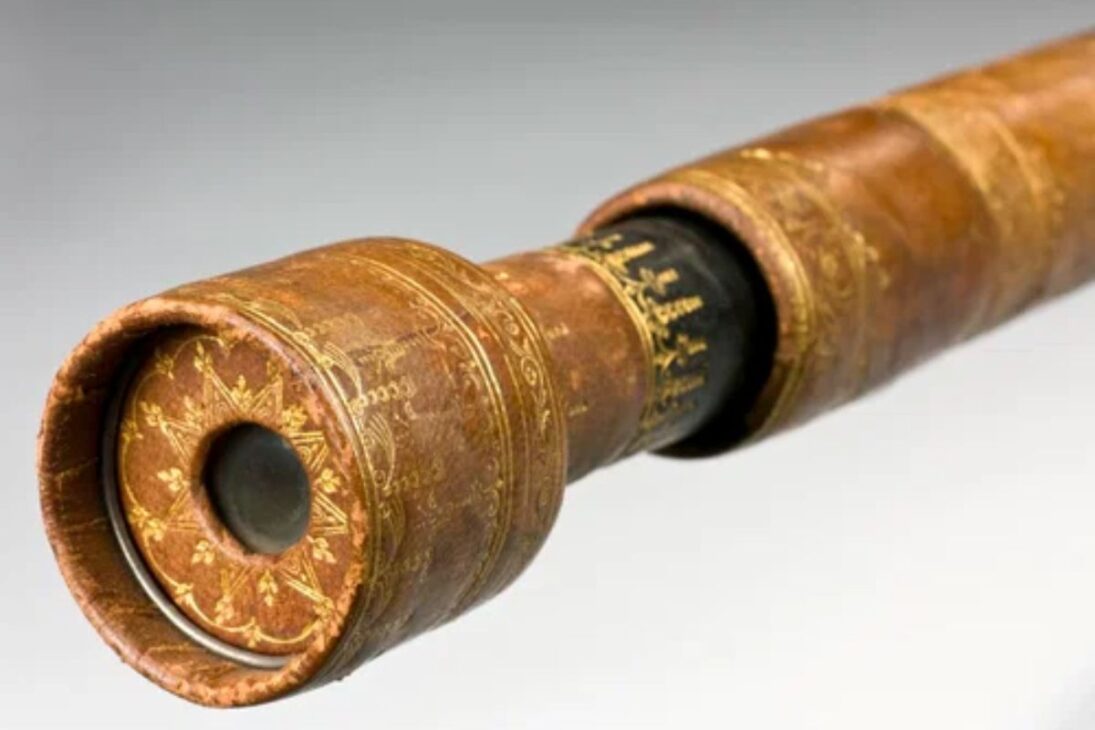
Upon hearing about a new optical instrument in 1609, he not only reproduced the telescope but improved it from about 3x to 30x, building with his own hands the tool that would reveal mountains on the Moon, phases of Venus, and four moons of Jupiter. The observations shattered the inherited cosmology, shifting the discussion from “what has always been said” to what can be measured, tested, and repeated.
Who Was the Gifted Young Man and Why Did His Choice of Mathematics Change Everything
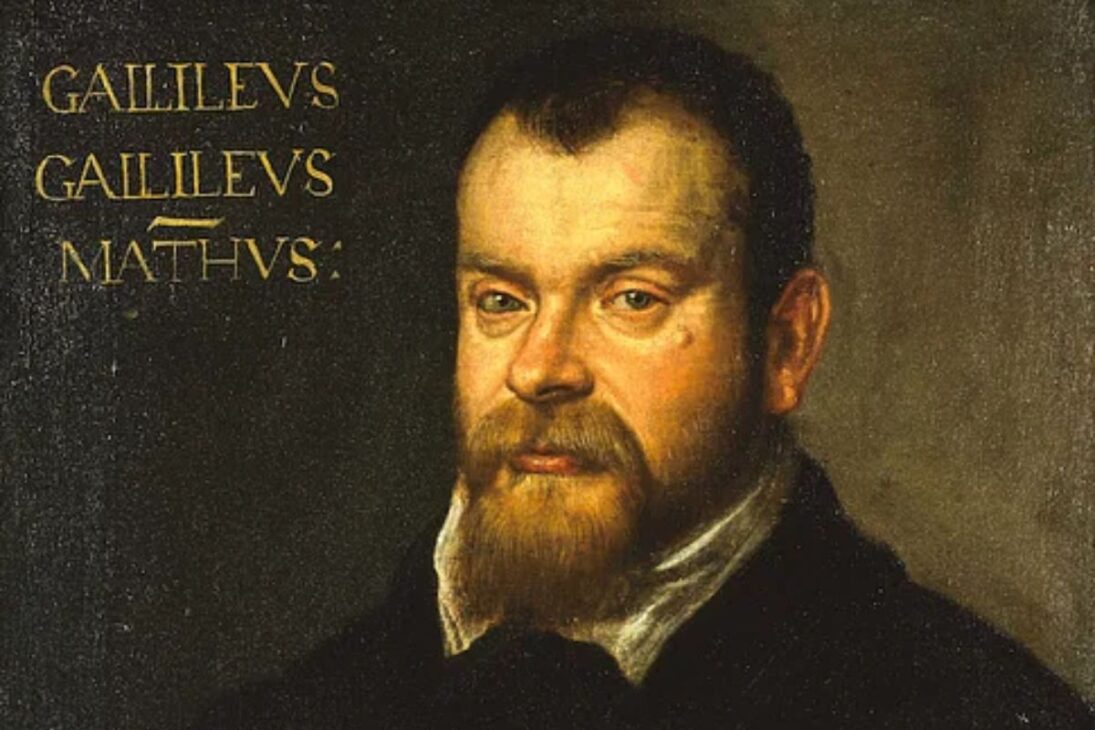
As a student, the gifted young man, Galileo Galilei, secretly attended classes in Mathematics and natural philosophy. Exchanging a prestigious and lucrative career for a less valued field was an act of intellectual conviction: the quest for truth through logic, calculation, and direct observation. This theoretical foundation reflected early in writings about motion and in the invention of instruments, such as a hydrostatic balance.
-
Thailand Converts 8 Tons of PET Bottles into 3,500 School Backpacks, Showcasing Circular Economy with Over 40 Factories Involved

-
Mysterious Bats Spotted in Paris’s Père Lachaise Cemetery, Drawing Tourists to the “Vampire Cemetery”

-
From Selling Street Food to Leading a $300 Million Construction Firm: The Journey of a Brazilian Entrepreneur

-
Abandoned Penthouse in Houston Reveals Million-Dollar Suite with 24-Karat Gold, Tiffany Crystals, and Opulence Even Elvis Might Have Snubbed



The break was not only vocational. Mathematics became the language to read the world, as he would later argue, elevating triangles, circles, and geometric figures to the status of “the alphabet of the universe.” From then on, controlled experience complemented deduction, and the laboratory replaced authority argument.
By building superior telescopes, Galileo Galilei gained what was missing in the cosmological debate: resolution, contrast, and optical stability. The magnification of about 30x allowed to map lunar terrains, observe Jupiter’s moons in orbit around the planet, and track the phases of Venus, a set of facts incompatible with the classical geocentric view.
The innovation was not just technological. The strategy of publishing results in the vernacular and organizing repeated observation sequences transformed curiosity into protocol. Faced with solar spots that changed shape and position, the idea of a rotating Sun emerged, a mutable sky, governed by physical laws shared with Earth.
Where Physics Overthrew Ancient Intuitions: From the Pendulum to Projectiles
In his workshop, Galileo Galilei investigated uniform acceleration, inertia, and parabolic trajectories, dismantling Aristotelian interpretations. He demonstrated that, without air resistance, bodies of different masses fall with the same acceleration, and that a body persists in motion without continuous force — a principle that would support the understanding of a moving Earth.
These results arose from incremental experiments and careful measurements, a practice that institutionalized repetition as a truth criterion. Experimental physics became the axis of validation, no longer reliant on textual tradition.
The intellectual cost was high. Adopting evidence in favor of heliocentrism contradicted the dominant cosmology and led the researcher to a trial for heresy, culminating in house arrest. Nevertheless, he systematized physics in mature works and continued inventing, from the thermoscope to navigation instruments.
The historical balance surpasses isolated discoveries. The method—formulating hypotheses, experimenting, measuring, refuting, and publishing—survived the conflict. Science gained a verifiable procedure, capable of absorbing corrections and evolving with new data, as later did Kepler and Newton.
Why the Story of This Gifted Young Man Still Shapes the Way We Know
The turnaround was not only astronomical. The gifted young man showed that old questions can be answered with new tools, and that the right instrument shifts certainties. By translating the sky into numbers, he consolidated Mathematics as the grammar of nature and experience as the final judge.
This culture of proof changed what we understand by evidence. From the pendulum to the rugged Moon, from Jupiter’s moons to sunspots, the message is the same: the world can be known by trained eyes, better lenses, and data notebooks.
Science became a public endeavor, with data, illustrations, protocols, and debate. Writing in accessible language broadened reach and accountability. From laboratory to laboratory, the replicable experiment replaced rhetorical authority, shifting the discussion to the measurable.
This is the point where biography turns into method. Galileo Galilei did not just “see” more; he taught how to see. Instrument, measurement, and repetition became infrastructure of knowledge, not mere accessories.
The journey of the gifted young man who exchanged Medicine for Mathematics and improved the telescope proves that technology + method alter paradigms. When evidence changes, the world changes—and science learns to change along with it.
Do you agree that the decisive element in this story was the method, not just the instrument? In your field, what “telescope” is lacking to transform opinion into evidence? Do you think this legacy still impacts how we research, fund, and communicate science? Leave your opinion in the comments—we want to hear from those who live this in practice.







Exemplo de vocação e convicção técnica