






 Portuguese
  Spanish


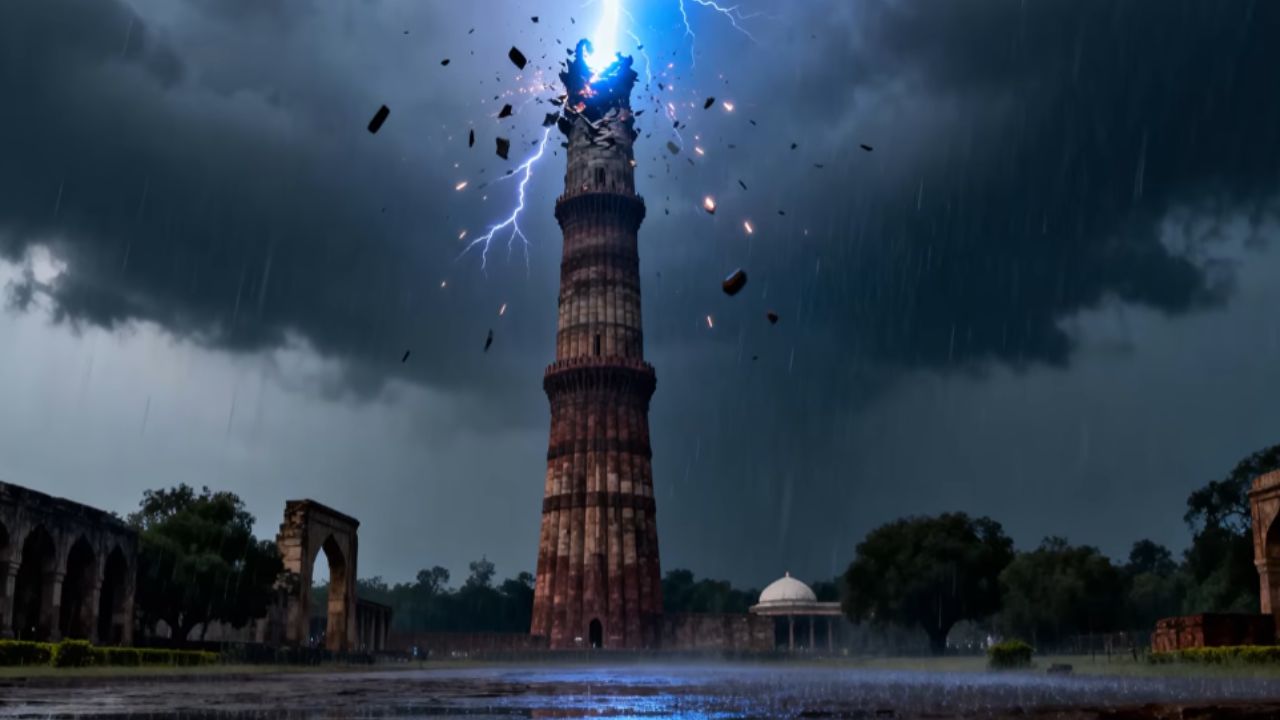

Understand The Impossible Engineering Of This Construction In India: The Qutub Minaret, A 72-Meter Tower That Has Stood For Centuries.
In the heart of Delhi, India, stands a monument that transcends architectural beauty to become a landmark of impossible engineering. The Qutub Minaret, a colossal structure initiated in the 1200s, is not only one of the tallest brick towers in the world but a testament to human audacity. Built during the expansion of the Ghurid Empire by General Qutb-ud-din Aibak, the 72-meter monument was designed to demonstrate authority and power, serving as an ostentatious symbol that could be seen from afar in the conquered city.
More than a religious or political symbol of the Sultanate of Delhi, the tower represents a mathematical and structural triumph. Made of molded pieces of red sandstone and marble, it has withstood the test of time, surviving wars, lightning storms, and at least three major earthquakes. The technical sophistication employed by the artisans of the time allowed this masterpiece to remain standing for eight centuries, defying gravity and the passage of eras with impressive solidity.
Geometry And Structural Stability

When analyzing the monument from a technical perspective, it is clear that its longevity is the result of an advanced mastery of geometry and intelligent use of materials. The secret to sustaining one of the tallest brick towers in the world lies in its conical shape and the strategic reinforcement of its layers. The minaret has five stories, each with its own balcony supported by richly adorned columns that go far beyond mere aesthetics.
-
U.S. City Builds Tiny Home Village on Water Company Land to House 136 Homeless People: Inside the Social Housing Units

-
Woman Turns Shipping Container into Home, Embraces Rural Life to Cut Monthly Expenses to Just Over $330
-
France Revamps 530 Social Housing Units with Large Balconies and Glass Facades Without Demolishing Existing Buildings

-
Facing high rent, couple transforms parents’ garage into a fully functional apartment, creating a complete home at a fraction of the market cost.




These balconies act as crucial structural reinforcements, helping to prevent excessive vibrations and dampening wind forces. Each floor functions as a mechanical lock that prevents the tower from oscillating too much or suffering dangerous twists. At the base, the sculpted geometric patterns and decorative inscriptions reveal the artisans’ skill in working with massive pieces with nearly perfect symmetry, unifying beauty and functionality.
The Hidden Secret Inside The Tower
Inside the structure, there is a spiral staircase with just over 370 steps, built around a massive core that extends from the foundation to the top. Essentially, there is a tower inside the tower. This central core is the true pillar of stability for the Qutub, serving as the support axis that carries the vertical weight and acts as a counterweight against oscillations. Without this impossible engineering element, the structure would never have withstood the centuries.
In addition to stability, the builders had to deal with internal pressure during extreme heat. To address this, dozens of small openings were created around the tower to ensure lighting and airflow, preventing collapse due to thermal pressure. Unfortunately, access to the interior has been closed to the public since 1981, when a blackout caused panic and resulted in fatalities on the narrow staircase.
Resistance To Disasters And Unfinished Projects


The tower has a slight tilt, noticeable in photographs, possibly caused by ground shifts over the centuries, but this does not compromise its safety. The structure has proven its resilience as a “brave warrior” that refused to fall even when earthquakes devastated the surroundings. Damage occurred, especially in the upper floors struck by lightning, which were rebuilt by later generations, resulting in visible architectural differences at the top.
The ambition of the sultans was such that Alauddin Khalji planned an even larger tower, the Alai Minaret, which was supposed to be double the height, reaching 140 meters. However, technical limitations and the ruler’s death left only a massive unfinished circular base, proving that not all ambition overcomes the reality of construction. Today, this base serves as a comparison to the grandeur of the original project that succeeded.
The Mystery Of The Rust-Free Iron

In the courtyard of the complex, which was built on top of ancient reused Hindu buildings, there lies another technological enigma: the iron pillar. With over 1600 years and 7 meters in height, the wrought iron monument practically does not rust, even when exposed to India’s humid climate for centuries. This demonstrates that ancient civilizations had already mastered advanced purity techniques and metal treatment long before what was previously thought.
After periods of neglect during the Mughal Empire and revitalizations initiated by the British in the 1800s, the Qutub Minaret complex remains solid and elegant. It reminds us that great enterprises of impossible engineering depend not only on luxury but also on balance, mathematical precision, and planning aimed at eternity.
Would You Have The Courage To Climb The 370 Steps Of This Narrow Tower If It Were Reopened Today?








