






 Portuguese
  Spanish


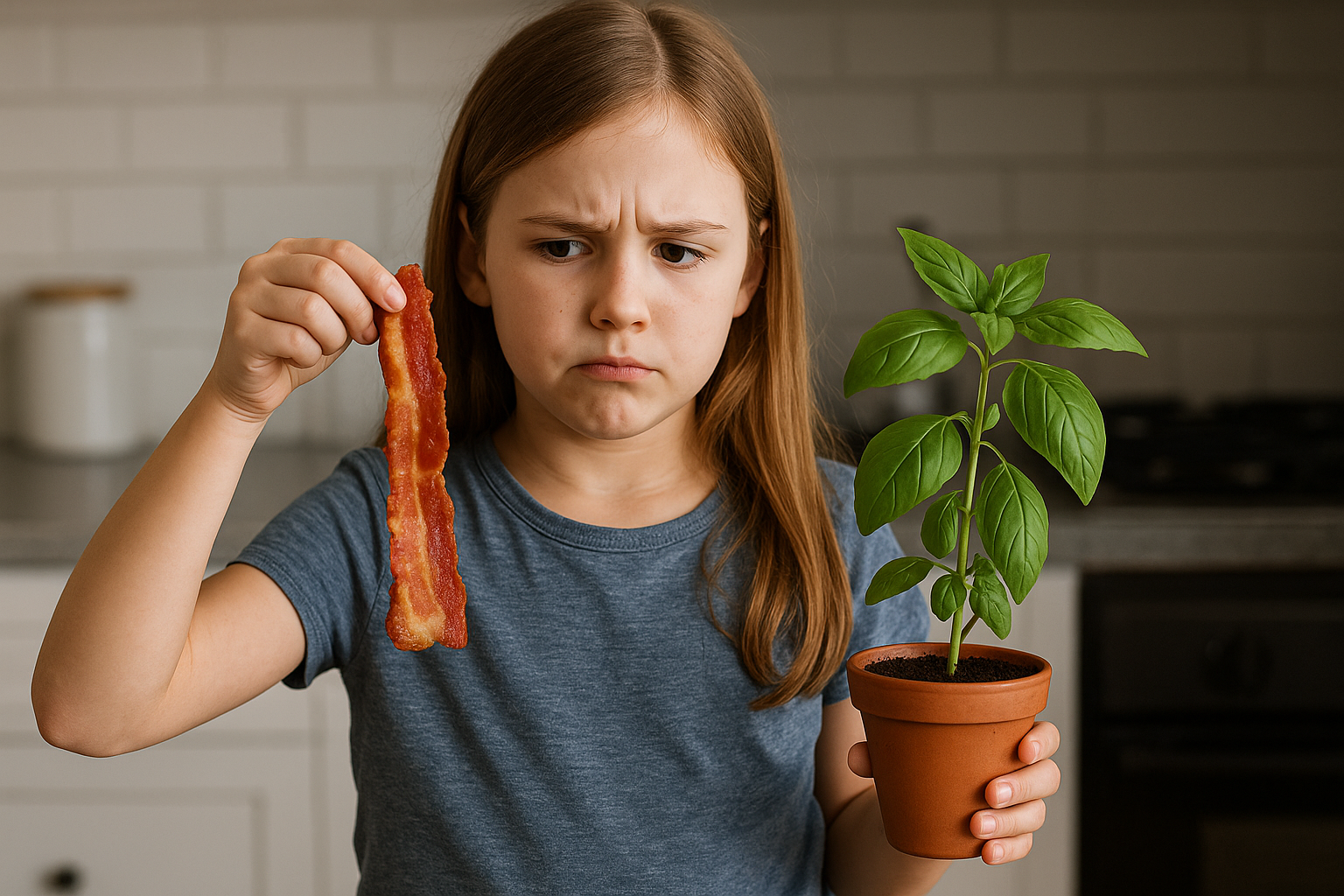

Study With 176 Children in the U.S. Shows High Rate of Errors About the Origin of Common Meats, Dairy, and Vegetables
A study published in the Journal of Environmental Psychology revealed curious data about American children’s understanding of the origin of food. According to the research, 41% of children aged 4 to 7 believe that bacon comes from a plant. And this was not the only misconception found.
Study Involved 176 Children in the United States
The research was recently conducted by a team of psychologists. In total, 176 children from a metropolitan area in the southeastern United States participated.
The researchers asked the children to indicate the origin of common foods in their daily routines, such as cheese, chicken nuggets, popcorn, fries, sausages, and bacon. The aim was to assess the level of children’s knowledge about the sourcing of these products.
-
Hospital Cook Discovers 1,700-Year-Old Pot of 52,503 Roman Coins Using Metal Detector in Field

-
Salvador’s Acarajé Vendors Turn Used Frying Oil into Income by Selling it for Biodiesel Production
-
Volunteer Revives Dead Lake in Bengaluru Overnight, Doubling Water Capacity and Attracting Kingfishers and Herons
-
1909 Train Car Once Destined for Abandonment Transformed into Luxury Accommodation in the U.S. After $3,000 Restoration




High Rates of Confusion in Responses
The results showed a lot of confusion. In addition to the 41% who said that bacon comes from plants, 40% claimed the same about sausages.
Cheese was classified as a vegetable by 44% of the children. Chicken nuggets, despite the name indicating an animal origin, were identified as vegetables by 38% of the participants.
Other foods were also confused. More than 30% of children said that popcorn and almonds are of animal origin.
The most striking case was that of French fries: 47% of children stated that they come from animals. Additionally, 1% considered sand as food, while 5% said that cat is a type of food.
The study also analyzed what children consider edible. Most responded that cows (77%), pigs (73%), and chickens (65%) should not be eaten. These data contrast with the common diet of American families, where these animals are dietary staples.
Parents Avoid Talking About the Origin of Meat
The authors suggest that this misinformation does not happen by chance. According to the researchers, many parents avoid explaining to children that meat comes from slaughtered animals. The goal would be to protect the innocence of the children, as they believe that the slaughtering might be too cruel a fact for their age.
There is also a practical reason. According to the study, if children knew the origin of meat, they might refuse to eat it. To avoid this type of resistance or the need to prepare other meal options, some parents prefer to provide vague answers or even omit details.
Childhood Can Be Decisive for Eating Habits
The article points out that childhood represents an important phase for forming more ethical and sustainable eating habits.
While adults have already created arguments to justify meat consumption, children have not yet developed this type of thinking. They often consume meat without knowing its true origin.
For the authors, this moment in life is a unique opportunity to encourage plant-based diets. As the years go by, this shift tends to become more difficult.
The study indicates that youth climate activism can start at the dinner table. By rejecting foods that contradict their beliefs about animal welfare, children would not only be true to their values but could also influence their parents and help reduce the family’s carbon footprint.
With information from Aventuras na História.


