






 Portuguese
  Spanish


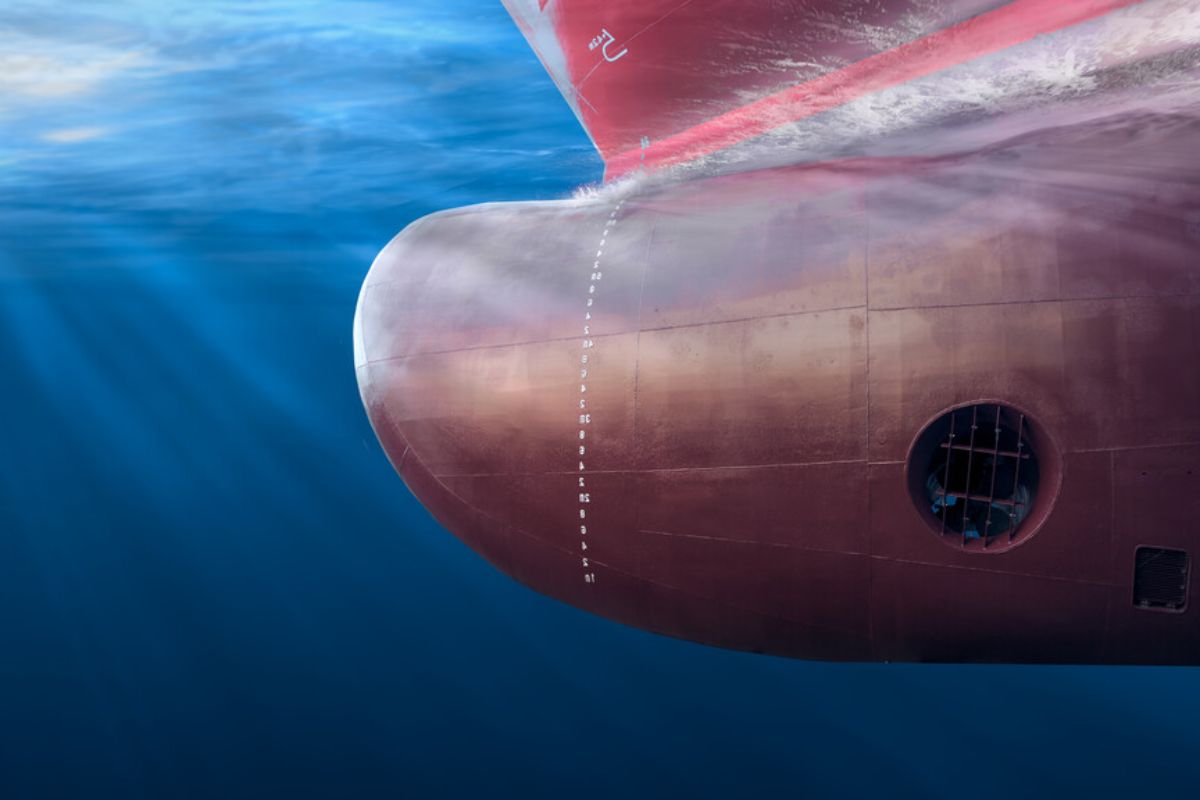


Understand What a Bow Thruster Is, the Maneuvering Engine of a Ship That Dispenses Tugs and Became an Essential Technology for Safety in Tight Ports in 2025
The maneuvering engine of a ship, technically known as a bow thruster or transverse propeller, is a propeller installed in a tunnel at the bow (the front of the ship). Its function is to generate lateral thrust, allowing the vessel to move sideways with extreme precision. This capability is crucial for docking and undocking maneuvers in crowded ports.
For cruise ships and large freighters, this technology has become an operational necessity rather than a luxury. It drastically reduces dependence on tugboats, which generates significant savings in port costs and accelerates operations. Safety also increases, as the captain gains control that can prevent costly collisions with the dock or other vessels.
How Physics Explains the Functioning of the Propeller?
The concept behind the propeller is straightforward and is based on a fundamental principle of physics. The system consists of a propeller within a tunnel that runs from one side of the hull to the other, below the waterline. When activated, the propeller draws water in from one side and expels it at high speed from the other side.
-
Former Atacadão Employee Turns Online Cake-Baking Lessons into a Confectionery Brand with Factory, Store, Delivery, and Nearly $400,000 in Revenue

-
Brazilian Startup Sells Nearly 9 Million Surprise Bags of Near-Expiry Food, Prevents Thousands of Tons of Waste, Aiming for $42 Million Revenue by 2026
-
How to Prevent Brown Recluse Spider Bites: Common Hiding Spots and Free Tips to Reduce Risks

-
Natto: The Unusual Japanese Superfood Gaining Popularity on Social Media and Driving Record Exports




According to Newton’s Third Law, for every action there is an equal and opposite reaction. The force exerted on the mass of expelled water generates a reaction force that pushes the bow of the ship in the opposite direction. If the water is thrown to starboard (right), the bow moves to port (left). It is a mechanism of pure force and reaction. However, its effectiveness is limited by the speed of the ship. Above 3 to 6 knots, the “Coandă Effect” causes the water jet to “stick” to the hull, neutralizing the lateral thrust.
The Essential Components of the System
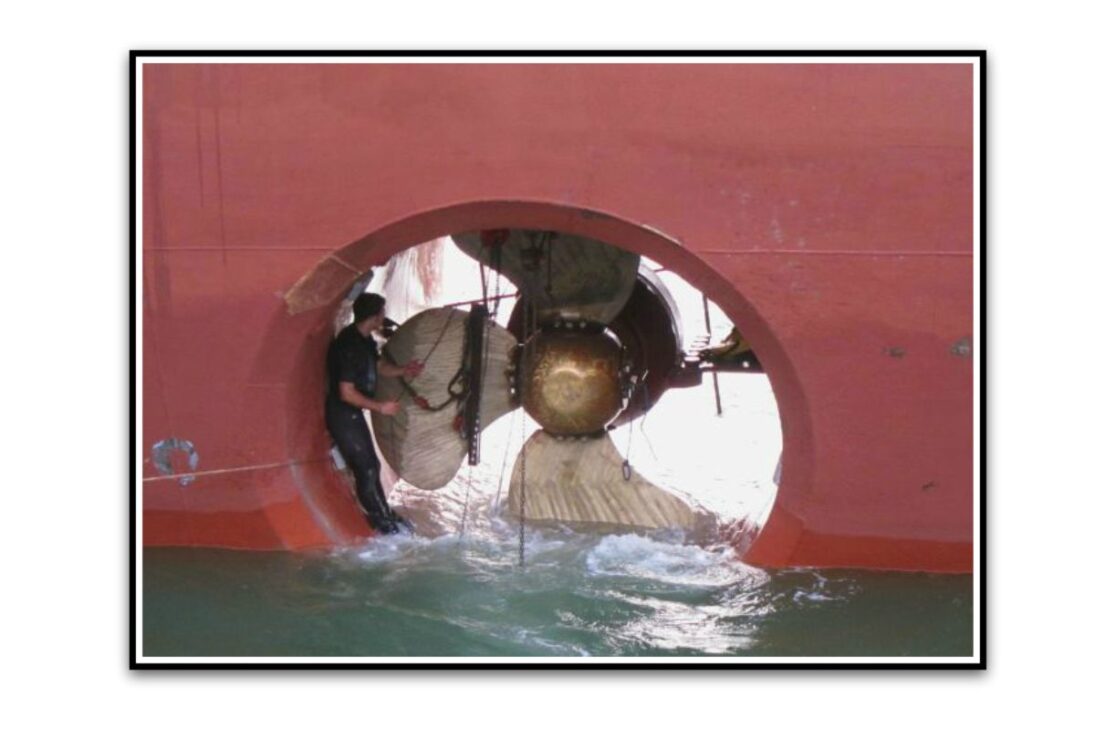
A tunnel thruster system is an assembly of various components, with the main ones being:
Main Engine: the power source that drives the propeller. On modern ships, it is predominantly an electric motor, which provides precise control and easy integration with automation systems.
Propeller: the heart of the system. There are two main types. The Fixed Pitch Propeller (FPP), simpler, where the direction of thrust is controlled by reversing the motor’s rotation. The Controllable Pitch Propeller (CPP) allows for changing the angle of the blades, offering a quicker response and smoother control, ideal for precision systems.
Tunnel: the duct that houses the propeller. Its design and finish are crucial for hydrodynamic efficiency, channeling the water flow to maximize lateral force.
From Military Secret to Global Standard, the History of the Maneuvering Engine
The path of the propeller is a fascinating story of innovation. Its origins date back to World War II, a time that drove technological development.
A key milestone occurred in 1940, when the U.S. Navy asked the company Murray & Tregurtha to develop an external propulsion system capable of rotating 360 degrees. Years later, in 1946, leveraging this experience, the same company designed and built the first commercial tunnel thrusters. The problem of safely docking large ships was solved.
A geopolitical catalyst accelerated development even further. In 1955, during a visit by the Soviet fleet to the United Kingdom, British divers secretly inspected the cruiser Sverdlov. They discovered an opening at the bow with a propeller, revealing that the Soviets already possessed advanced maneuvering technology. The discovery stimulated Western powers to intensify their own development programs.
The Future Has Already Begun, Automation and New Technologies
The maneuvering engine of a ship continues to evolve. Today, innovations are marked by the pursuit of sustainability, silence, and automation. One of the most promising trends is ring thrusters (“rim-drives”), such as those developed by the Dutch company Vetus. In these systems, the electric motor is shaped like a ring, eliminating the gearbox and resulting in nearly silent operation.
The most advanced frontier is integration with artificial intelligence. Docking assistance systems, such as the Avikus NeuBoat Dock II, use cameras to create a 3D view of the environment, guiding the operator accurately. Furthermore, integration with Dynamic Positioning (DP) systems allows the vessel to maintain its position and heading automatically, even under the influence of wind and currents, transforming the propeller into a key component in smart navigation of the future.








Famoso ” bow truster” ou propulsor de proa.
Também o ” dinamic position ” faz a atração ficar totalmente automática com erro inferior a 0,3 metros.
Já consertei alguns .