






 Portuguese
  Spanish
  5 min of reading
  0 comments


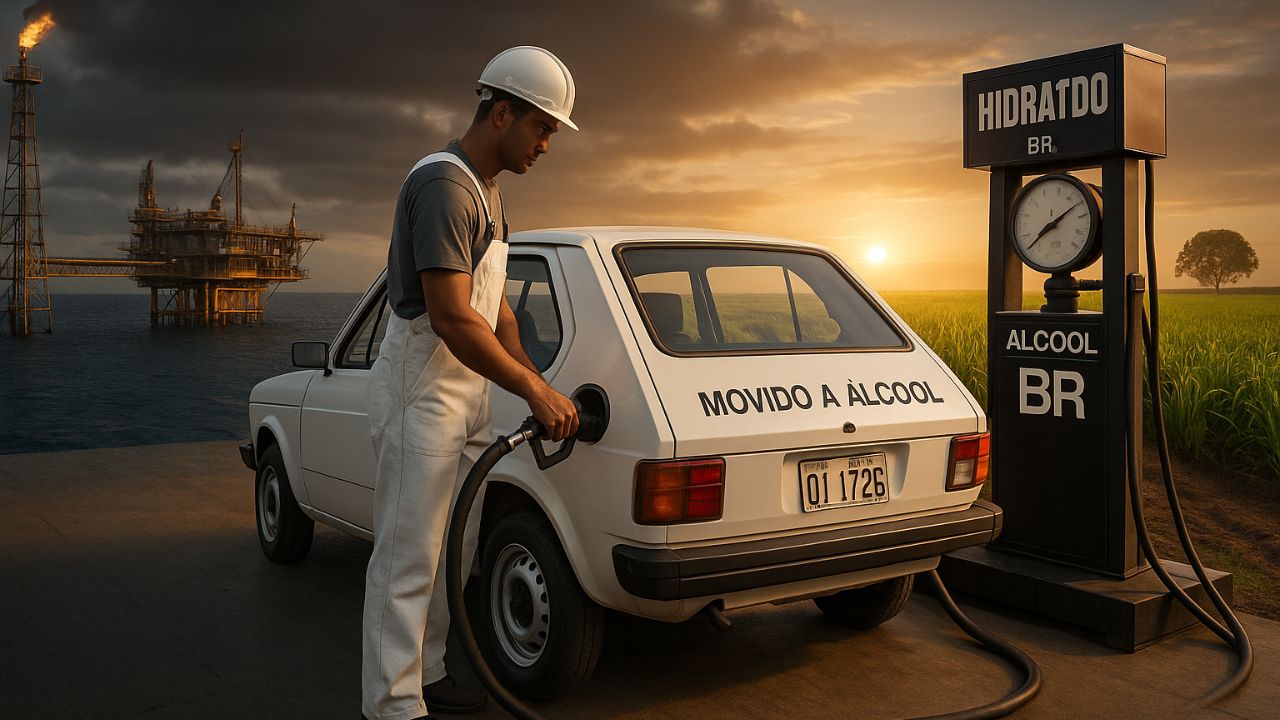
Know The History Of Proálcool, The Program That Came From Need In The Global Oil Crisis And Today Drives The Largest Fleet Of Flex Cars On The Planet.
In the early 1970s, Brazil was on the brink of economic collapse. The “Economic Miracle” was built on a dangerous dependence on imported oil. The global oil crisis of 1973 brutally exposed this fragility. In response, the country launched one of the most ambitious plans in its history: the National Alcohol Program (Proálcool). It was born not from environmental awareness, but from a desperate need for economic survival and sovereignty.
How The Global Oil Crisis Threatened The Brazilian Economy
Brazil was at the end of its “Economic Miracle” (1968-1973). Rapid industrialization massively depended on imported oil, which accounted for about 80% of national consumption. This dependence was the Achilles’ heel of the economy.
In 1973, the first oil shock hit the world. The price of oil quadrupled in a few months. For Brazil, the impact was catastrophic. The cost of oil imports jumped from US$ 600 million in 1973 to US$ 2.5 billion in 1974. This created a huge deficit in the trade balance and skyrocketed inflation from 15.5% to 34.5% in just one year.
-
Petrobras is expected to complete the drilling of the Morpho well in the Foz do Amazonas in August 2026, the first well in the Equatorial Margin, an oil frontier that the ANP estimates at more than 30 billion barrels and could redraw the map of Brazil.

-
Oil returns to the center of concerns with tension between the US and Iran

-
IEA reduces forecast for global oil demand in 2026 after impacts of the Middle East crisis

-
Bank of Japan raises interest rates to 1%, reaching the highest level in over three decades


The global oil crisis was a deliberate geopolitical act. The Organization of Arab Petroleum Exporting Countries (OAPEC) used oil as a political weapon. A second shock in 1979, with the Iranian Revolution, once again raised prices. By 1981, Brazil was spending US$ 10.6 billion on oil imports, an unsustainable situation. Proálcool emerged as a geopolitical countermeasure to regain control of the country’s economic fate.
The Launch And The Golden Age Of Proálcool
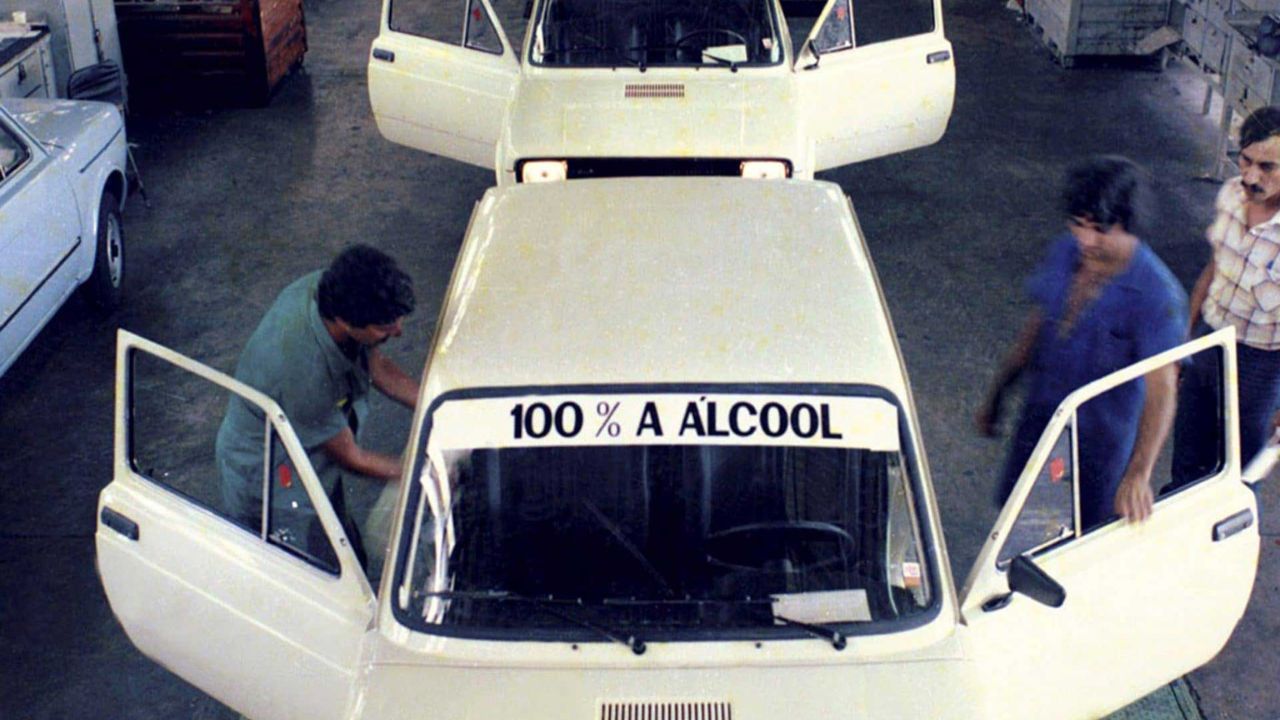
The National Alcohol Program was officially launched on November 14, 1975. The solution was genuinely Brazilian: use sugarcane to tackle the energy challenge posed by the global oil crisis.
The first phase (1975-1979) focused on the production of anhydrous ethanol to be blended with up to 20% gasoline. This smart strategy did not require changing the vehicle fleet. The government offered financing and guaranteed the purchase of all production, eliminating the risk for sugar mill owners.
The second shock in 1979, which intensified the global oil crisis, accelerated the program. The strategy shifted to the mass production of cars powered exclusively by hydrated ethanol. The Fiat 147, launched in 1979, was the world’s first mass-produced alcohol car. The government created a powerful incentive package: the price of alcohol was fixed at a maximum level of 59% to 65% of the price of gasoline, taxes for alcohol cars were reduced, and gas stations were prohibited from selling gasoline on weekends.
The result was spectacular. Alcohol production skyrocketed, and by 1986, alcohol cars accounted for 76.1% of new vehicle production, reaching 90% of sales.
The Decline Of Alcohol And The Scarcity At Gas Stations
The success of Proálcool depended on subsidies and the high oil price scenario, sustained by the global oil crisis, and cheap sugar. Starting in 1986, this logic reversed. Oil prices plummeted in the international market, while sugar prices rose. For sugar mill owners, it became more profitable to export sugar than produce ethanol for a controlled price market.
At the same time, Brazil faced a serious fiscal crisis, and the government cut the subsidies that sustained the program. Ethanol production was discouraged, but demand remained high. The ticking time bomb exploded in 1989.
During the off-season for sugarcane, ethanol simply disappeared from the gas stations. Millions of drivers were left with useless cars. The 1989 fuel supply crisis was the fatal blow to the program’s credibility and destroyed consumer confidence in alcohol. Sales of alcohol cars plummeted to less than 1% by the end of the 1990s. The program was seen as a failure.
After The Global Oil Crisis, The Renaissance With Flex Cars
The solution to the global oil crisis did not come from politics, but from technology. The lesson learned was that consumers should no longer depend on a single volatile fuel. The answer was flexibility.
Brazilian engineers, leveraging accumulated knowledge, developed and perfected the flex-fuel engine. In March 2003, Volkswagen launched the Gol 1.6 Total Flex, the first flex car in Brazil. The success was immediate and overwhelming.
Technology gave drivers the power to choose the cheapest fuel at the pump, eliminating the risk that had destroyed the original program. Within a few years, flex models began to dominate the market, surpassing 90% of sales. Today, Brazil has the largest flex-fuel vehicle fleet in the world. This consumer-driven innovation revitalized the entire ethanol chain and saved the legacy of Proálcool.
The Legacy Of Proálcool: Economic, Social, And Environmental Impacts
The legacy of nearly half a century of Proálcool is deep and complex. From an economic standpoint, the program reduced dependence on imported oil, generating savings of hundreds of billions of dollars for the country after the global oil crisis.
It also supported the automotive industry and created a sophisticated agro-industrial complex. However, these gains came at the cost of subsidies that contributed to public debt and created market distortions.
Socially, the program encouraged the concentration of land in large sugarcane monocultures, displacing food production in some regions. On the other hand, the sugarcane industry is a significant generator of formal jobs in the countryside.
Environmentally, the program presents a paradox. In urban centers, the replacement of leaded gasoline with ethanol dramatically improved air quality. In the countryside, however, the costs were high. The expansion of sugarcane was associated with indirect deforestation, and practices such as sugarcane burning and improper disposal of vinasse (production waste) caused air and river pollution for decades, although today there are more sustainable practices.






Be the first to react!