Portuguese
  Spanish




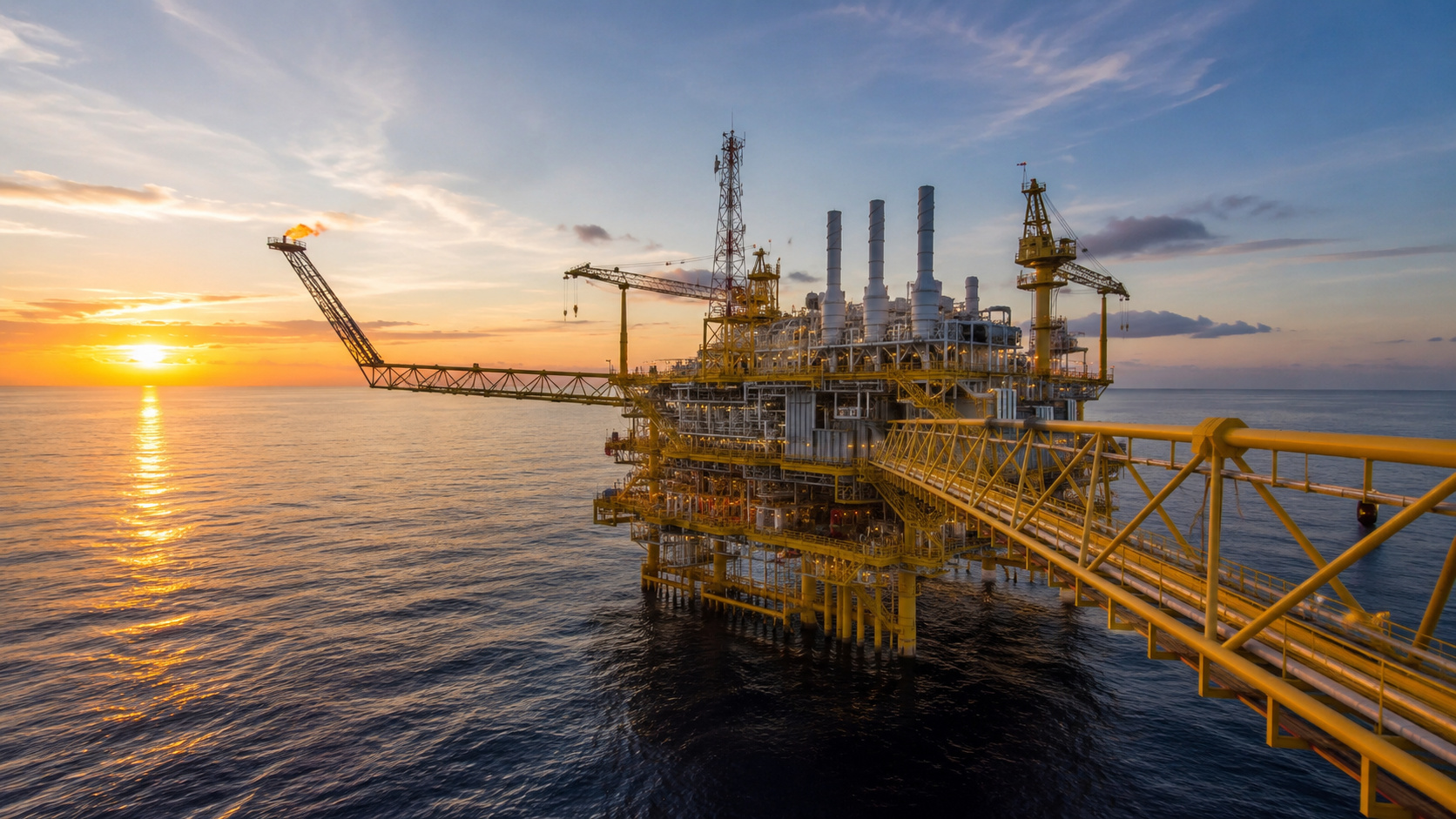
As Russia abandons Siberian posts, the American state of Texas will convert offshore oil platforms in the Gulf of Mexico into rocket recovery stations for the Space Force.
The program is coordinated by the Air Force Research Laboratory and has a federal budget of $480 million.
According to a report by Defense News, the project involves 38 eligible platforms in the Gulf of Mexico.
-
Petrobras to Double Natural Gas Supply in Northeastern Brazil with New Investment

-
Petrobras Approves $1.2 Billion Refinery in Brazil to Produce Aviation Fuel and Diesel from Plants
-
Petrobras Secures $2.2 Billion Contract to Build and Operate Four Support Vessels for Brazil’s Offshore Oil Fields
-
European Parliament Approves Digital Euro, Aiming to Challenge Visa and Mastercard’s Dominance and Transform Payments Across Europe by 2029


Thus, the abandoned oil industry in the Gulf of Mexico gains new life as U.S. military space infrastructure.

The program starts with 4 pilot platforms by 2027, according to the Air Force Research Laboratory (AFRL).
The Space Force has a budget of $29.4 billion for 2026 and will operate the stations in partnership with the United States Navy.
According to the Bureau of Ocean Energy Management (BOEM), there are 1,870 decommissioned offshore platforms in the Gulf of Mexico that would cost $7.6 billion to dismantle.
Colonel Daniel Hawkins will lead the Texas Rocket Recovery program
Colonel Daniel Hawkins, a US Air Force officer with 18 years of service, will lead the conversion program.
According to the AFRL, Hawkins previously worked on the MQ-9 Reaper drone program and holds a Ph.D. in aerospace engineering from MIT.
The Texas Rocket Recovery program has an initial budget of $480 million approved by the United States Congress in March 2026.
Thus, the project simultaneously addresses two federal bottlenecks: the environmental liability of offshore platforms and the growing demand for Space Force rocket recovery stations.
Additionally, SpaceX already tested landings on customized ocean platforms called Of Course I Still Love You and Just Read the Instructions in 2021 and 2022.
Why the steel tendon of platforms offers an ideal structure
TLP (Tension Leg Platform) type platforms use steel tendons up to 1,219 meters deep anchored to the seabed.
According to a study by the United States Department of Energy, each tendon supports tension of up to 4,500 tons.
Therefore, the structure withstands the impact of returning rockets of the Falcon 9 class (550 tons) and even Starship (5,000 tons).
The AFRL identified 38 eligible TLP platforms in the Gulf of Mexico between Texas and Louisiana.

According to SpaceX, Falcon 9 rockets have completed 372 vertical landings on ocean platforms by May 2026.
Additionally, the Falcon Heavy also lands on platforms, with 18 successful returns since 2018.
Senator Maria Cantwell of the US Senate approved the funding in committee
Democratic Senator Maria Cantwell, chair of the United States Senate Committee on Commerce, Science, and Transportation, approved the initial funding of $480 million in March 2026.
According to Cantwell, the program creates 2,300 direct jobs in the region and Louisiana between 2026 and 2030.
Thus, the Senate voted approval with 78 in favor and 19 against, with rare bipartisan support for military programs.
Cantwell has represented the state of Washington in the Senate since 2001 and has a history of approving aerospace programs.
Additionally, the senator was responsible for approving NASA’s Artemis program in 2019, which led the Artemis 2 mission to space in 2025.
Texas could save $4.2 billion in platform dismantling
The Bureau of Ocean Energy Management estimates that dismantling the 1,870 platforms would cost American taxpayers $7.6 billion.
According to the Government Accountability Office (GAO), about 80% of the original operating companies (Shell, ExxonMobil, Chevron, BP) have already transferred the platforms to smaller subsidiaries that lack the capital for dismantling.
Thus, the accumulated environmental liability of 1,870 platforms transforms into a military asset through the Lone Star State Rocket Recovery program.
The AFRL calculates savings of $4.2 billion in dismantling if 50% of the platforms are converted into recovery stations.

According to data from the Bureau of Ocean Energy Management, offshore oil production in the Gulf of Mexico fell 38% between 2010 and 2024.
The decline followed the drop in the global market oil barrel price and the increase in onshore extraction via fracking in the Permian Basin.
Thus, more than 1,870 platforms became economically unviable in the last 12 years.
The Lone Star State concentrates 940 of the platforms eligible for the Rocket Recovery program, according to the BOEM.
Additionally, Louisiana contributes with 620 platforms and the state of Florida adds another 310 platforms to the federal program.
According to the US Coast Guard, maritime traffic in the Gulf of Mexico decreased by 22% in 2025 with the decline in exploration operations.
The American offshore oil sector currently employs 87,000 direct workers, down from 145,000 in 2014, according to the American Petroleum Institute.
Thus, the Rocket Recovery program offers a transition path for those 60,000 workers who lost jobs on traditional platforms.
SpaceX, Blue Origin, and Rocket Lab compete for operation contracts
Three private companies compete for operation contracts of the converted stations: SpaceX, Blue Origin, and Rocket Lab.
Elon Musk’s SpaceX leads the ranking with 372 platform landings by May 2026.
According to the AFRL, Jeff Bezos’ Blue Origin is preparing the New Glenn rocket for platform use starting in 2027.
Thus, New Zealand’s Rocket Lab has already tested landings with the Electron rocket on Californian platforms in 2024.
Each company will be entitled to 8 platforms in the Gulf of Mexico, according to the AFRL’s pre-agreement division.
- SpaceX (Hawthorne, CA): 372 platform landings, Falcon 9 and Falcon Heavy
- Blue Origin (Kent, WA): New Glenn in testing, debut expected 2027
- Rocket Lab (Auckland, NZ): Electron with Californian landings in 2024
- Relativity Space (Long Beach, CA): Terran R in development until 2028
- Stoke Space (Seattle, WA): Nova with reusable return until 2029
According to the Government Accountability Office, the southern state Rocket Recovery program becomes a replicable model for other regions with abandoned platforms like the North Sea and Persian Gulf.
For comparison with other space initiatives, see coverage on SpaceX and Google orbital data centers and the Tengeh solar park in Singapore.
Brownsville in Texas becomes the program’s headquarters in 2027
The AFRL chose Brownsville, in the southern American state, as the operational headquarters of the Gulf Rocket Recovery program.
The city is 8 km from SpaceX’s Starbase, where the Starship has been testing since 2020.
According to the Brownsville City Hall, the program attracts $1.2 billion in real estate investments and generates 8,500 direct and indirect jobs by 2030.
Thus, the city on the American coast will become the world capital of reusable rocket recovery in the next decade.
Additionally, the Gulf of Mexico already leads the private space industry in the United States with SpaceX in Boca Chica.

The American state program confirms the integration between abandoned energy infrastructure and new space demands.
However, environmentalists warn that platform conversion requires decontamination of still active wells.
Nevertheless, according to the Environmental Protection Agency (EPA), the program requires certified environmental decommissioning before conversion for military use in the Gulf region.