Portuguese
  Spanish



The Track Gauge Between Russia and Europe Hinders Train Interoperability in War Scenarios, Creating a Technical Barrier with Direct Logistic and Military Implications
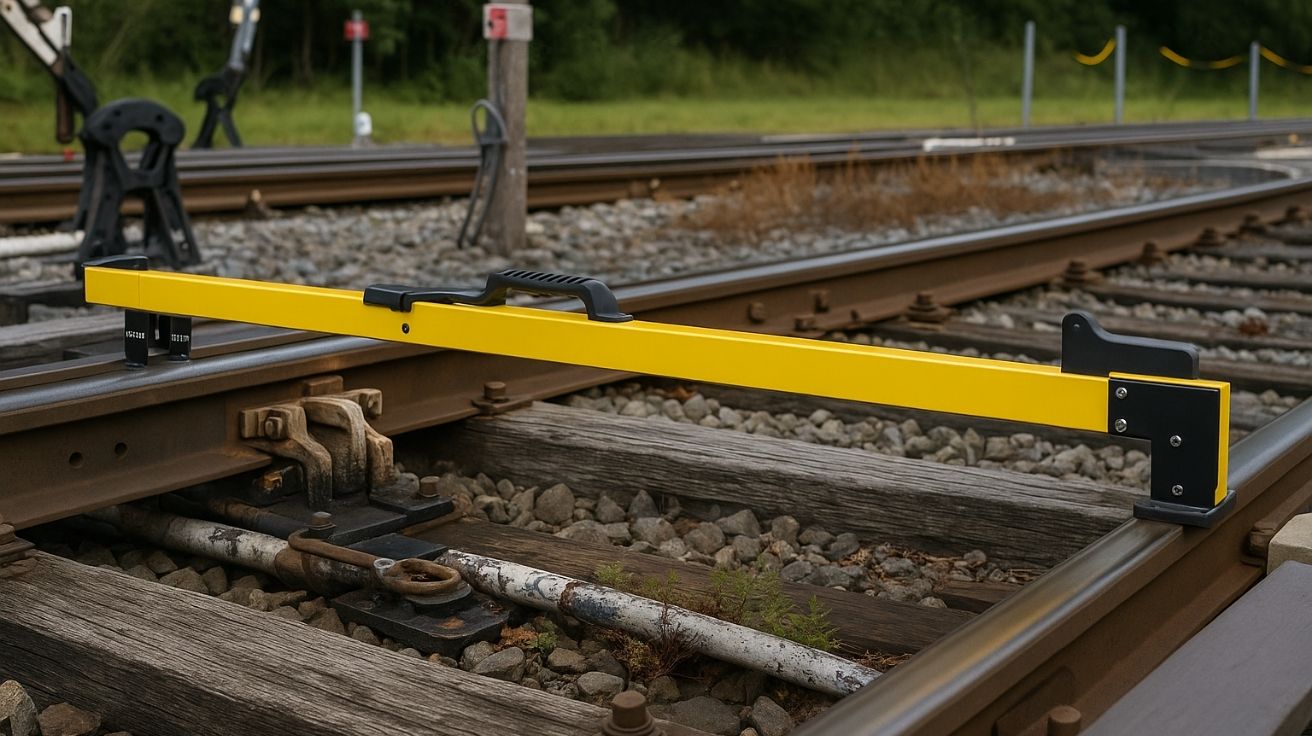
Few people know that there is a technical factor that acts as a silent barrier against possible military offensives by Russia towards Western Europe: the gauge of the railway tracks. While most of Europe adopts the standard gauge of 1,435 mm, the Russian railway system, as well as many countries of the former USSR, operates with a wider gauge of 1,520 mm. This seemingly small difference has significant logistic and military implications.
Historically, this strategic choice was intentionally adopted. By opting for a gauge incompatible with its western neighbors, Russia creates a natural difficulty for the movement of foreign troops and equipment within its territory—and vice versa. Any attempt to cross this railway border requires complex and time-consuming adaptations.
According to public data, this gauge change requires procedures such as the use of adjustable wheelsets, transshipment wagons, or even the complete swapping of bogies, the axles with wheels of the wagons. This process can take hours for a single train, making rapid large-scale actions unfeasible and limiting Russian military mobility beyond its railway borders.
-
Belo Horizonte’s Beltway Project Risks Losing $5 Billion to Metro Expansion if Court Doesn’t Act Soon; State Government Plans New Lines with IDB Support

-
Brazil to Auction 9,000 km of New Railways, Aiming to Attract $28 Billion by 2026

-
Brazil Plans $160 Billion Investment to Revitalize Railways and Reduce Reliance on Long-Distance Trucking
-
Retired Railway Workers in Brazil Preserve Locomotive for 52 Years, Now See It Donated by the Government


What Is Track Gauge and Why Does the Difference Between Russia and Europe Matter So Much?
Track gauge is the distance between the inner faces of the rails. It seems like a technical detail, but it defines the entire operational logic of a railway system. Trains with wheels adapted for 1,520 mm, like the Russian ones, simply cannot run on European tracks, which have only 1,435 mm spacing. This incompatibility turns into a real geostrategic obstacle.
The choice of the standard gauge in Europe follows a logic of integration and connectivity. Since the 19th century, European countries adopted this measure as a way to ensure interoperability among nations. On the other hand, Russia, following a defensive logic, decided to use a wider gauge, thus creating an invisible “technical wall.”
Countries like Finland, Ukraine, Belarus, and the Baltics have also adopted the Russian gauge, perpetuating this technical separation. This has consequences not only militarily but economically: freight trains need to stop, unload and reload goods, or change their bogies at the borders.
In practice, track gauge acts as a physical border. During the Cold War, it was considered a strategic advantage. And today, in times of renewed tensions between Russia and NATO, it remains one of the reasons why a massive invasion by train would be extremely difficult.
Furthermore, the gauge difference delays reinforcements, increases transportation costs, and reduces logistical response speed. An obstacle of 85 millimeters is enough to halt entire convoys. The gauge is, therefore, a deterrent factor.
In modern wars, where time is critical, every delay represents vulnerability. Russia, despite being a powerful railway nation, finds itself limited when strategy calls for rapid mobility beyond its borders—simply because the tracks do not match.
It is no coincidence that automatic gauge change systems, like the Spanish Talgo or the Polish SUW 2000, have been developed for decades. But even these are still expensive, slow, and limited to specific wagons.
Rail Baltica: The European Strategy to Cut the Railway Link With Russia
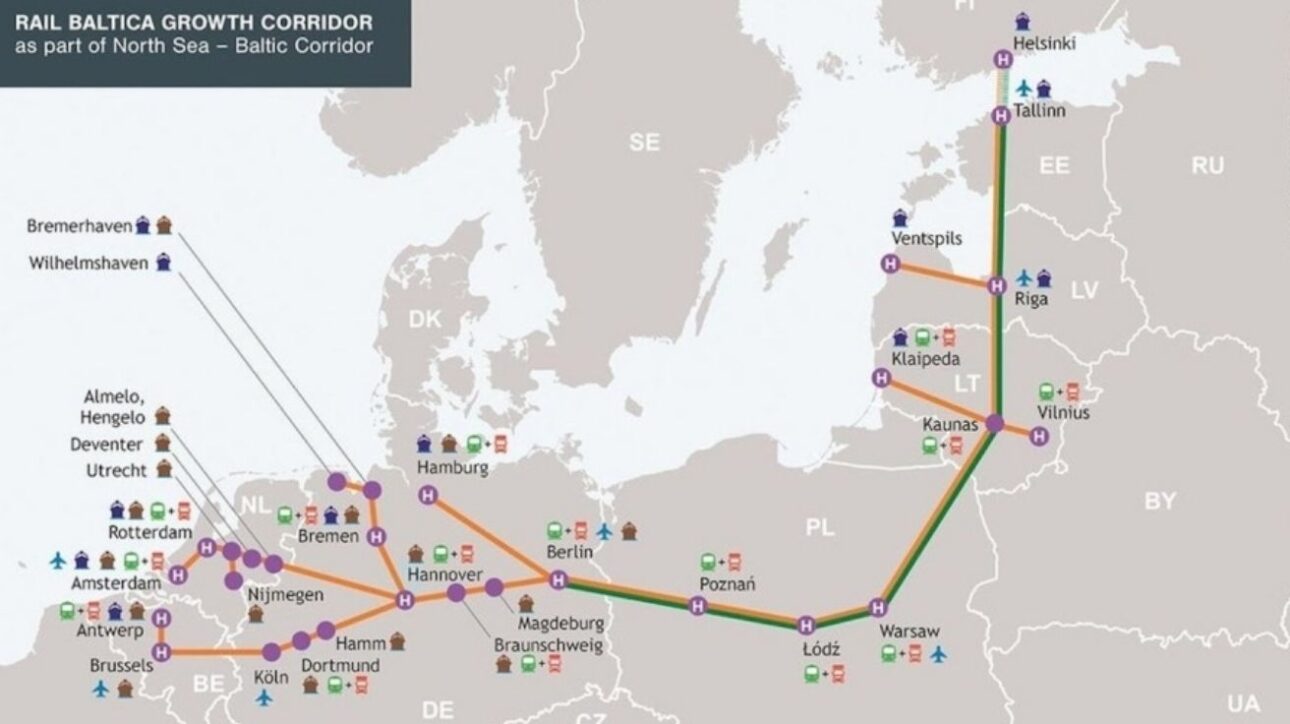
Faced with this technical barrier imposed by the Russian track gauge, Europe has reacted with an ambitious infrastructure project: Rail Baltica. This is a high-speed line connecting Estonia, Latvia, Lithuania, and Poland, using exclusively the standard European gauge (1,435 mm).
With billion-euro investment from the European Union, the goal is to break the dependency of the Baltic countries on the Russian railway network. Today, a significant portion of the railway network in these countries still uses the 1,520 mm gauge inherited from the USSR. This poses a logistical and security risk, especially in the event of military tensions with Moscow.
Rail Baltica is not just a transportation project: it is a strategic decision. By standardizing the gauge with the rest of Europe, these countries integrate into the continental network, facilitating trade, reducing logistical costs, and, above all, gaining independence from Russia.
For NATO, the line represents a safe route for reinforcements and supplies. For local governments, it is a way to accelerate economic development. For the Russian military, it is a new potential obstacle.
The project includes not only tracks but also stations, logistics centers, and connections with ports and highways. In total, there will be over 870 km of strategic railway line.
With completion expected in the coming years, Rail Baltica shows how the choice of track gauge can redraw entire geopolitical maps. It is an infrastructure that, contrary to what it appears, serves more for defense than for transportation.
In the medium term, it is expected that other countries in the region, such as Ukraine and Moldova, will also advance in converting their railway networks to the standard gauge.
Brazil Also Suffers from Gauge Wars — And This Affects Our National Logistics
The lesson from Europe serves Brazil. Here, the problem is not geopolitical but economic. Our railway network is fragmented by an internal gauge war that dates back to the 19th century. We have about 30,000 kilometers of tracks, predominantly using the narrow gauge (1,000 mm) and the Irish gauge (1,600 mm).
This technical chaos hinders national integration and increases cargo transportation costs. Just like between Russia and Europe, Brazilian trains must stop for axle changes or transloading when moving between regions. This increases costs and reduces the competitiveness of our industry.
The attempt to unify gauges in Brazil started late, in the 1970s, and was never completed. The result is disconnected regions, abandoned stretches, and a railway network that, despite its size, does not serve to cross the country efficiently.
Studies show that the complete conversion to a single gauge in Brazil would cost billions of reais, but would save even more in logistics over time. Today, we literally have “rail islands” that do not communicate with each other.
The choice of gauge defines what kind of train can operate, the speed, the load, and even foreign investments. Brazil needs to learn from the European case: gauge is a strategic asset.
The decision to standardize is a political choice—and, as history shows, it is also a choice of sovereignty. A country that cannot connect its own tracks loses in every sense.
Just as Russia uses gauge to prevent invasions, Brazil should use standardization to allow progress.
Tracks Shape Borders — And the Future of Global Transportation
The gauge difference between the tracks of Russia and Europe is much more than a technical detail: it is a geopolitical barrier. It prevents Russian trains from easily entering Western Europe, creating a logistical bottleneck that protects the continent.
In times of war, this limitation transforms into a strategic advantage. In times of peace, it continues to influence trade routes and infrastructure plans. Tracks shape borders, define alliances, and, in many cases, prevent conflicts.
Rail gauge, contrary to what it seems, is not just a measure. It is a decision. A line of defense. A tool of power.
If countries like Russia treat gauge as a matter of national security, perhaps the rest of the world should do the same. Because sometimes, what separates peace from war… is just 85 millimeters of track.