






 Portuguese
  Spanish
  5 min of reading
  0 comments


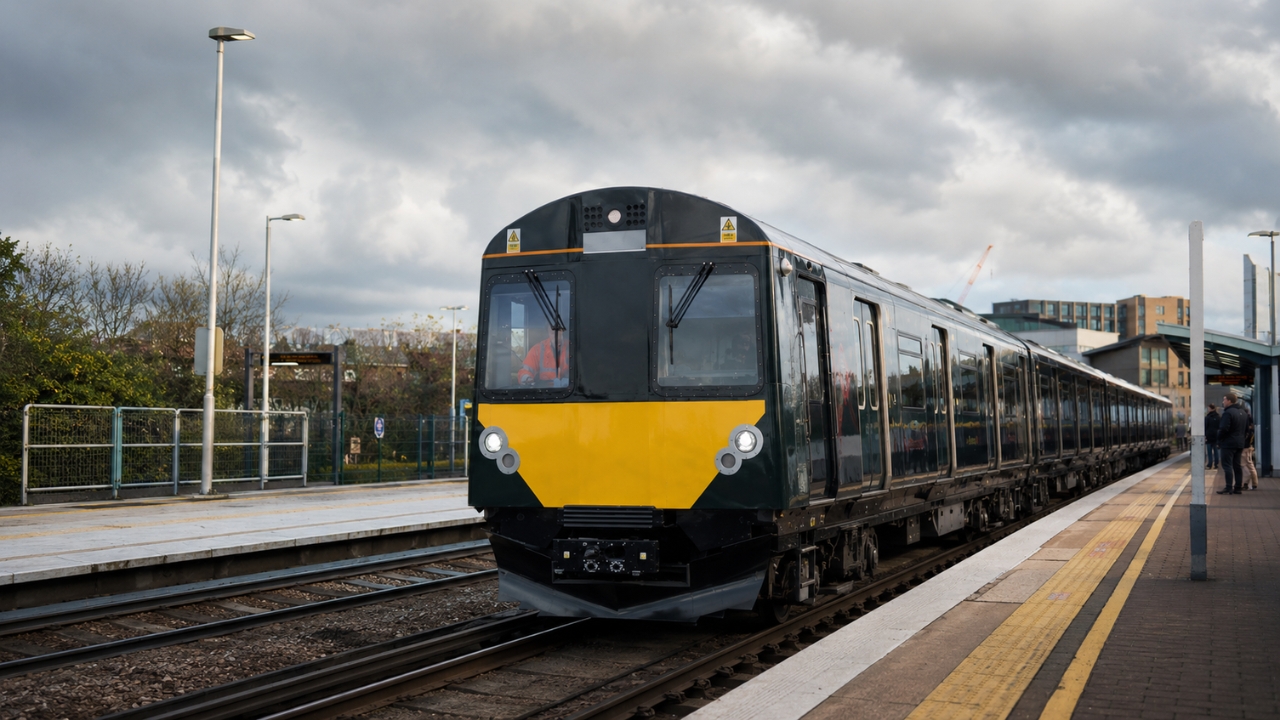
London rail experiment combines high autonomy, fast charging, and passenger operation to test a new phase of electric rails
On February 3, 2026, a battery-powered train began transporting passengers in the UK, raising an alert in the railway sector: the era of diesel regional trains may be more threatened than ever. The model, operated by Great Western Railway, debuted in regular service on the line between West Ealing and Greenford, in London.
The news was announced by FirstGroup, GWR’s parent company, which confirmed the entry into operation of the first British train powered exclusively by battery in passenger service, after 22 months of testing with fast-charging technology on the route. The train replaced a diesel train starting with the 05:30 AM departure from West Ealing to Greenford, according to FirstGroup.
The detail that transforms this project into something much bigger than a simple train swap is the promise to solve one of the biggest problems of modern railways: how to eliminate diesel on lines where installing overhead cables is expensive, slow, or visually undesirable.
-
Railway returns to prominence in Brazil after STF approval: a R$ 25.2 billion project promises to save R$ 9 billion in freight, transport 50 million tons per year, and transform Sinop into a logistics powerhouse for agribusiness.

-
Retired trains leave European tracks and become tons of steel, aluminum, and copper in dismantling yards where recycling exceeds 90%, but batteries, composites, and electronics create a new frontier of railway waste.

-
The strategic railway of Santa Catarina will receive R$ 608 million, will undergo historic modernization, and could transform logistics between Mafra and the Port of São Francisco do Sul.
-
While showcasing bullet trains traveling at over 300 km/h, China maintains about 81 slow train lines that travel at 40 km/h, charge less than R$ 2 for a ticket, and cross remote villages carrying residents, students, and even chickens and vegetables to the market.



An old train with a completely new mission

The protagonist of this turnaround is a Class 230, a train converted to operate with batteries. It was not born as a futuristic laboratory composition, but was adapted to prove that the technology can work in a real situation, with passengers, schedules, stations, and daily operational demands.
During testing, the train was used on the Greenford branch line, a short but strategic route to evaluate performance, safety, and reliability. After almost two years of experimentation, GWR decided to put the train into regular service, initially on Saturdays.
This point is crucial: it’s not just a prototype hidden on an experimental track. The train entered the railway routine, replaced a diesel unit, and began generating real data for the future of the British network.
The milestone that surprised the railway sector
Before transporting passengers, the train had already attracted attention by reaching an impressive milestone. The unit recorded 200.5 miles traveled on a single charge, surpassing the previous record of 139 miles, set by another battery train.
Converting to kilometers, that’s over 320 km running without recharging. For a regional battery-powered train, this number completely changes the conversation about the future of non-electrified lines.
GWR itself states that, in its future plans, it will need battery trains capable of routinely covering more than 60 miles between recharges. In other words, the record shows that the technology can go far beyond a short route in London.
Fast charging could be the big trick
The true secret of the project lies in the so-called FastCharge technology. The logic is simple but powerful: instead of installing electrical cables along the entire line, the train recharges quickly at strategic points, such as stations.
Technical reports on the system indicate that recharging can happen in a few minutes, using high power to return energy to the train during the stop. This transforms the time spent stopped on the platform into part of the train’s energy operation.
In practice, this model can reduce the need for complete track electrification, which usually requires expensive works, visual impact, long deadlines, and complex adaptations. For regional lines, the gain can be enormous.

Diesel becomes the main target
The introduction of the battery train comes at a decisive moment for British rail transport. The country seeks to reduce emissions, modernize its network, and abandon fossil fuels, but still relies on diesel trains on several routes where full electrification has not progressed.
The big obstacle has always been cost. Electrifying a railway requires poles, cables, substations, interventions on bridges, tunnels, and stations. On smaller lines, the investment can be difficult to justify.
This is where the battery-powered train emerges as an intermediate solution: cleaner than diesel, less invasive than full electrification, and with the potential to be implemented on sections where traditional electrical infrastructure is not cost-effective.
Passengers enter the test center
The initial Saturday operation has a clear objective: to observe how the train performs in real service. GWR wants to understand performance, reliability, maintenance, energy consumption, and acceptance before expanding schedules throughout the year.
For passengers, the change might seem simple: a different train, quieter, and without a diesel engine. But behind the scenes, each journey helps define whether this type of rolling stock can spread to other routes.
The involvement of charging infrastructure is also decisive. It’s not enough to have a large battery; the system needs to charge quickly, operate safely, and maintain service regularity without creating delays.
A small line with a giant impact
The West Ealing–Greenford route is short, but the impact of the experiment could be much greater. If the system works well, it could become a showcase for other British lines facing the same dilemma: little electrification, high construction costs, and increasing pressure to abandon diesel.
The battery train shows a third way. Neither traditional diesel nor complete end-to-end electrification. The bet is on batteries, fast charging, and localized infrastructure.
This combination can transform regional branch lines, reduce emissions, and accelerate railway modernization without waiting decades for large infrastructure projects.
The future of the tracks might be in batteries
The most impressive thing in this case is that the revolution didn’t come from a futuristic bullet train, but from a converted composition, tested for 22 months, and put to work on a common London line.
With over 320 km of tested range, fast charging, and passenger operation, GWR’s project places the battery at the center of an inevitable question: how long will diesel still resist on regional railways?
If the technology scales, the UK can pave the way for a new generation of clean, quiet trains capable of operating where overhead lines never reached. And it all started with a short branch line, a converted train, and a bold bet on electrical energy stored in batteries.







Be the first to react!