Portuguese
  Spanish


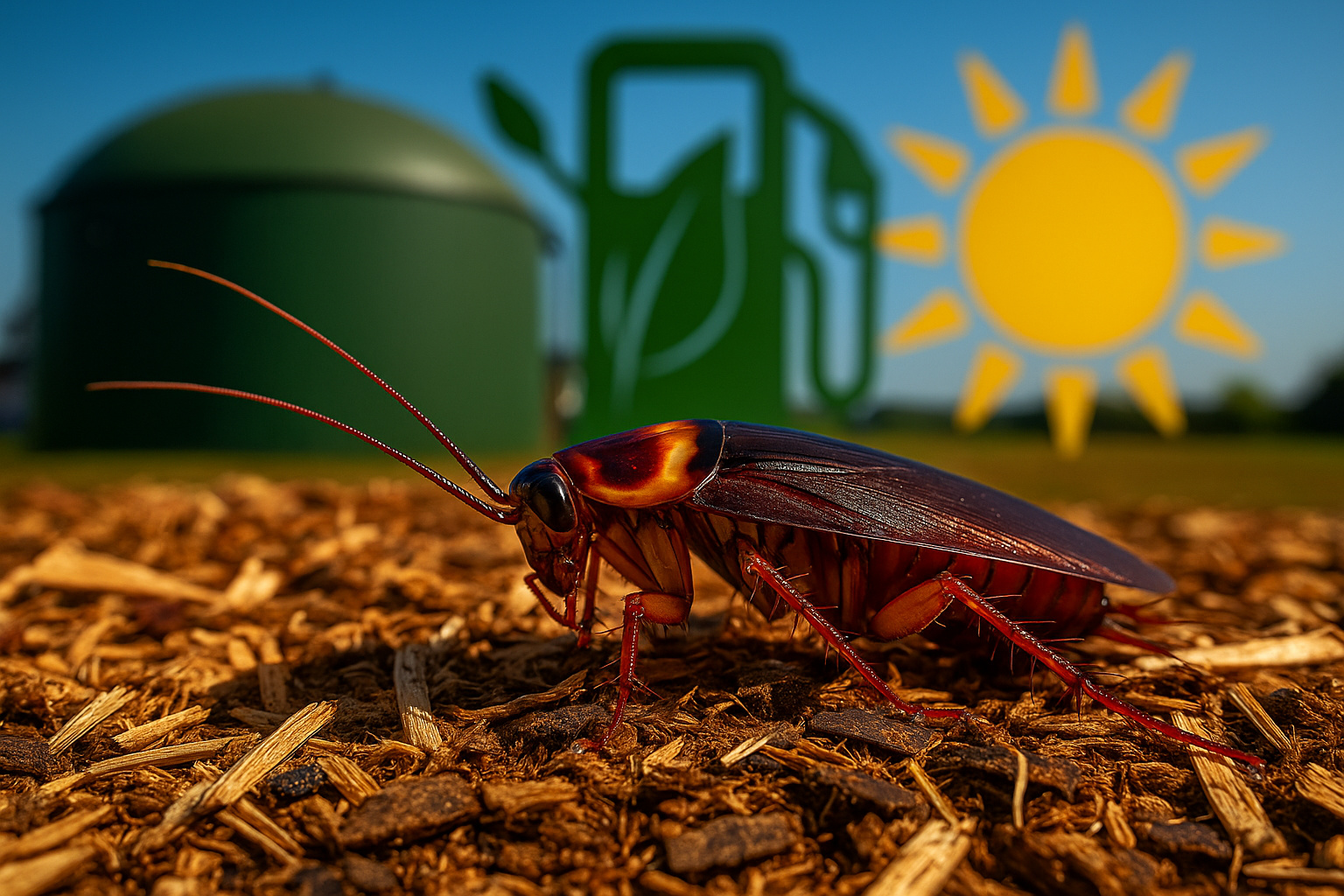


The Role of Cockroaches in the Energy Transition
Researchers from USP and UFRJ have been investigating since 2023 how the digestive system of cockroaches can be used as a model for bioenergy production.
Although often seen as urban pests, cockroaches, especially the species Periplaneta americana, have a highly adaptable digestive system.
This mechanism allows for the efficient degradation of plant fibers and organic waste, which sparks scientific and industrial interest.
Thus, understanding this process may be an essential step toward a cleaner and more sustainable energy matrix.
The Study on the Efficient Digestion of Cockroaches
Over millions of years, these insects have developed an extremely effective digestion system to utilize different food sources.
In 2024, Marcos Buckeridge, a professor at the Institute of Biosciences at USP, and Ednildo Machado, an entomologist at UFRJ, detailed in the journal BioEnergy Research how the gut of cockroaches functions.
The process operates like a natural production line.
In this system, each part of the digestive tract works to grind, degrade, and maximize the use of plant biomass.
The research highlights that replicating this process could reduce production costs of ethanol and increase industrial efficiency.
The Potential of Biomimetics Applied to Energy
Based on biomimetics, a concept rooted in observing nature, scientists believe that studying cockroaches can inspire industrial solutions.
This includes utilizing sugarcane bagasse more efficiently.
Researchers believe that applying this process on an industrial scale will enhance biomass degradation and boost ethanol production in Brazil.
The strategy could contribute to reduced farmland use and greater preservation of forested areas.
-
Brazil to Introduce B16 Diesel with Increased Soybean Oil Content for Trucks by 2026
-
Brazil Advances with JetBio’s Megaproject to Build the World’s Largest Ethanol-Based Sustainable Aviation Fuel Plant, Aiming to Become a Global Exporter

-
Brazil on Track for Record 40.7 Billion Liters of Ethanol in 2026/27 Season, Driven by Corn Ethanol
-
Petrobras Approves $1.2 Billion Refinery in Brazil to Produce Aviation Fuel and Diesel from Plants


Sustainable Paths for Bioethanol
The studies published in 2024 emphasize that the goal is not to create plants filled with cockroaches.
The aim is to understand their digestive mechanisms and replicate them with technology.
In this way, it would be possible to produce bioethanol without resorting to aggressive chemical processes, reducing environmental impacts.
Moreover, adapting industry to natural models can accelerate the energy transition.
New enzymes and microorganisms inspired by the digestive system of these insects can be applied to optimize large-scale production.
Next Steps in Research
According to Buckeridge and Machado, the investigation will continue with the study of other insects, such as termites and mealworms. In addition, these species have a greater capacity to degrade cellulose.
As a result of the tests conducted, it was observed that these species can break down up to 90% of the biomass. This performance paves the way for new industrial applications.
At the same time, science is advancing toward bioenergetic solutions that are cleaner, more accessible, and effective in addressing current energy challenges.
For this reason, insect-based biotechnology presents itself as a promising alternative to transform the Brazilian energy matrix in the coming years.
Therefore, the next studies are expected to further strengthen the role of these organisms in the transition to renewable energy sources.