Portuguese
  Spanish


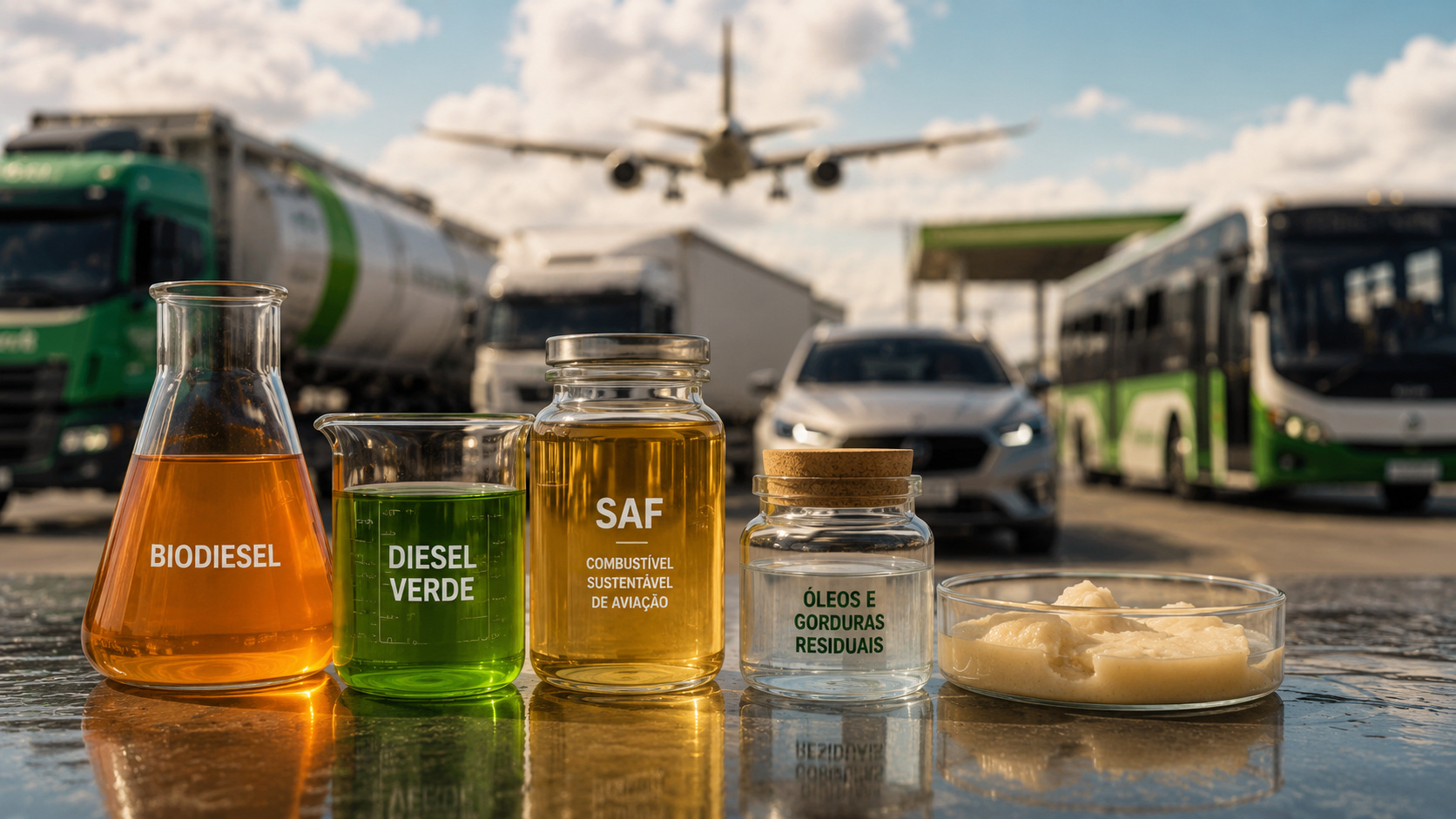

MMA and MME expand the use of waste in biofuel production and accelerate the advancement of sustainable fuels in Brazil by 2030.
The new federal measure published by the Ministry of the Environment and Climate Change and the Ministry of Mines and Energy promises to expand the use of waste in biofuel production in Brazil. Interministerial Ordinance No. 3/2026, published last Tuesday (5/13), establishes a minimum proportion of the use of residual oils and fats (ROG) in the production of biodiesel, sustainable aviation fuel (SAF), and green diesel.
According to a government publication on May 18, the initiative is part of the Future Fuel Law and reinforces the MMA and MME strategy to reduce carbon emissions, strengthen the circular economy, and increase the participation of sustainable fuels in the Brazilian energy matrix by 2030.
Besides the environmental impacts, the measure can also stimulate investments in selective collection, recycling, reverse logistics, and industrial infrastructure aimed at the reuse of urban and industrial waste.
-
Brazil Advances with JetBio’s Megaproject to Build the World’s Largest Ethanol-Based Sustainable Aviation Fuel Plant, Aiming to Become a Global Exporter

-
Brazil on Track for Record 40.7 Billion Liters of Ethanol in 2026/27 Season, Driven by Corn Ethanol
-
Petrobras Approves $1.2 Billion Refinery in Brazil to Produce Aviation Fuel and Diesel from Plants
-
US$ 7 billion, green hydrogen, and steel with up to 95% less CO₂: the first green steel plant on the planet emerges in Sweden and targets Brazil as the next chapter



New federal measure creates minimum target for waste use in biofuels
The new federal measure sets a minimum target of 1% use of residual oils and fats in relation to the total renewable raw materials used by biofuel producers.
According to the text published by MMA and MME, the rule will be voluntary in 2026 and 2027. The requirement will take effect from January 1, 2028.
Although the initial percentage is small, energy sector specialists assess that the regulation creates an important foundation for the gradual expansion of waste reuse in the country.
The proposal also meets the determinations of CNPE Resolution No. 13/2024, which provided for public consultation, Regulatory Impact Analysis (RIA), and social participation before setting the targets.


MMA and MME bet on the circular economy to reduce emissions
The joint action between MMA and MME reinforces the government’s attempt to integrate environmental and energy policies into a broader energy transition strategy.
In practice, the reuse of waste reduces the carbon intensity of sustainable fuels produced in Brazil. Moreover, it decreases environmental impacts caused by the improper disposal of cooking oil in sewage networks and water bodies.
Sanitation companies have been warning for years about the damage caused by improper disposal of this material, which can cause blockages and increase urban operational costs.
Among the main objectives of the measure are:
- expand waste reuse;
- reduce carbon emissions;
- stimulate investments in recycling;
- strengthen the production of sustainable fuels;
- encourage reverse logistics and selective collection.
Biofuels advance as a strategic alternative for transport and aviation
Biofuels have gained even more relevance in recent years due to international pressure to reduce emissions in heavy transport and aviation.
Sustainable aviation fuel, known as SAF, is globally recognized as one of the main solutions to reduce the carbon footprint of the aviation sector in the coming decades.
In this scenario, Brazil appears in a strategic position thanks to strong agricultural production, availability of biomass, and potential for large-scale waste reuse.
The new MMA and MME regulation aims to accelerate this process by creating clearer rules for the use of renewable raw materials.
Urban waste and cooking oil begin to gain economic value
One of the most important effects of the new federal measure is to transform previously discarded waste into strategic raw material for the energy industry.
Used cooking oil, residual fats, and other materials may gain higher commercial value as the demand for the biofuels chain increases.
This should stimulate investments in:
- specialized collection;
- traceability;
- industrial pre-treatment;
- storage logistics;
- energy recycling.
The measure also recognizes the role of cooperatives and associations of waste pickers in structuring the OGR supply chain.
In addition to the positive environmental impact, the initiative can increase income generation in activities related to recycling and the circular economy.

Sustainable fuels enter the center of the Brazilian energy transition
The advancement of sustainable fuels occurs at a time of global transformation in the energy sector.
Countries in Europe, the United States, and Asia are expanding decarbonization targets to reduce dependence on fossil fuels. In Brazil, the strengthening of biofuels is seen as one of the main competitive advantages of the national energy matrix.
According to MMA and MME, the use of waste helps to increase the environmental gains associated with the energy transition and reduces climate impacts linked to energy production.
Moreover, the country already has established experience in the production of ethanol and biodiesel, a factor that facilitates the expansion of new technologies related to green diesel and SAF.
ANP will be responsible for monitoring the targets set for 2028
The National Agency of Petroleum, Natural Gas and Biofuels (ANP) will be responsible for regulating the monitoring and inspection mechanisms of the new policy.
The agency will have to monitor the fulfillment of minimum targets for the use of waste in biofuel production.
Experts point out that traceability will be one of the main challenges for the sector in the coming years. This is because it will be necessary to prove the origin of the waste used by companies.
Control will also be important to prevent fraud and ensure greater transparency in the sustainable fuels production chain.
New federal measure could accelerate green investments until 2030
The global renewable energy market is in a fast-paced race for low-carbon solutions. In this context, Brazil is trying to expand its international participation in the advanced biofuels sector.
The new federal measure could unlock investments in new plants, logistics infrastructure, and specialized waste reuse collection centers.
The advancement of SAF also arouses growing interest from airlines and transportation companies, which need to meet increasingly stringent environmental targets.
In the coming years, the trend is that global demand for sustainable fuels will continue to increase, especially in sectors considered difficult to electrify.
How the new policy can transform energy, recycling, and sustainable development
The regulation published by MMA and MME represents another step in Brazil’s strategy for decarbonizing the economy.
By encouraging the use of waste in biofuel production, the government enhances the integration between environmental sustainability, industrial reuse, and energy security.
The measure also creates opportunities for recycling cooperatives, reverse logistics companies, sustainable fuel producers, and investors linked to the energy transition.
With targets set until 2028 and expected impacts by 2030, Brazil aims to consolidate a cleaner, more efficient production chain aligned with new global carbon reduction demands.
With information from Federal Government