Portuguese
  Spanish


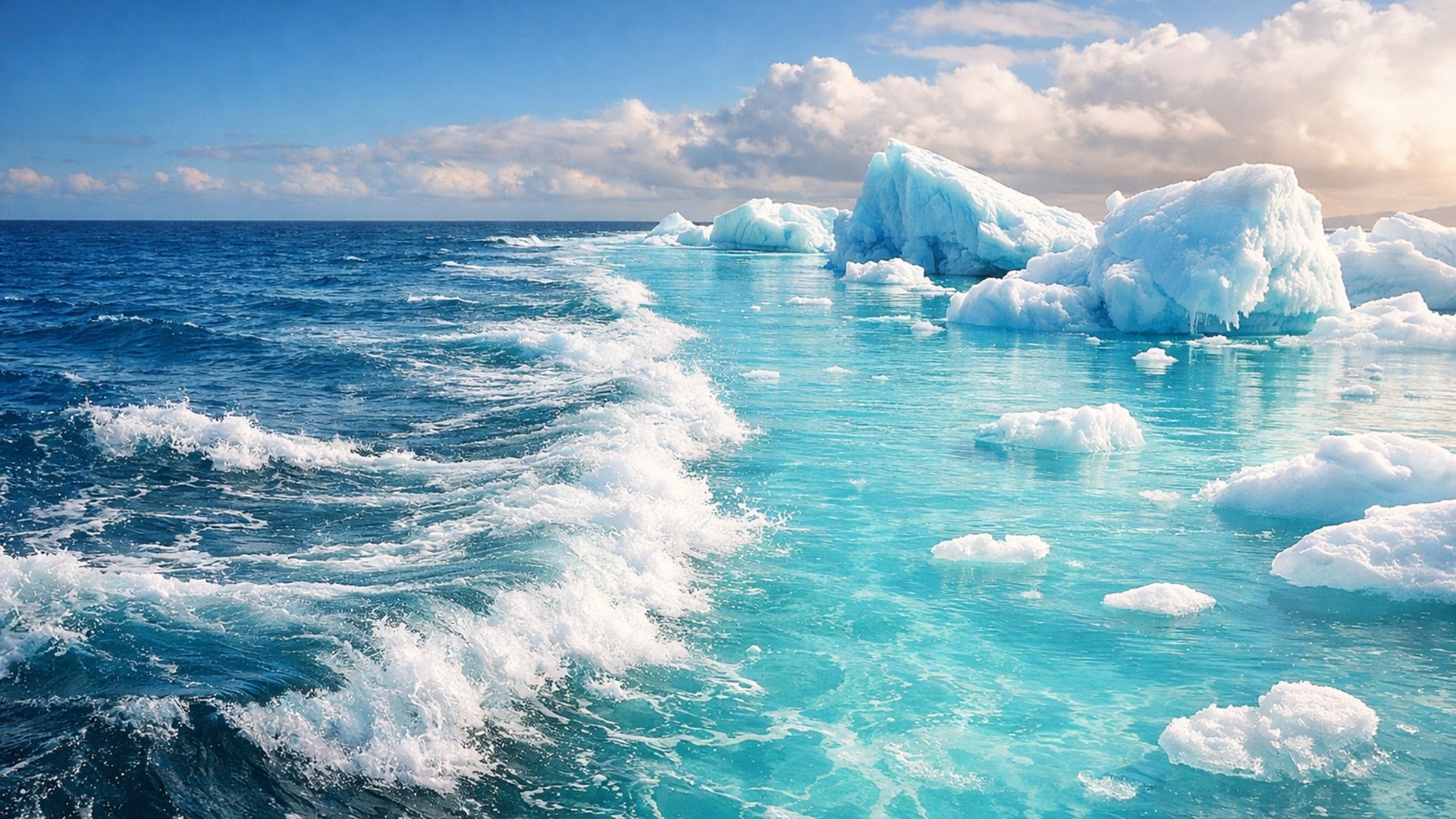


Study Reveals That Climate Change Is Rapidly Altering Wind Patterns and Ocean Currents, Driving a Massive Volume of Freshwater to the South of the Indian Ocean, Threatening Thermohaline Circulation and Marine Biodiversity.
The study from the University of Colorado published in Nature Climate Change on February 3, 2026 reveals that the salinity of the southern Indian Ocean has dropped by 30% over 60 years due to climate change, impacting ocean currents and ecosystems.
Rapid Desalination in the Southern Indian Ocean
The southern Indian Ocean is facing a salt loss at an alarming and unprecedented rate. This vast region, located off the west coast of Australia, is becoming less saline at an accelerated pace. The change requires rigorous attention from scientists currently.
The rise in global temperatures over the past 60 years has altered important surface wind patterns. Such climatic modifications have also profoundly impacted ocean currents. These combined factors are channeling increasing amounts of freshwater directly into the southern Indian Ocean.
-
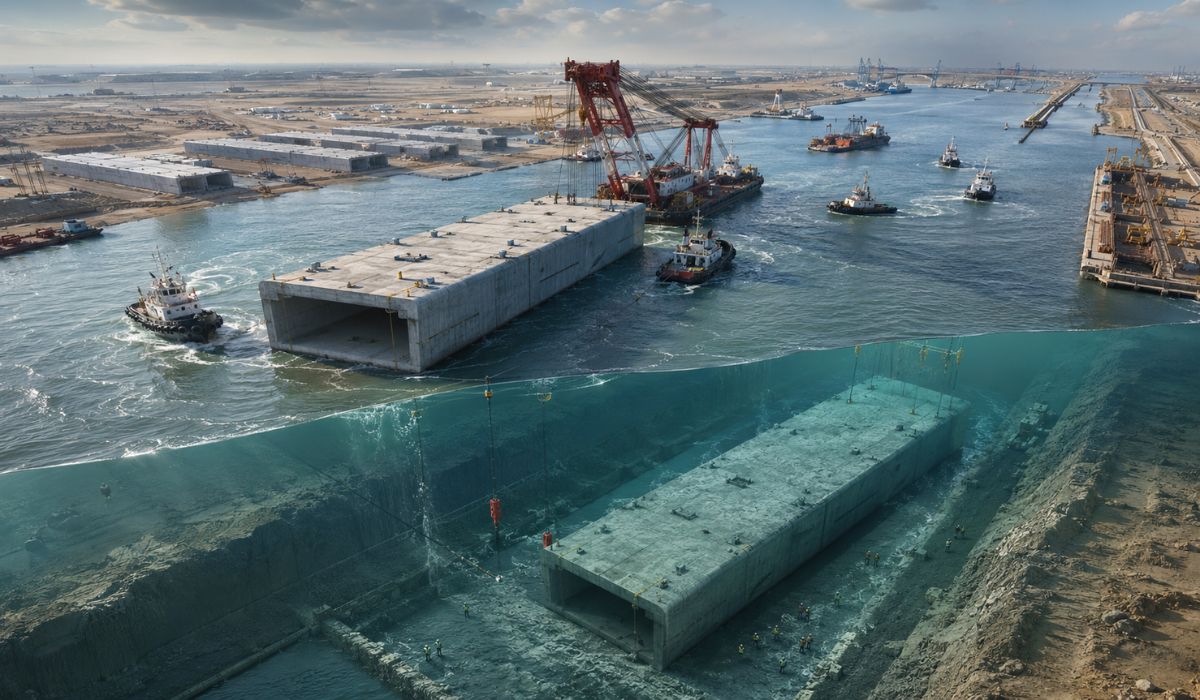
Iraq floats and sinks under an arm of the Euphrates 10 giant concrete boxes of 46,000 tons and 125 meters each to assemble a 2.4 km submerged tunnel and open a new land route between Asia and Europe.

-
Scientists use more than 20,000 artificial birds and solar speakers to “trick” seabirds, reactivate nesting routes, and revive a colony on an island that seemed abandoned.

-
She spent 73 years breathing inside an iron lung, survived the aftereffects of polio, and became the last woman in the United States dependent on the equipment before dying at 78 years old.
-
Brazilian students created a $1 filter using pine bark, cotton, and 3D-printed parts to clean cassava wastewater, reduce the toxicity of a hazardous waste, and transform contaminated water into biofertilizer.



Weiqing Han, a professor in the Department of Atmospheric and Oceanic Sciences, reports that a large-scale change is occurring. The phenomenon alters how freshwater moves through the ocean. According to the expert, the region plays a crucial role in the oceanic circulation of the entire globe.
Marine salinity serves vital mechanical functions. The salt level helps determine exactly how seawater organizes into layers. It also influences how currents can transport heat around the planet.
The Impact of the New Volume of Freshwater
The research team calculates a substantial drop in regional salinity levels. The area covered by saltwater in the southern Indian Ocean has seen a decrease of about 30%. The record has been consolidated over a period of 60 years of observations.
The volume of newly introduced freshwater is equivalent to adding about 60% of the total amount of Lake Tahoe annually. Researchers estimate that the freshwater directed to this area could supply the entire U.S. population for over 380 years.
Gengxin Chen, the lead author of the paper and a senior scientist at the Chinese Academy of Sciences, points out the severity of the situation. The team describes the current phenomenon as the fastest desalination process ever observed in the Southern Hemisphere.
In the past, waters off the southwest coast of Australia were typically dry on the surface. Historically, evaporation consistently outpaced precipitation rates. This long-term pattern favored the maintenance of higher marine salinity.
However, recent observations indicate that this delicate historical balance is changing. The team found that local precipitation cannot explain the influx of freshwater. Computational simulations revealed that currents are being directed by altered winds.
The Dynamics of the Indo-Pacific Reservoir
The freshwater flooding the region originates from a specific vast tropical area. The zone stretches from the eastern Indian Ocean to the western Pacific. It is located in the tropics of the Northern Hemisphere, where frequent rains naturally dilute the surface waters.
Precipitation is extremely high in this tropical band of the planet. In contrast, evaporation exhibits comparatively low levels in this same zone. Due to these characteristics, scientists refer to the region as the Indo-Pacific freshwater reservoir.
Continuous global warming is reshaping surface wind patterns in the Indian and tropical Pacific Oceans. With the altered winds, ocean currents are redirected. This transports more freshwater from the Indo-Pacific basin southward.
This large pool of freshwater does not remain isolated from the rest of the planet. It connects directly to the global thermohaline circulation. The system is often described as a conveyor belt, transporting heat, salt, and freshwater between major basins.
The warm surface waters from the Indo-Pacific feed significant maritime pathways. Ultimately, these currents influence physical conditions in the Atlantic. When it reaches the North Atlantic, the transported water gradually cools and becomes significantly denser.
Stratification and Effects on Thermohaline Circulation
Salt plays a decisive role in determining the density of all seawater. Density drives the movements of sinking and water dispersal. It is these movements that keep global thermohaline circulation functioning continuously.
The decrease in salt levels makes seawater physically less dense. Fresher, lighter water tends to remain above saltier water. This process accentuates separation and increases the physical distance between the surface and deep layers.
Increased stratification limits the occurrence of vertical ocean mixing. This process allows surface water to sink into the ocean. Mixing also ensures that deep water can efficiently rise to the upper layers.
Previous studies have suggested that climate change could slow down part of the thermohaline circulation. The melting of the Greenland and Arctic ice sheets adds freshwater volume to the North Atlantic. The expansion of the Indo-Pacific reservoir transports even more less salty water, disrupting the saline balance.
The reduction in mixing traps excess heat very close to the surface. This blockage further elevates the temperatures of shallow waters. Marine species that are already struggling against ocean warming face additional severe environmental pressures.
Threats to Biodiversity and Food Web
Vertical mixing is essential for the proper transport of nutrients. Abundant nutrients reside in the deeper waters of the ocean. When they cannot reach the sunlit surface, marine life at the top loses the chance to thrive.
The blockage of vital resources severely affects organisms living in the upper layers. Without access to nutrients from the depths, they find immense difficulties in surviving. The impacts on the ecosystem affect all forms of marine life that depend on these shallow areas.
Drastic changes in salinity levels directly harm marine plankton. Seagrasses also suffer the consequences of these severe environmental changes. Both are foundational organisms that sustain the entire biological architecture of the food web.
Gengxin Chen emphasizes that these changes cause far-reaching impacts in the oceans. The decline in plankton and seagrass immediately affects higher trophic layers. The entire biodiversity of ecosystems faces pressures that continuously undermine its future stability.
The research was authored by Gengxin Chen, Weiqing Han, Aixue Hu, Gerald A. Meehl, and Arnold L. Gordon. The group also includes Toshiaki Shinoda, Nan Rosenbloom, Lei Zhang, and Yukio Masumoto. The work received the DOI code 10.1038/s41558-025-02553-1 in the original publication.