Portuguese
  Spanish


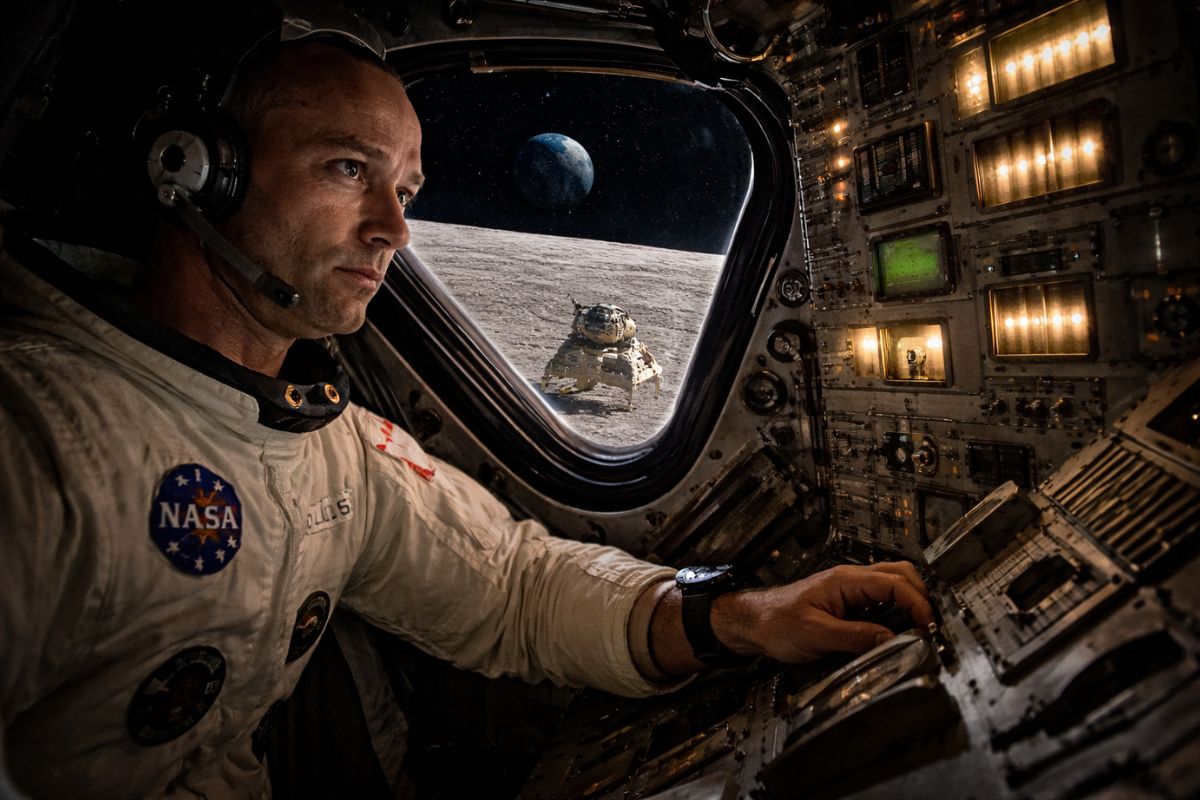


An Astronaut From Apollo 11 Became Invisible When The Moon Blocked The Radio, Spent 47 Minutes Alone And Held The Maneuver That Could Leave Armstrong And Aldrin Stranded, While The World Applauded Only Two Names In The History Of Exploration
Although Neil Armstrong and Buzz Aldrin Dominate The Collective Memory Of The Moon Landing, Apollo 11 Astronaut Michael Collins Occupied The Quietest And, In A Certain Sense, The Most Delicate Place In The Mission. He Stayed In The Columbia Command Module, In Lunar Orbit, Tasked With Keeping Everything Alive And Reuniting With His Colleagues.
For 47 Minutes On Each Orbit, Collins Disappeared Behind The Far Side Of The Moon, Without Radio And Without Any External Confirmation Of What Was Happening With The Duo On The Surface. It Was There, In That Interval Of Absolute Isolation, That A Historic Mission Could Turn Into A Monumental Failure.
The Third Name Stuck In The Detail That Nobody Sees

The Public Narrative Often Reduces Apollo 11 To Two Men And A Phrase. This Is Understandable But Incomplete.
-
16-Year-Old from Brazil’s Sertão Wins Young Scientist Award for AI Predicting Rainfall with 94.5% Accuracy to Aid Farmers

-
Netherlands Reports First Child Euthanasia Case Since Rule Expansion for Minors

-
Brazilian Innovator Survives Homemade Submarine Dive in Paraty Despite Hatch Leak and False Oxygen Alarm
-
China Develops Custom 140-Ton Electric Mining Truck with 770 kWh Swappable Battery, Deploys 290 Units in Xinjiang’s Largest Zinc Mine



The Apollo 11 Astronaut Who Did Not Walk On The Moon Was Exactly The One Who Needed To Keep The Technical Script Running When Improvisation Had No Space Left.
Michael Collins Piloted The Command Module In Orbit While Armstrong And Aldrin Carried Out The High-Risk Work On The Surface.
The Central Point Was Not “Waiting.” It Was Maintaining Orbital, Energy, Navigation, And Timing Parameters, Knowing That The Return Depended On An Encounter At The Right Place, At The Right Speed, With No Room For Vanity And Minimal Error Margin.
47 Minutes Behind The Moon, Without Radio, Without An Audience, With Real Responsibility
With Each Lunar Revolution Came The Strangest And Least Televised Part Of The Mission: The Far Side.
Collins Described This Period As An Isolation That No Other Human Had Experienced “Since Adam,” Because There Was No Contact With Houston, No Contact With His Colleagues, And No Contact With The Earth.
When The Module Returned To The Illuminated Side, The Contrast Was Almost Cruel.
It Reminded Him Of The Earth As A Small, Blue And White Dot, About The Size Of A Fingernail From A Distance, While The Moon, Up Close, Seemed Harsh And Unwelcoming.
Loneliness Was Not An Emotional Detail, It Was An Operational Condition: If Something Went Wrong, Time Would Pass Without Witnesses.
The Maneuver That Could Turn The Landing Into A Historic Disaster
What Sustained The Mission Was Not Just Landing. It Was Returning. And This Condensed Into A Task That Seems Simple In Summary, But Is Complex In The Real World: Re-Coupling The Lunar Module To The Command Module In Orbit.
The Apollo 11 Astronaut Who Was On Columbia Had To Be Ready To Handle Trajectory Failures, Delays, Orientation Errors, And A List Of Exceptions.
Collins Said He Carried A Small Notebook With 18 Different Possibilities Of Scenarios, Like A Mental Map Of Emergencies. He Admitted That Some Cases Were So Complicated That He Wasn’t Sure He Could Handle Them In The Heat Of The Moment.
The Weight Was Not “What To Do If It Goes Right,” It Was “What To Do If It Goes Wrong”. In The End, The Reunion Occurred Without Incidents, And History Continued To Applause.
The Victory That Came Home In A Quarantine
The Return To Earth Did Not Turn Into An Immediate Celebration. The Three Were Put In Quarantine For Two Weeks Because There Were Concerns About “Pathogens” Brought Back From The Moon.
The Solution Was To Isolate Them And, In A Nearly Surreal Way, Accompany Them With A Colony Of White Rats As An Improvised Biological Test For A Concern That Today Seems Distant.
The Scene Reveals The Mood Of The Time: A Mix Of Technological Boldness And Fear Of The Unknown.
The Apollo 11 Astronaut Who Carried Part Of The Structural Risk Still Had To Navigate This Post-Mission Phase Without The Public Catharsis That Usually Crown Heroes. Glory Does Not Erase The Human Cost Of The Process; It Just Makes It Less Discussed.
From Columbia To Colony, The Invisible Thread That Links Two Eras Of Space
The Material Also Points To An Interesting Contrast Between 1969 And The Present: Today, At The International Space Station, Teams Orbit The Planet 16 Times A Day, With Dozens Of Experiments And Support Routines On Board.
On Earth, This Daily Routine Depends On Control Centers, Like The One In Cologne, Germany, Where A Flight Controller Describes The Work Of Guiding Decisions That Happen Hundreds Of Kilometers Up.
This Parallel Does Not Diminish Collins; On The Contrary, It Helps To Understand Why The Apollo 11 Astronaut Still Matters.
Modern Space Exploration Is A Network Of Layers, People, Communication, Redundancy, Plan A And Plan B.
Apollo 11 Was This In A Pioneering Version, Compressed, With Less Technology And More Risk By Decision. When You Look Closely, The “Third Astronaut” Is Not A Supporting Actor; He Is The Structure.
What Remains When Memory Chooses Only Two Heroes
Collins, Already Elderly In The Interview, Still Advocated For A Hard-To-Measure Impulse: Curiosity.
For Him, Going To Space Was Not “Necessary” In The Utilitarian Sense But Was Part Of What Drives Humans To Look Up, Want To Understand, Touch, Visit What Seems Infinite. And When Talking About The Future, He Said He Preferred Mars, Seeing The Return To The Moon As An Interesting Detour.
This Kind Of Opinion Is Not Consensus, But It Exposes A Point That Often Disappears In The Marketing Of Exploration: Choices Involve Route, Cost, Risk, And Priority.
And In A World That Simplifies Stories, Perhaps The Most Concrete Lesson From The Apollo 11 Astronaut Is Another: Crucial Moments Rarely Occur In Front Of Cameras And Almost Always Depend On Someone Who Will Not Become A Catchphrase.
Apollo 11 Became A Myth Because Of The Step On The Moon But Also Because Of Everything That Could Not Fail For That Step To Return.
Michael Collins Stayed In The Place Where Failure Would Have No Audience, Just Consequence. And This Explains Why He Is Remembered Less Than He Should Be, Even Though He Was Indispensable.
I Want A Personal And Honest Answer: If You Had To Choose A Symbol Of Courage In The Mission, Would You Stick With The One Who Walks On The Moon Or With The One Who Waits Alone On The Far Side, Ready To Deal With 18 Disaster Scenarios? And Looking At Today, Do You Think The Next Obsession Should Be Returning To The Moon Or Going Straight To Mars?