






 Portuguese
  Spanish


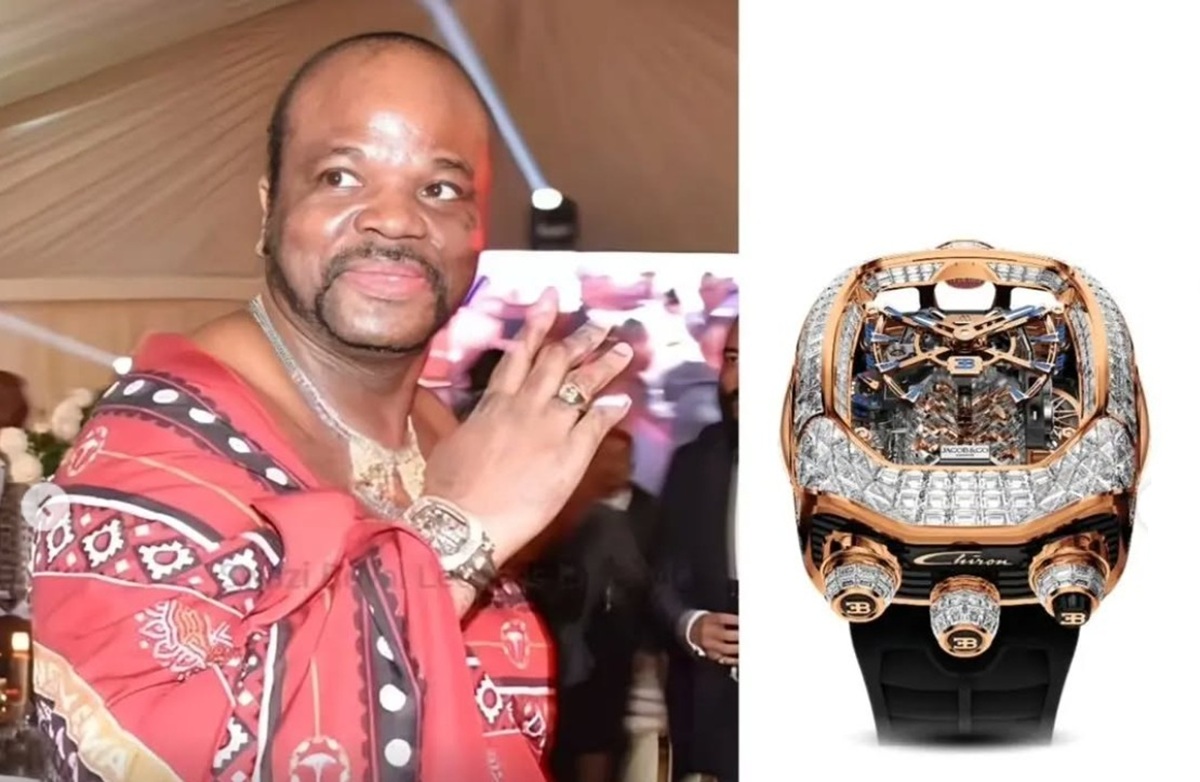

The Monarch of Eswatini, Known for His Extravagant Style and for Having 15 Wives, Draws Worldwide Attention for His Luxurious Collection of Rare Watches
The King Mswati III, reigning monarch of Eswatini (officially “Kingdom of Eswatini”), showcases a preference for luxury watches that attracts international attention.
His collection of refined pieces, shared with his large family and royal lifestyle, stands in stark contrast to the living conditions in his country.
In this context, the king — who has 15 wives, two of whom are state-named, according to local polygamous tradition — elevates the court’s presence to opulence.
-
A 3-year-old deaf student received the first white belt in Jiu-Jitsu and understood the achievement because the teacher learned Libras to communicate with him, in a video that surpassed 7 million views and moved social media by showing inclusion happening on the mat.

-
Miguel Krigsner opened a small compounding pharmacy in Curitiba in 1977, turned Brazilian fragrances into a national success, and created O Boticário, now one of the largest beauty networks in the world.

-
Meet the charming parrot grandpa, who became known for hugging free birds and revealed how he gained their trust over the years.
-
After 18 years of development, Bridgestone launches the AirFree airless tire, which requires no inflation and is puncture-proof, into daily service in Japan, starting with autonomous vehicles up to 20 km/h, used for transporting elderly people.





The Collection and the Lifestyle
Mswati III has amassed dozens of exquisite watches, notably pieces from the brand Jacob & Co.. Among the models are the “Billionaire Ashoka” with hundreds of diamonds, the “Brilliant Skeleton Tourbillon Ruby,” and a piece inspired by the Bugatti Chiron, in 18-carat rose gold with baguette diamonds and a miniature engine, valued at around US$ 940,000.
Other watches in the collection reach values of US$ 750,000 or more, totaling an estimated over US$ 15 million in rare and exclusive pieces.
Criticism and Disconnection from Local Reality
Despite the discerning taste and display of personal wealth, the luxurious lifestyle of the royal family — which includes more than 100 servants (security personnel, advisors, cooks, and ceremonial aides) — has been subject to strong criticism.
The displayed wealth contrasts with the harsh living conditions of the people of Eswatini, generating discontent among observers who see a monarchy distant from the everyday struggles of the population. The media exhibition of the watches and palace life reinforces this sense of disconnection.
In summary, King Mswati III stands out not only as a leader of one of the last absolute monarchies in Africa but also as a luxury collector whose choices evoke both admiration and controversy in equal measure.


