






 Portuguese
  Spanish


Oil prices surged again in the international market following the escalation of tensions in the Middle East, putting investors on alert and reigniting concerns about the direct impact of the geopolitical crisis on energy prices. This movement occurs amid uncertainties involving negotiations between the United States and Iran, as well as the growing risk of disruptions in global supply.
In the early hours of trading, oil futures contracts already showed a significant rise, reflecting fears that the conflict could affect strategic transport routes and reduce the availability of the product in the international market.

Oil rises strongly after increased tensions in the Middle East and direct risk to global supply
The appreciation of oil is not happening by chance. The market is reacting directly to the increased tensions involving the Middle East, a region responsible for a significant portion of world production.
-
With a record production of nearly 3 million barrels per day, Petrobras resumes importing diesel in July, highlighting the bottleneck in Brazilian refining.

-
Qantas and Airbus Invest in Company Aiming to Convert Unsorted Household Trash into Jet Fuel

-
Brazil’s ANP Opens 86 New Oil Blocks in the Equatorial Margin, Expanding the Amazon River Mouth Frontier

-
OPEC+ Boosts Oil Supply by 188,000 Barrels per Day in July 2026, Leading to Price Drop from $112 to $89 per Barrel in Under Two Months
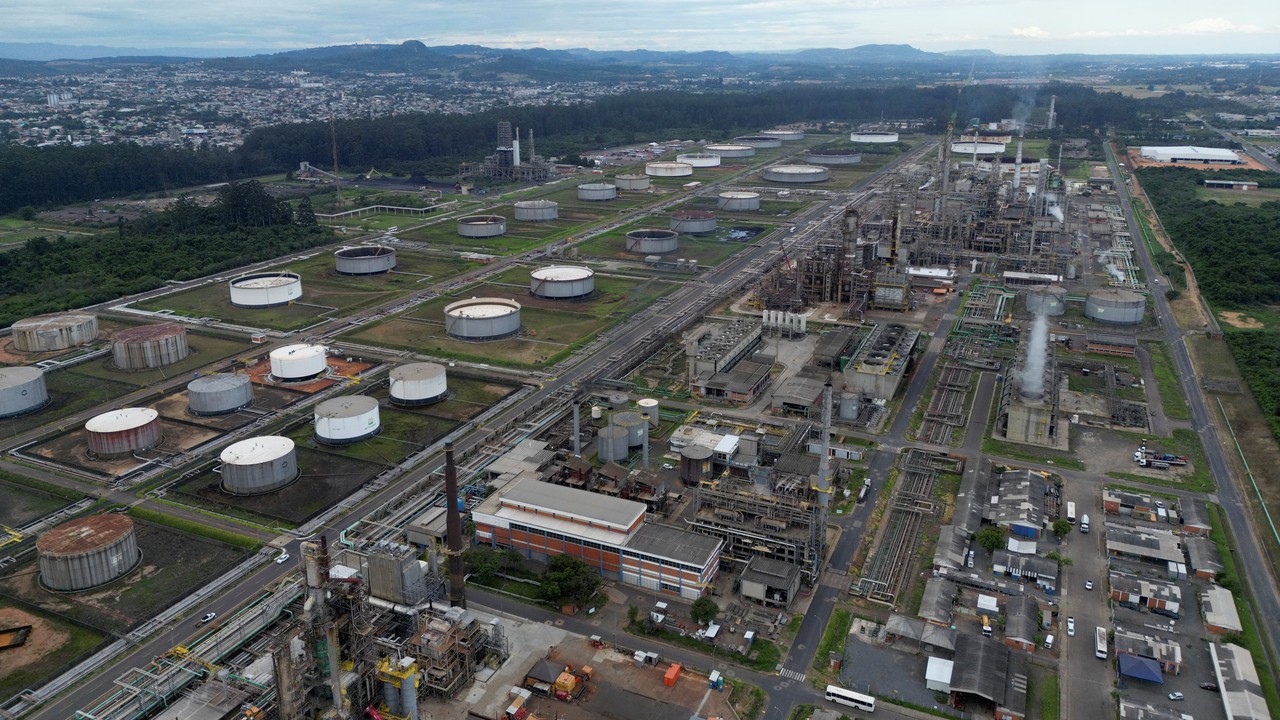



In recent days, the Brent crude barrel has once again surpassed the mark of $110, registering an increase of over 6% amid the worsening geopolitical scenario.
Moreover, oil is accumulating a sequence of appreciation driven by fears that the conflict between the United States and Iran could directly affect global supply, especially if there are impacts on maritime energy transport.
In this sense, investors have sought protection, which further intensifies the pressure on prices and increases market volatility.
Strait of Hormuz returns to the center of concerns and increases risk of shock in the oil market
One of the main factors explaining the rise in oil involves the Strait of Hormuz, one of the most important routes in the world for energy transport.
About 20% of global oil passes through this region, meaning any threat or blockade can have immediate effects on international prices.
Additionally, the current crisis has already caused concrete impacts on maritime flow. At certain times, tanker traffic has dropped drastically, reflecting the level of risk in the region.
Thus, oil becomes extremely sensitive to any military movement or political decision involving the Middle East.

Market reacts with continuous rise and oil surpasses important levels amid uncertainty
At the same time, market behavior reinforces the perception of risk. Oil has already accumulated several consecutive sessions of increase, driven by geopolitical uncertainty and the possibility of supply restrictions.
In some recent moments, the barrel exceeded $103 and even $118, highlighting the intensity of the appreciation movement.
Furthermore, the price increase occurs even without a total production interruption, showing that the market anticipates more critical scenarios.
In other words, it is not only what has already happened that impacts oil, but mainly what could happen in the coming days.

Oil surge pressures global inflation and may directly affect the cost of living
The increase in oil prices is not limited to the financial market. On the contrary, it generates direct effects on the real economy, impacting everything from fuels to the cost of basic products.
According to recent analyses, the rise in energy can elevate global inflation above expectations, pressuring economies around the world.
Moreover, sectors such as transportation, industry, and logistics quickly feel the effects of oil appreciation, which tends to make products and services more expensive.
In this context, countries that depend on energy imports become even more vulnerable, increasing economic risks in an already uncertain scenario.
Conflict between the United States and Iran remains the main factor behind the oil surge
Although various factors influence the market, the main driver of the current oil surge is the conflict between the United States and Iran.
The uncertainty in negotiations, combined with military threats and possible sanctions, keeps the market in a constant state of alert.
Furthermore, any sign of escalation in the conflict tends to provoke new price increases, as investors anticipate possible interruptions in production and transportation.
On the other hand, a potential diplomatic resolution could relieve pressure on oil. However, for now, the scenario remains uncertain.

Oil remains a global barometer and directly reflects political and economic tensions
The recent behavior of oil reinforces a well-known pattern: the product functions as a true barometer of the global economy.
Whenever there is geopolitical instability, especially in producing regions, oil reacts immediately. This occurs because the market depends on predictability to maintain the balance between supply and demand.
Moreover, oil continues to be one of the most strategic resources in the world, widely used in transportation, industry, and energy generation.
Thus, any change in its price generates chain impacts, affecting everything from governments to the end consumer.
Scenario indicates that oil may continue to rise as long as tensions in the Middle East persist
Based on the current scenario, the trend is that oil will remain under pressure as long as tensions in the Middle East persist.
The combination of geopolitical risk, possible supply reduction, and increased demand for security in the financial market creates a favorable environment for new increases.
Additionally, experts are already considering even more extreme scenarios, should the conflict intensify or reach critical energy infrastructure.
Thus, oil remains at the center of global attention, not only as a commodity but as one of the main indicators of the world economic balance.








