






 Portuguese
  Spanish


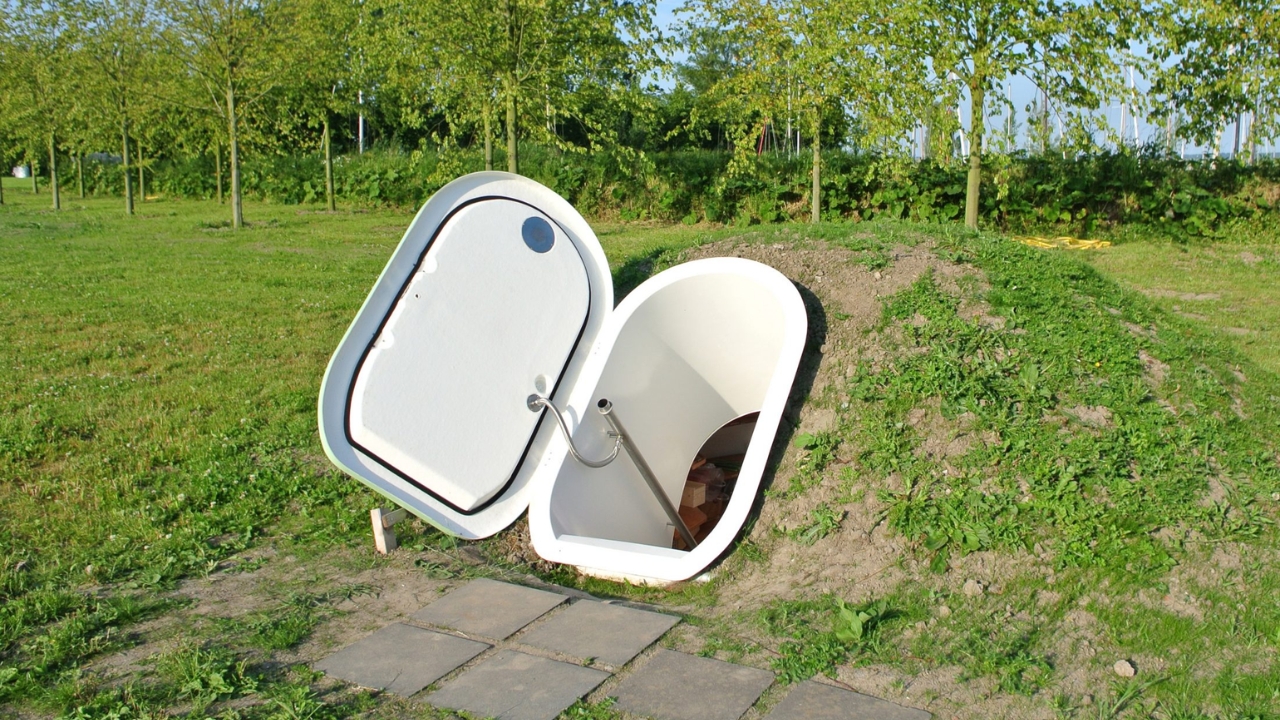

Discover the Groundfridge, an underground solution inspired by ancient conservation cellars that has regained prominence with modern design, sustainable focus, and large storage capacity for those seeking smart alternatives outside the conventional refrigerator.
Imagine opening a door in the middle of the garden, descending a few steps, and finding a true cold chamber hidden underground. It sounds like a scene from a futuristic movie, but it already exists in Europe and goes by the name Groundfridge.
The system promises something that catches attention in times of increasingly high electricity bills: preserving food, wines, and cheeses using the natural temperature of the soil, without relying on a common refrigerator plugged in all day. It’s not magic. It’s an old idea, revamped with modern design and a touch of sustainable engineering.
What is the Groundfridge?

The Groundfridge is a type of cellar or underground pantry prefabricated to store food at a cool and stable temperature. According to the official Groundfridge page, it was developed as a naturally cooled cellar for storing food and wine.
-
Former Cardboard Collector Turns Broken Laptop into Million-Dollar Business, Attracts Industry Giant and Aims for New Growth in 2026.

-
Child Prodigy from Brazil, Son of Photographers, Exhibits Self-Taught Watercolor Paintings at UK Arts Center

-
Real Estate Agent Buys Marvel Movie Subway Car for $5,000 and Converts It into Themed Airbnb

-
Couple Transforms Abandoned Pool with Snakes into Garden for $15,500 Instead of $50,000 Renovation


In practice, it works like a modern version of the old underground cellars used by generations to preserve harvests before the popularization of electric refrigerators. The difference is that now everything comes in a ready-made structure, with entrance, stairs, and shelves.
The look also draws attention: seen from the outside, it looks like a small door in the garden. But inside, there is a circular space capable of transforming the backyard into a low-energy secret pantry.
The secret is beneath your feet
The great trick of the Groundfridge is simple and powerful: the earth acts as a natural thermal insulator. While the external air heats and cools quickly, the soil maintains a much more stable temperature in depth.
The structure is buried and covered by a layer of earth, creating a natural barrier against the intense heat of summer and the extreme cold of winter. According to designer Floris Schoonderbeek, the spherical model is covered by the very earth removed from the excavation, forming an insulating layer that helps maintain the internal temperature with almost no variations.
It is precisely this stability that allows storing fruits, vegetables, wines, cheeses, and other products that need freshness but not necessarily freezing.
The promise that seems impossible: preserving without a common refrigerator

The most explosive point of this invention is the idea of drastically reducing dependence on electric refrigeration. The Groundfridge does not aim to be a freezer nor completely replace the traditional home refrigerator for sensitive foods like meats and fish.
But for vegetables, beverages, preserves, cheeses, and garden products, it emerges as an impressive alternative. The magazine WIRED described the project as a prefabricated structure inspired by ancient root cellars, created to keep food at a cool and constant temperature throughout the year.
In other words: it is not a “miracle fridge,” but it can be a powerful weapon against food waste and excessive energy consumption.
Why is Europe eyeing this idea?
Europe has a perfect scenario for this type of solution: cold winters, moderate summers in many regions, appreciation of local products, and a growing interest in more sustainable homes. Additionally, many European consumers maintain gardens, home vineyards, or small artisanal productions.
According to the Groundfridge FAQ section, the product can be transported by truck or sea container, but delivery is currently only available in Europe. This shows that, for now, the technology is still very much tied to the European market.
And the reason is clear: in regions where the soil remains naturally cold for much of the year, the system can operate more efficiently.
Can it hold a lot inside?
One of the most impressive details is its capacity. The Groundfridge is not a small buried box: it is a structure large enough to function as a true visitable underground pantry.
The portal Dutch Design Daily highlighted that the system was presented as a cellar with a capacity equivalent to about 20 refrigerators. This explains why it attracts so much attention from families with large gardens, rural communities, restaurants, and self-sufficient living projects.
For those who produce a lot of food at once, like potatoes, apples, carrots, pumpkins, or wines, this capacity can represent a radical change in the way production is stored.
Sustainable, beautiful, and… expensive?

Here’s the part not everyone wants to hear: the Groundfridge is innovative, but it’s not necessarily cheap. The Dutch Design Awards pointed out that, due to the purchase price, it is not an obvious solution for a single person nor a direct alternative to the common refrigerator, but it can make a lot of sense for collective use.
This changes the perception of the product. Instead of being just an ecological luxury for a sophisticated backyard, it can be seen as a solution for condominiums, cooperatives, agricultural communities, eco-villages, and small producers.
After all, when several people share the investment, the structure can become a shared fresh storage center.
The detail no one should ignore
Despite the sensational appeal, it’s important to make it clear: the Groundfridge does not freeze food and does not maintain everything at the same temperature as a conventional household refrigerator. It is a cold underground cellar, not a hidden backyard freezer.
This means it is excellent for certain uses, but unsuitable for others. Fresh meats, fish, open milk, and highly perishable products still require lower controlled refrigeration.
The true brilliance of the system lies in another point: it revives an ancient technique and transforms it into a modern product for a world that seeks to save energy, reduce waste, and rely less on the power grid.
An ancient invention with a future look
The Groundfridge seems new, but its soul is old. It recovers the logic of underground cellars, used for centuries to preserve food before electricity dominated kitchens.
The difference is that now this idea has returned with design, marketing, and a much greater environmental urgency. In times of energy crisis, climate change, and the search for smarter solutions, a buried refrigerator in the garden stops seeming eccentric and starts sounding like a powerful provocation.
Perhaps the future of sustainable refrigeration is not just in solar panels, batteries, or smart devices. Perhaps part of it is exactly where it has always been: underground.


